
[論文レビュー] Multi-hop Question Answering
本調査では、マルチホップ質問応答(MHQA)の形式的定義と体系的な整理を提供し、既存のフレームワーク、データセット、評価戦略を分析する。推論チェーン構築、一般的常識の統合、算術的推論といった主な課題を特定し、より優れた評価指標と生成型MHQA手法の導入を提言することで、頑健で説明可能なNLPシステムの発展を促進する。
The task of Question Answering (QA) has attracted significant research interest for long. Its relevance to language understanding and knowledge retrieval tasks, along with the simple setting makes the task of QA crucial for strong AI systems. Recent success on simple QA tasks has shifted the focus to more complex settings. Among these, Multi-Hop QA (MHQA) is one of the most researched tasks over the recent years. In broad terms, MHQA is the task of answering natural language questions that involve extracting and combining multiple pieces of information and doing multiple steps of reasoning. An example of a multi-hop question would be "The Argentine PGA Championship record holder has won how many tournaments worldwide?". Answering the question would need two pieces of information: "Who is the record holder for Argentine PGA Championship tournaments?" and "How many tournaments did [Answer of Sub Q1] win?". The ability to answer multi-hop questions and perform multi step reasoning can significantly improve the utility of NLP systems. Consequently, the field has seen a surge with high quality datasets, models and evaluation strategies. The notion of 'multiple hops' is somewhat abstract which results in a large variety of tasks that require multi-hop reasoning. This leads to different datasets and models that differ significantly from each other and makes the field challenging to generalize and survey. We aim to provide a general and formal definition of the MHQA task, and organize and summarize existing MHQA frameworks. We also outline some best practices for building MHQA datasets. This book provides a systematic and thorough introduction as well as the structuring of the existing attempts to this highly interesting, yet quite challenging task.
研究の動機と目的
- 多様な解釈を統一するため、マルチホップ質問応答(MHQA)タスクの形式的かつ一般的な定義を確立すること。
- 異なる知識ソースをカバーする既存のMHQAフレームワーク、モデル、データセットを体系的に整理し要約すること。
- 推論チェーン構築、一般的常識の統合、算術的推論といった、MHQAにおける主な課題を特定し、それらに対処すること。
- 語彙的一致を超えて意味的類似性、同義語、部分的な正答性を考慮する改善された評価指標を提案すること。
- カリキュラム学習や実世界の応用を支援するため、生成型MHQAと難易度制御可能な質問生成の必要性を強調すること。
提案手法
- 複数の文脈(テキスト、表、知識グラフ)を介した複数の推論ステップを要するタスクとして、MHQAの形式的定義を提唱する。
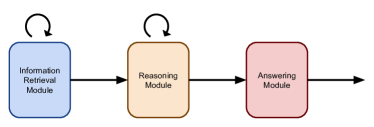
- 知識ソース(例:Wikipedia、知識グラフ、表)と推論タイプ(例:チェーン・オブ・トゥーク、証拠検索)に基づいて、MHQAフレームワークを分類する。
- 明示的および暗黙的な中間ステップを区別する推論チェーンの分類体系を導入する。
- モデルの解釈性を向上させ、詳細なパフォーマンス分析を可能にするために、ホップごとの評価戦略を推奨する。
- 語彙的一致を超えて意味を捉えるために、Word Mover’s Distance や Sentence Mover’s Similarity といった意味的評価指標を提案する。
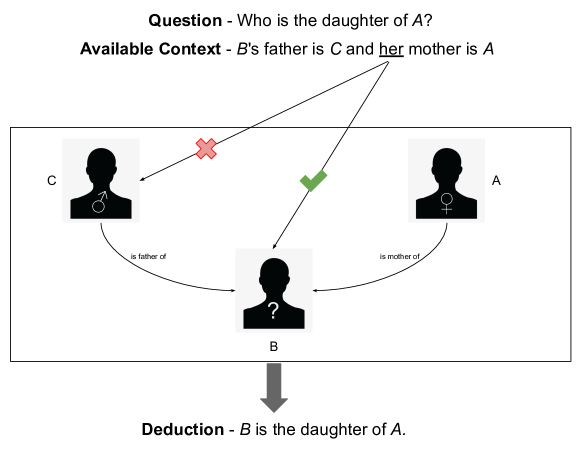
- 一般的常識推論を強化し、背景知識の欠落によるモデルの失敗を低減するため、外部知識ベース(例:ConceptNet、WordNet)の統合を提言する。
実験結果
リサーチクエスチョン
- RQ1多様なタスクバリアントを統一する形式的かつ一般的なマルチホップ質問応答の定義とは何か?
- RQ2既存のMHQAフレームワークは、知識ソース、推論メカニズム、評価プロトコルの観点でどのように異なるか?
- RQ3現在のMHQAモデルの主な失敗モードは何か?そして、より良い訓練データと知識統合によってそれらをどのように緩和できるか?
- RQ4語彙的一致を超えて意味的類似性と部分的正答性を考慮するため、評価指標をどのように改善できるか?
- RQ5生成型MHQAと難易度制御可能な質問生成は、頑健で説明可能なNLPシステムの発展にどのように寄与できるか?
主な発見
- 現在のMHQAモデルは一般的常識の欠落により頻繁に失敗しており、ある研究ではその16%がこれに起因している。
- 語彙的一致に基づく評価指標は、語彙的に異なるが意味的に正しい回答(例:'U.S.' と 'United States')を罰する傾向があり、信頼性を低下させる。
- WikiHopなどのデータセットでは、地理的または時間的近接の回答(例:'December 1988' と 'January 1989')に対して部分的評価を行うことが、評価の頑健性を高めるために不可欠である。
- Word Mover’s Distance や Sentence Mover’s Similarity といった意味的マッチング技術は、表面的な形ではなく意味を捉えることで、回答評価の向上に効果を示している。
- 算術的推論は依然として大きな課題であり、HotpotQAにおける比較質問の45%が数値的であるが、モデルは日付比較や時系列計算でしばしば失敗する。
- 時系列的、地理的、カウントベースの質問タイプに対する的確な改善は、全体のMHQAパフォーマンスを顕著に向上させることができる。
この論文を読む
Nubintのビューアで原文を開き、読みながら気になる箇所をすぐに質問できます。
Nubintでこの論文を読むこのレビューはAIが論文の原文をもとに作成しました。引用する前に原文をご確認ください。