
[論文レビュー] NatSGD: A Dataset with Speech, Gestures, and Demonstrations for Robot Learning in Natural Human-Robot Interaction
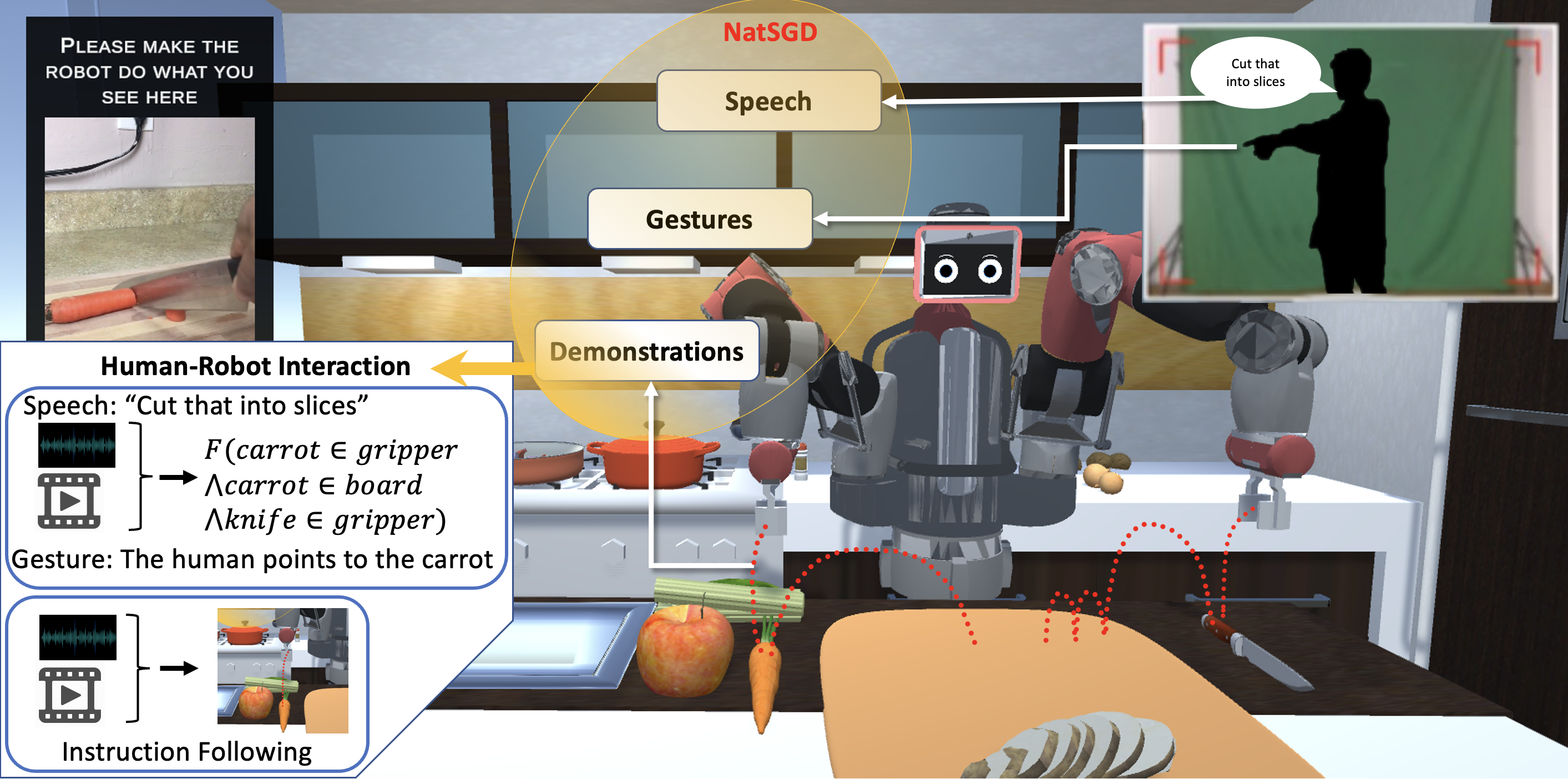
NatSGDは、調理や掃除などの複雑な日常タスクを対象とした、自然な会話、ジェスチャー、ロボットのデモンストレーション軌道を組み合わせた新しいマルチモーダルHRIデータセットを提供する。これにより、同期された専門家デモンストレーションと連携した会話とジェスチャーの統合的入力を通じてロボットが学習可能となり、単一モodal入力に比べてタスク理解が顕著に向上する。さらに、強化学習およびsim2real研究を支援する、ROS互換性を備えたフォトリッチなシミュレータとともに公開されている。
Recent advancements in multimodal Human-Robot Interaction (HRI) datasets have highlighted the fusion of speech and gesture, expanding robots' capabilities to absorb explicit and implicit HRI insights. However, existing speech-gesture HRI datasets often focus on elementary tasks, like object pointing and pushing, revealing limitations in scaling to intricate domains and prioritizing human command data over robot behavior records. To bridge these gaps, we introduce NatSGD, a multimodal HRI dataset encompassing human commands through speech and gestures that are natural, synchronized with robot behavior demonstrations. NatSGD serves as a foundational resource at the intersection of machine learning and HRI research, and we demonstrate its effectiveness in training robots to understand tasks through multimodal human commands, emphasizing the significance of jointly considering speech and gestures. We have released our dataset, simulator, and code to facilitate future research in human-robot interaction system learning; access these resources at https://www.snehesh.com/natsgd/
研究の動機と目的
- 複雑な現実世界のタスクに適した、自然な会話、ジェスチャー、ロボットのデモンストレーション軌道を統合したマルチモーダルHRIデータセットの不足に対処すること。
- 会話(明示的)とジェスチャー(暗黙的)の両方のヒューマンコミュニケーションを統合することで、調理や掃除といった複雑なタスクの学習を可能にすること。
- タスクの部分構成、参照(行動/物体)、ジェスチャーの意図、ボディパーツの役割を含む、同期された人間およびロボット視点のデータを含む、豊富にアノテートされたデータセットを提供すること。
- 統一的でスケーラブルかつ現実的なデータセットとシミュレーション環境を通じて、会話とジェスチャーの統合的理解システムの開発を支援すること。
- 知覚中心のHRIデータセットと、タスクの複雑さに配慮した行動基盤の学習のニーズの間のギャップを埋めること。
提案手法
- 参加者が仮想の自律型ヒューマノイドロボットと相互作用するWizards-of-Oz実験を実施し、自然な命令を会話とジェスチャーで発行した。
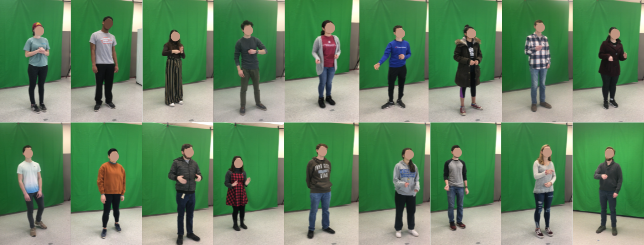
- 18名の参加者から、11の行動、20の物体、16の状態を対象に、合計1143件のヒューマンコマンドを収集し、それぞれに専門家によるロボットデモンストレーション軌道を対応付けた。
- Fast Event Video Annotation (FEVA)ツールを用いて、会話、ジェスチャー、サブタスク、参照(行動/物体)、ジェスチャーの意図(意図的 vs. 非意図的)、ボディパーツ使用を時間的アノテーションでラベル付けした。
- コミュニケーション的意図に基づきジェスチャーを分類:タスク指向(意図的)と非意図的(文脈的)で、ボディパーツは頭、胴体、左/右腕、左/右脚の6つのグループに分割した。
- 強化学習およびsim2real移行を支援するフォトリッチなシミュレータをROSインターフェースと統合し、スケーラブルなトレーニングと評価を可能にした。
- 人間とロボットのエゴセントリックビューからの同期データを提供し、深度画像、物体のセマンティックセグメンテーション、エンドエフェクタ、ヘッド、ベースの軌道を含めた。
実験結果
リサーチクエスチョン
- RQ1ロボットが会話とジェスチャーを併用して処理することで、単一モーダルの入力に比べて、より優れたタスク理解を達成できるか?
- RQ2ジェスチャーの意図(意図的 vs. 非意図的)とボディパーツの使用を、HRIにおける機械学習を支援するための体系的かつ一貫した方法でアノテートできるか?
- RQ3専門家デモンストレーション軌道を組み込むことで、調理や掃除のような複雑で多段階のタスクの学習がどの程度向上するか?
- RQ4同期された人間およびロボット視点の統一的マルチモーダルデータセットが、より強固で一般化可能なHRIポリシー学習をどのように可能にするか?
- RQ5文脈的で非意図的なジェスチャーおよび副言語的特徴は、人間-ロボットタスク理解において果たす役割は何か?それらはどのようにモデル化できるか?
主な発見
- NatSGDは、食事準備や掃除などの複雑な日常タスクを対象とした、自然な会話、ジェスチャー、同期されたロボットデモンストレーション軌道を統合した最初のデータセットである。
- 会話とジェスチャーの統合により、単一モーダルアプローチに比べて、ロボットのタスク理解が顕著に向上し、マルチモーダル統合の価値が実証された。
- ジェスチャーのアノテーションは、意図的(タスク関連)と非意図的(文脈的)を区別しており、曖昧さを低減し、モデルの一般化を向上させた。
- サブタスク、物体および行動の参照、ボディパーツの役割を含む、詳細な時間的アノテーションを備えており、微細なタスク表現学習を可能にした。
- ROSインターフェースを備えたフォトリッチなシミュレータにより、効率的なトレーニングとsim2real移行が可能となり、HRIシステムの開発を加速した。
- トレーリングレベル(デモンストレーション)およびシンボリックレベル(真の活動)の両方で、豊富な監視信号を提供し、ポリシー学習と解釈性の向上を支援した。
この論文を読む
Nubintのビューアで原文を開き、読みながら気になる箇所をすぐに質問できます。
Nubintでこの論文を読むこのレビューはAIが論文の原文をもとに作成しました。引用する前に原文をご確認ください。