
[論文レビュー] Nonlinear Balanced Truncation: Part 2 -- Model Reduction on Manifolds
この論文は、非線形バランストランケーションのためのスケーラブルな balance-and-reduce アプローチを、非線形バランス化多様体上での多項式的ノンライン性を持つ状態空間のモデル還元を通じて開発し、非線形変換の ill-conditioning に対処する戦略を含む。
Nonlinear balanced truncation is a model order reduction technique that reduces the dimension of nonlinear systems in a manner that accounts for either open- or closed-loop observability and controllability aspects of the system. Two computational challenges have so far prevented its deployment on large-scale systems: (a) the energy functions required for characterization of controllability and observability are solutions of high-dimensional Hamilton-Jacobi-(Bellman) equations, which have been computationally intractable and (b) the transformations to construct the reduced-order models (ROMs) are potentially ill-conditioned and the resulting ROMs are difficult to simulate on the nonlinear balanced manifolds. Part~1 of this two-part article addressed challenge (a) via a scalable tensor-based method to solve for polynomial approximations of the open- and closed-loop energy functions. This article, (Part~2), addresses challenge (b) by presenting a novel and scalable method to reduce the dimensionality of the full-order model via model reduction on polynomially-nonlinear balanced manifolds. The associated nonlinear state transformation simultaneously 'diagonalizes' relevant energy functions in the new coordinates. Since this nonlinear balancing transformation can be ill-conditioned and expensive to evaluate, inspired by the linear case we develop a computationally efficient balance-and-reduce strategy, resulting in a scalable and better conditioned truncated transformation to produce balanced nonlinear ROMs. The algorithm is demonstrated on a semi-discretized partial differential equation, namely Burgers equation, which illustrates that higher-degree transformations can improve the accuracy of ROM outputs.
研究の動機と目的
- 大規模システムに対する非線形バランストランケーションの計算的課題に対処するために(i)新しい座標系でエネルギー関数を対角化するスケーラブルな非線形状態変換を導出し、(ii)非線形多様体上での balance-and-reduce 手法を提案して ill-conditioning を緩和する。
- オープンループおよびクローズドループのエネルギー関数と対応する非線形変換のスケーラブルな計算を可能にする多項式エネルギー関数フレームワークを提供する。
- 高次元変換が ROM の精度と特異値挙動に与える影響を示すために、半離散化された Burgers 型 PDE でアプローチを実証する。
提案手法
- スケーラブルな Taylor 系列テンソル法を用いて、オープン/クローズドループのエネルギーを表す非線形エネルギー関数の近似を計算する。
- 入力正規形/出力対角形を実現する非線形状態変換を導出し、特異値関数を抽出する。
- エネルギー関数と特異値関数を対称係数を持つ多項式(テンソル)展開として表現し、計算を効率化する。
- 非線形多様体上で直接 balanced ROM を構築する balance-and-reduce 戦略を開発し、全非線形変換の ill-conditioning を緩和する。
- 次数 k の多項式表現を定義・活用してエネルギー関数をバランスさせ、状態ごとの特異値関数に基づく状態削減を可能にする。
- Burgers 型 PDE の例でフレームワークを検証し、変換次数が ROM の精度に与える影響を研究する。
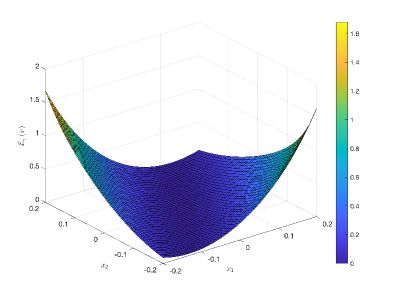
実験結果
リサーチクエスチョン
- RQ1large nonlinear system のバランスを可能にするために、非線形エネルギー関数をスケーラブルに計算するにはどうすればよいか。
- RQ2局所領域でオープンループ/クローズドループのエネルギー関数を対角にバランスさせる非線形座標変換を構築できるか。
- RQ3非線形変換の ill-conditioning に対処するために、非線形バランス多様体上で直接モデル還元を行えるか。
- RQ4PDE様システムの高次の非線形変換が ROM の精度に与える影響はどのようか。
- RQ5エネルギー関数の多項式(テンソル)表現は非線形バランシングのスケーラブルで正確な成分を提供するか。
主な発見
- 非線形状態変換と特異値関数をオープンアクセスのリポジトリで計算するスケーラブルな Taylor 系列ベースの戦略を提供。
- 新しい座標でオープン/クローズドループのエネルギー関数を対角にバランスさせる非線形状態変換を構築し、非線形バランスモデルを得る。
- 非線形多様体上での balance-and-reduce アプローチを開発し、ill-conditioning を回避して非線形 ROM の評価を効率化する。
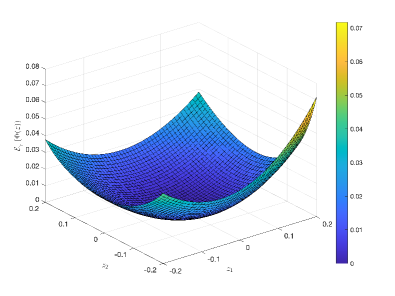
- 非線形バランス ROM は半離散化された Burgers 型 PDE で実証され、高次元変換が ROM の出力精度を改善し得ることを示す。
- この方法論は特定の系形を仮定せず、変換は二つの多項式エネルギー関数をバランスさせ、一般の非線形系に再利用可能な非線形写像を生み出す。
この論文を読む
Nubintのビューアで原文を開き、読みながら気になる箇所をすぐに質問できます。
Nubintでこの論文を読むこのレビューはAIが論文の原文をもとに作成しました。引用する前に原文をご確認ください。