
[論文レビュー] On the Robustness of the Backdoor-based Watermarking in Deep Neural Networks
この論文は、深層ニューラルネットワークにおけるバックドアベースのウォーターマーキングが、公開のラベルなしデータとモデルのラベルのみを用いたブラックボックス攻撃、およびモデルパラメータを用いたホワイトボックス攻撃の2つの有効な攻撃を提案することで、非信頼性であることを示している。両方の攻撃は、訓練データやトレーニングスクリプトにアクセスせずに、最小限の精度損失でウォーターマークを効果的に削除できることを示しており、ウォーターマーキング方式が訓練データやトレーニングスクリプトにアクセスしないでも削除可能であることを証明している。
Obtaining the state of the art performance of deep learning models imposes a high cost to model generators, due to the tedious data preparation and the substantial processing requirements. To protect the model from unauthorized re-distribution, watermarking approaches have been introduced in the past couple of years. We investigate the robustness and reliability of state-of-the-art deep neural network watermarking schemes. We focus on backdoor-based watermarking and propose two -- a black-box and a white-box -- attacks that remove the watermark. Our black-box attack steals the model and removes the watermark with minimum requirements; it just relies on public unlabeled data and a black-box access to the classification label. It does not need classification confidences or access to the model's sensitive information such as the training data set, the trigger set or the model parameters. The white-box attack, proposes an efficient watermark removal when the parameters of the marked model are available; our white-box attack does not require access to the labeled data or the trigger set and improves the runtime of the black-box attack up to seventeen times. We as well prove the security inadequacy of the backdoor-based watermarking in keeping the watermark undetectable by proposing an attack that detects whether a model contains a watermark. Our attacks show that a recipient of a marked model can remove a backdoor-based watermark with significantly less effort than training a new model and some other techniques are needed to protect against re-distribution by a motivated attacker.
研究の動機と目的
- 深層ニューラルネットワークにおけるバックドアベースのウォーターマーキング方式の耐性および信頼性を評価すること。
- 訓練データやラベル付きデータ、モデルパラメータを必要とせず、公開のラベルなしデータとモデルの分類ラベルのみを用いてウォーターマークを削除するブラックボックス攻撃を開発すること。
- モデルパラメータが利用可能である場合に、効率的にウォーターマークを削除するホワイトボックス攻撃を設計し、ブラックボックス手法よりも実行時間を短縮すること。
- ウォーターマーキング検出が可能であることを示し、バックドアベースのウォーターマーキングが不正検出を回避するという安全性の仮定を暴露すること。
- 既存のバックドア削除技術(例:Neural-Cleanse や Fine-Pruning)がウォーターマーキング削除に効果を発揮しないことの証明を行い、意図的な攻撃者に対する新たな防御策の必要性を示すこと。
提案手法
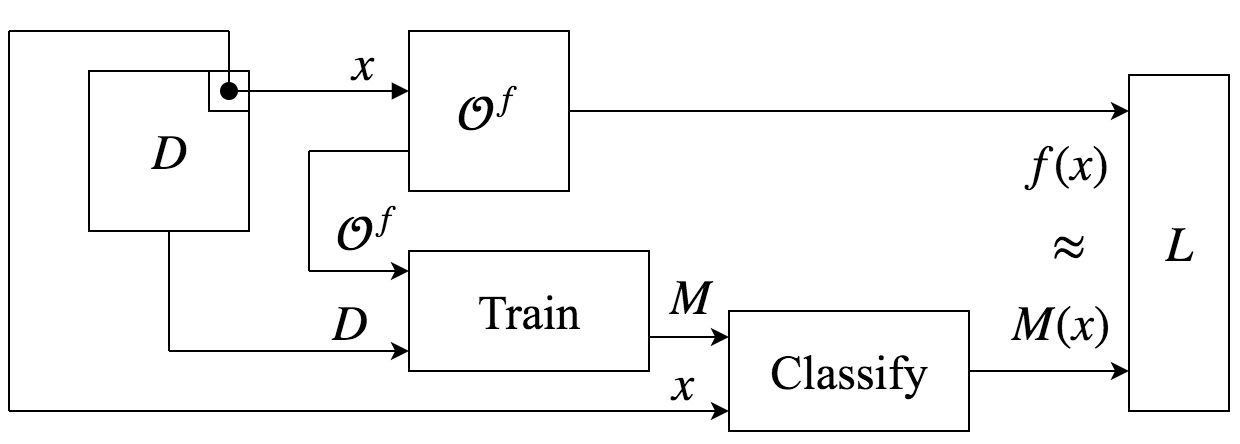
- ブラックボックス攻撃は、モデルの入力分布に属する20,000~50,000件の公開済みラベルなし入力データを用いて、ターゲットモデルに問い合わせを行い、最終的な分類ラベルのみを収集する。
- 攻撃は、ラベル応答に対してアクティブラーニングを適用し、元のマーク付きモデルの挙動を模倣するサーヴィレートモデルを再構築する。
- ホワイトボックス攻撃は、モデルパラメータへのアクセスを活用してウォーターマーク削除プロセスを最適化し、ブラックボックス手法と比較して大幅に実行時間を短縮する。
- 攻撃は、元の訓練データ、トレーニングスクリプト、ラベル付き例にアクセスする必要がなく、推論時における問い合わせまたはパラメータへのアクセスに依存する。
- ウォーターマークの存在を検出できる性質推定攻撃を導入し、削除手法を適用する前の事前検証を可能にする。
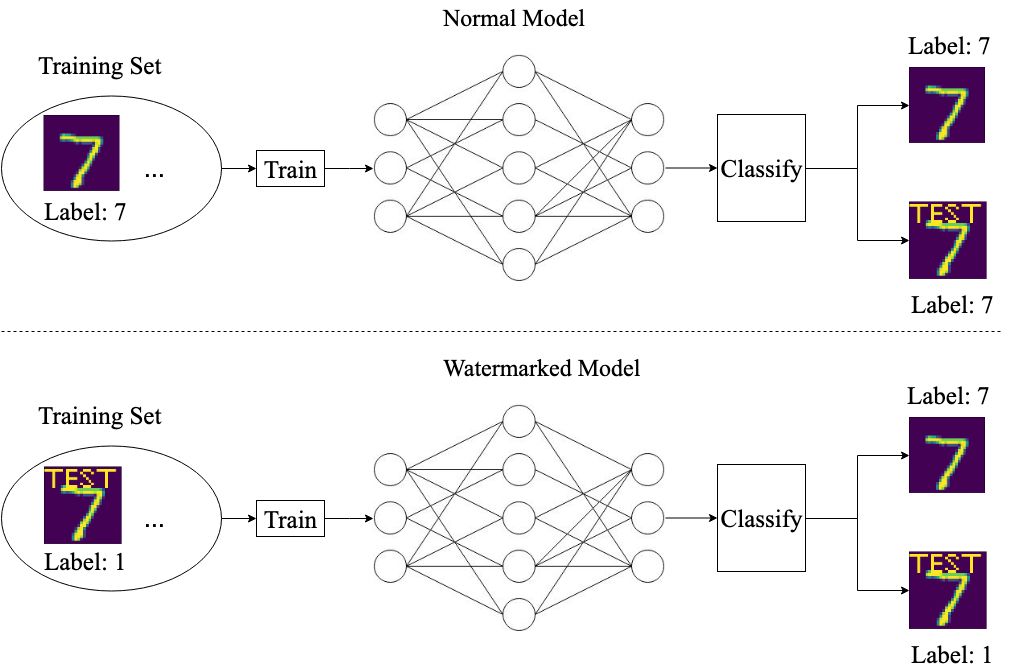
- 攻撃は、埋め込みロゴ、ノイズパターン、抽象的なトレーニング画像など、さまざまなウォーターマークタイプのモデルに対して検証され、ウォーターマークの形式にかかわらず汎用性があることが示された。
実験結果
リサーチクエスチョン
- RQ1元の訓練データやトレーニングスクリプトにアクセスせずに、深層ニューラルネットワークからウォーターマークを削除することは可能か?
- RQ2分類ラベルとラベルなしデータのみを用いたブラックボックス攻撃は、バックドアベースのウォーターマーキングを効果的に削除できるか?
- RQ3モデルパラメータが利用可能な場合、ホワイトボックス攻撃はブラックボックス手法よりも高速かつ高精度にウォーターマーク削除を実現できるか?
- RQ4トレーニングスクリプトや訓練データの事前知識なしに、モデル内にウォーターマークが存在するかどうかを検出することは可能か?
- RQ5Neural-Cleanse や Fine-Pruning などの既存のバックドア削除技術は、ウォーターマーキング削除に適用可能か?もし非効果的であるなら、その理由は何か?
主な発見
- ブラックボックス攻撃は、20,000~50,000件のラベルなし入力データと分類ラベルのみを用いてウォーターマークを効果的に削除でき、精度の低下は最小限に抑えられた。
- ホワイトボックス攻撃はブラックボックス手法と比較して、最大17倍の高速化を達成し、パラメータへのアクセスがあることで著しい効率性向上が示された。
- 性質推定攻撃は、ウォーターマーク付きモデルと未マークモデルを信頼性高く区別でき、ウォーターマークの存在を自動検出可能にした。
- トレーニングスクリプトやラベル付きデータにアクセスせずにウォーターマーク削除が可能であることが実証され、バックドアベースのウォーターマーキングの安全性仮定が覆された。
- Neural-Cleanse や Fine-Pruning などの既存のバックドア削除手法は、特定のトレーニングスクリプトパターンやラベル付きデータに依存するため、ウォーターマーキング削除には非効果的である。
- 本研究の結果から、ウォーターマーキング方式は意図的な攻撃者に対して耐性がなく、不正な再配布を防ぐための代替的保護メカニズムの開発が不可欠であることが示された。
この論文を読む
Nubintのビューアで原文を開き、読みながら気になる箇所をすぐに質問できます。
Nubintでこの論文を読むこのレビューはAIが論文の原文をもとに作成しました。引用する前に原文をご確認ください。