
[論文レビュー] Predicting Drivers' Route Trajectories in Last-Mile Delivery Using A Pair-wise Attention-based Pointer Neural Network
本稿では、ヒストリカルドライバー データを用いて現実の最終マイル配送ルートの軌道を予測するため、ペアワイズ アテンションを組み込んだポインタニューラルネットワークを提案する。局所的なペアワイズストップ関係性と反復的ルート生成アルゴリズムを統合することで、ベンチマークと比較して最初の4つのストップの予測精度が31.2%向上し、ルートの乖離度も15%低減された。
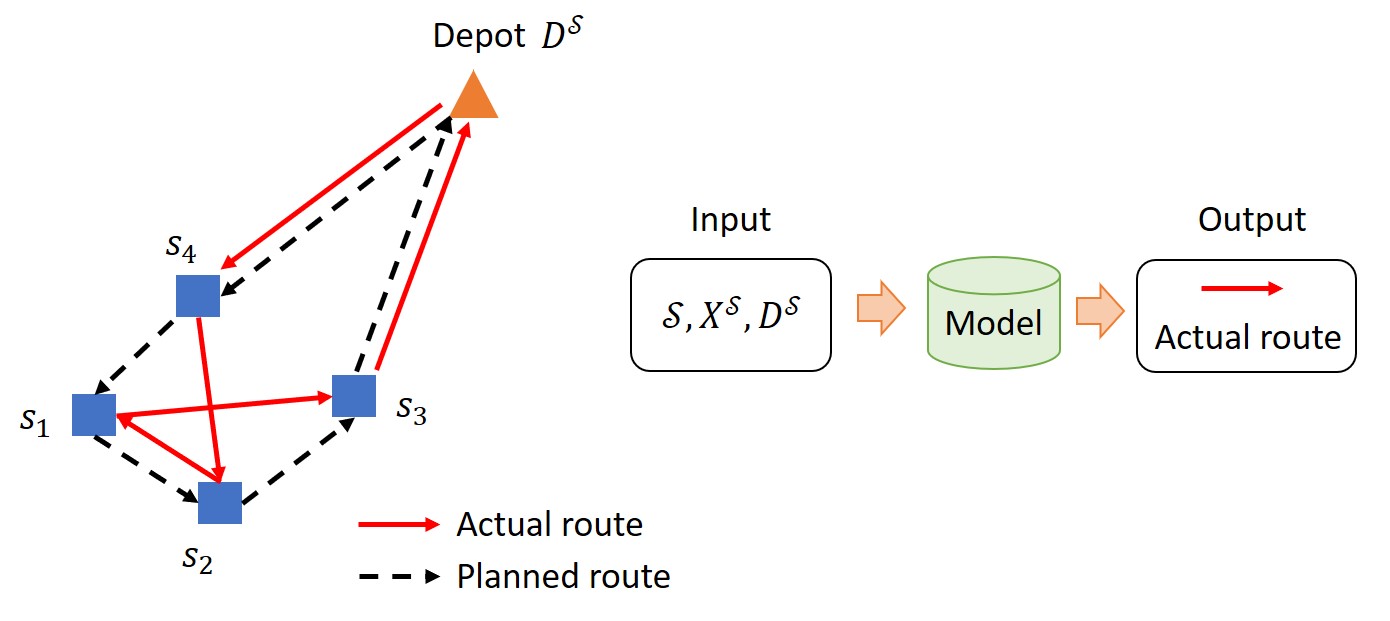
In last-mile delivery, drivers frequently deviate from planned delivery routes because of their tacit knowledge of the road and curbside infrastructure, customer availability, and other characteristics of the respective service areas. Hence, the actual stop sequences chosen by an experienced human driver may be potentially preferable to the theoretical shortest-distance routing under real-life operational conditions. Thus, being able to predict the actual stop sequence that a human driver would follow can help to improve route planning in last-mile delivery. This paper proposes a pair-wise attention-based pointer neural network for this prediction task using drivers' historical delivery trajectory data. In addition to the commonly used encoder-decoder architecture for sequence-to-sequence prediction, we propose a new attention mechanism based on an alternative specific neural network to capture the local pair-wise information for each pair of stops. To further capture the global efficiency of the route, we propose a new iterative sequence generation algorithm that is used after model training to identify the first stop of a route that yields the lowest operational cost. Results from an extensive case study on real operational data from Amazon's last-mile delivery operations in the US show that our proposed method can significantly outperform traditional optimization-based approaches and other machine learning methods (such as the Long Short-Term Memory encoder-decoder and the original pointer network) in finding stop sequences that are closer to high-quality routes executed by experienced drivers in the field. Compared to benchmark models, the proposed model can increase the average prediction accuracy of the first four stops from around 0.229 to 0.312, and reduce the disparity between the predicted route and the actual route by around 15%.
研究の動機と目的
- 従来の最適化手法では捉えきれない暗黙の知識を反映した、実際のドライバー ルートの軌道を最終マイル配送で予測すること。
- 局所的なストップ依存関係をペアワイズ アテンション メカニズムでモデル化し、より優れた順序予測を実現すること。
- 最適なルート開始地点を選択することで、運用コストを最小化する反復的生成アルゴリズムを開発すること。
- 伝統的なTSP/VRPソルバーおよび標準的なディープラーニング モデルよりも、人間が実行する高品質な配送順序を予測することに優れていること。
提案手法
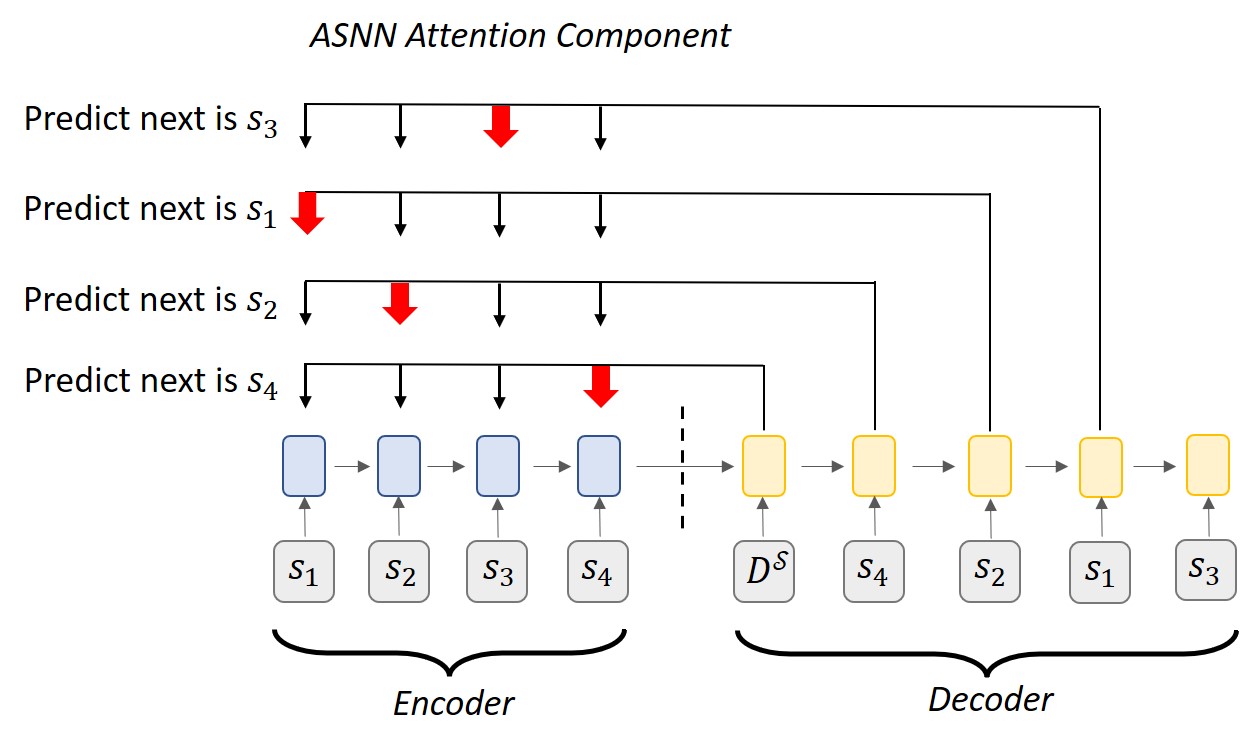
- エンコーダ・デコーダアーキテクチャを備えたシーケンス・ツー・シーケンスモデルが、ヒストリカルトラジェクトリーデータを用いてストップ シーケンスを処理する。
- 新規のペアワイズ アテンション メカニズムがストップペア間の局所的依存関係を捉え、順序選択のモデリングを強化する。
- 代替特定ニューラルネットワーク(ASNN)がストップペアの特徴に基づいてアテンションスコアを計算し、局所的ルート意思決定の正確性を向上させる。
- 反復的ルート生成アルゴリズムが、合計移動コストを最小化する最初のストップを選択することで、グローバルなルート効率を保証する。
- ゾーン内でのパスおよびトゥア TSP 問題を解くことで、ゾーンのエントリ/エグジット候補としての最近接ストップを用いて、完全なストップ シーケンスを生成する。
- ゾーンシーケンスは、各ゾーンの候補となる最初および最後のストップ間でTSPサブプロブレムを解くことで、完全なストップ シーケンスに変換される。
実験結果
リサーチクエスチョン
- RQ1履歴ドライバー トラジェクトリーデータでトレーニングされたディープラーニング モデルは、従来の最適化手法と比較して、実際のストップ シーケンスをより正確に予測できるか?
- RQ2ストップ間のペアワイズ アテンションを組み込むことで、標準的なポインタネットワークと比較して、軌道予測がどの程度向上するか?
- RQ3運用コストに基づく反復的生成戦略は、熟練ドライバーの行動から逸脱するルートをどの程度最小化できるか?
- RQ4LSTMエンコーダ・デコーダおよび標準的なポインタネットワークと比較して、モデルの性能は配送ルートの最初の4つのストップを予測する際にどの程度優れているか?
主な発見
- 提案モデルにより、最初の4つのストップの平均予測精度が約0.2から0.312に向上し、ベースラインモデルと比較して顕著な改善が得られた。
- ベンチマーク手法と比較して、予測されたルートと実際の配送ルートの乖離度が約15%低減された。
- ペアワイズ アテンション メカニズムは局所的ストップ依存関係を効果的に捉えており、標準的なアテンション メカニズムよりも優れた順序モデリングに寄与している。
- 反復的ルート生成アルゴリズムは、低コストの開始ストップを効果的に同定し、予測されたルートのグローバル効率性を向上させた。
- 本モデルは、伝統的な最適化ベースの手法およびディープラーニングのベースライン(例:LSTMエンコーダ・デコーダおよび元のポインタネットワーク)をすべて上回り、実世界の最終マイル配送シナリオで優れた性能を示した。
- ゾーンレベルのルーティングとゾーン内TSP最適化の統合により、予測されたシーケンスからスケーラブルかつ正確な完全ルート再構築が可能になった。
この論文を読む
Nubintのビューアで原文を開き、読みながら気になる箇所をすぐに質問できます。
Nubintでこの論文を読むこのレビューはAIが論文の原文をもとに作成しました。引用する前に原文をご確認ください。