
[論文レビュー] Reference Guided Image Inpainting using Facial Attributes
本稿では、1枚の参照画像からの顔の属性を用いて、マスク処理された入力画像の顔を現実的かつ一貫性を持って補完する、リファレンスガイドド画像補填手法を提案する。MS-SSIMと組み合わせた学習可能バイディレクショナルアテンションマップおよび新規の属性制約損失を統合することで、顔の構造を保持し、多様で現実的な出力を生成する能力を発揮し、CelebA-HQで最先端の手法を上回る性能を達成した。
Image inpainting is a technique of completing missing pixels such as occluded region restoration, distracting objects removal, and facial completion. Among these inpainting tasks, facial completion algorithm performs face inpainting according to the user direction. Existing approaches require delicate and well controlled input by the user, thus it is difficult for an average user to provide the guidance sufficiently accurate for the algorithm to generate desired results. To overcome this limitation, we propose an alternative user-guided inpainting architecture that manipulates facial attributes using a single reference image as the guide. Our end-to-end model consists of attribute extractors for accurate reference image attribute transfer and an inpainting model to map the attributes realistically and accurately to generated images. We customize MS-SSIM loss and learnable bidirectional attention maps in which importance structures remain intact even with irregular shaped masks. Based on our evaluation using the publicly available dataset CelebA-HQ, we demonstrate that the proposed method delivers superior performance compared to some state-of-the-art methods specialized in inpainting tasks.
研究の動機と目的
- 一般ユーザーが正確な入力を行うことが難しいユーザーガイドド顔画像補填の課題に対処すること。
- 1枚の参照画像から顔の属性を転送することで、ユーザーのガイドランスを簡素化すること。
- 不規則なマスクに対しても顔の構造の一貫性と現実性を向上させること。
- 異なる度合いでの参照属性の操作により、多様で現実的な顔の補填を生成すること。
- MS-SSIMと学習可能なアテンションを用いて、属性の一貫性と構造の正確性を確保するエンド・トゥ・エンドの学習を実現すること。
提案手法
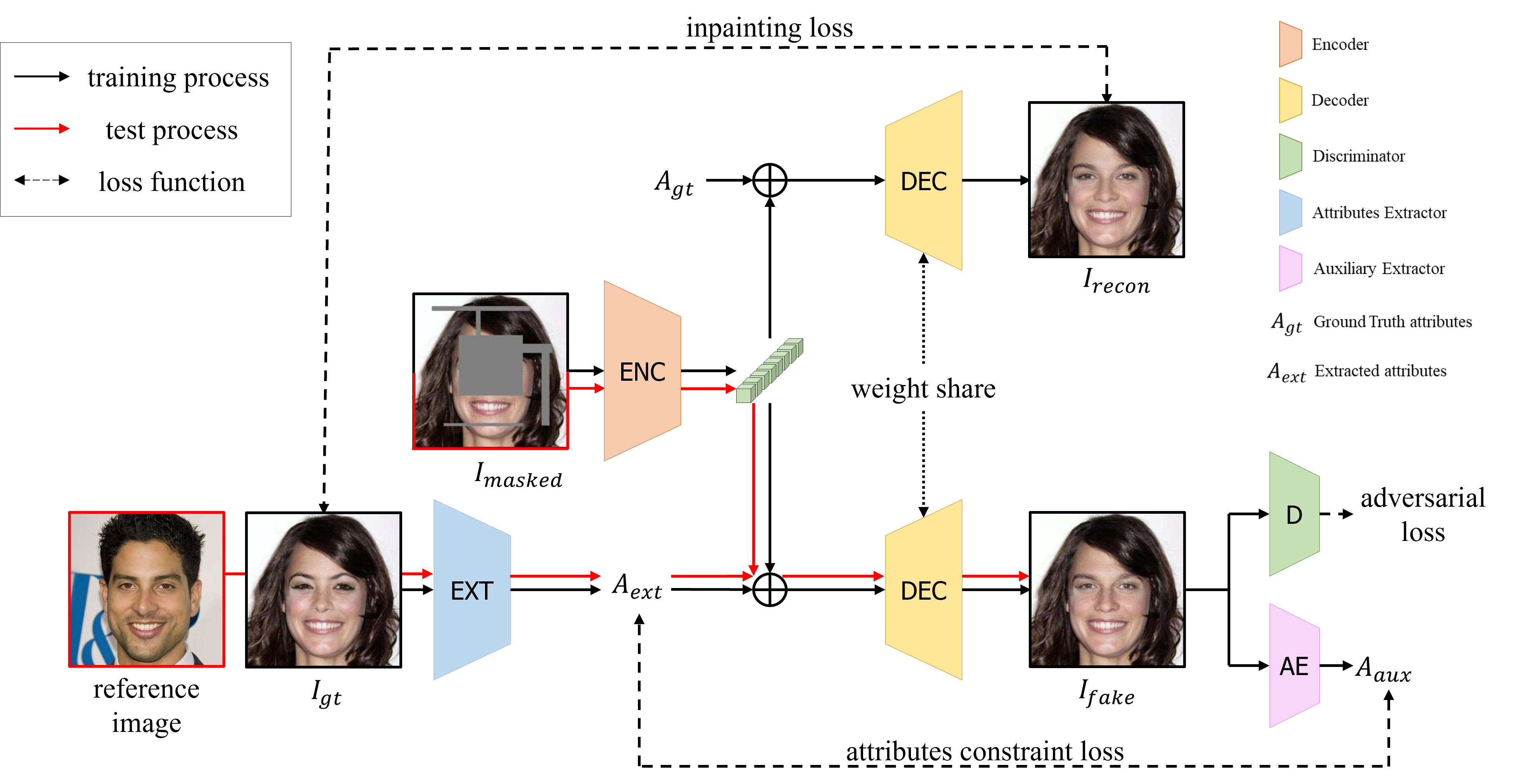
- 本モデルは、参照画像から顔の属性(例:性別、年齢、眼鏡)を抽出する属性抽出器を備えたエンド・トゥ・エンドアーキテクチャを採用する。
- 各層に学習可能なバイディレクショナルアテンションマップ(LBAM)を適用し、不規則な形状のマスク領域間での有効な特徴統合を可能にする。
- 参照画像の属性と生成画像の属性の差を最小化する属性制約損失を導入し、忠実な属性転送を保証する。
- 顔の構造とテクスチャの詳細を維持するため、マルチスケール構造的類似度(MS-SSIM)損失を用いる。
- 顔の属性アノテーションが付与されたCelebA-HQデータセットで学習を行い、知覚的損失とスタイル損失を用いて現実性を向上させる。
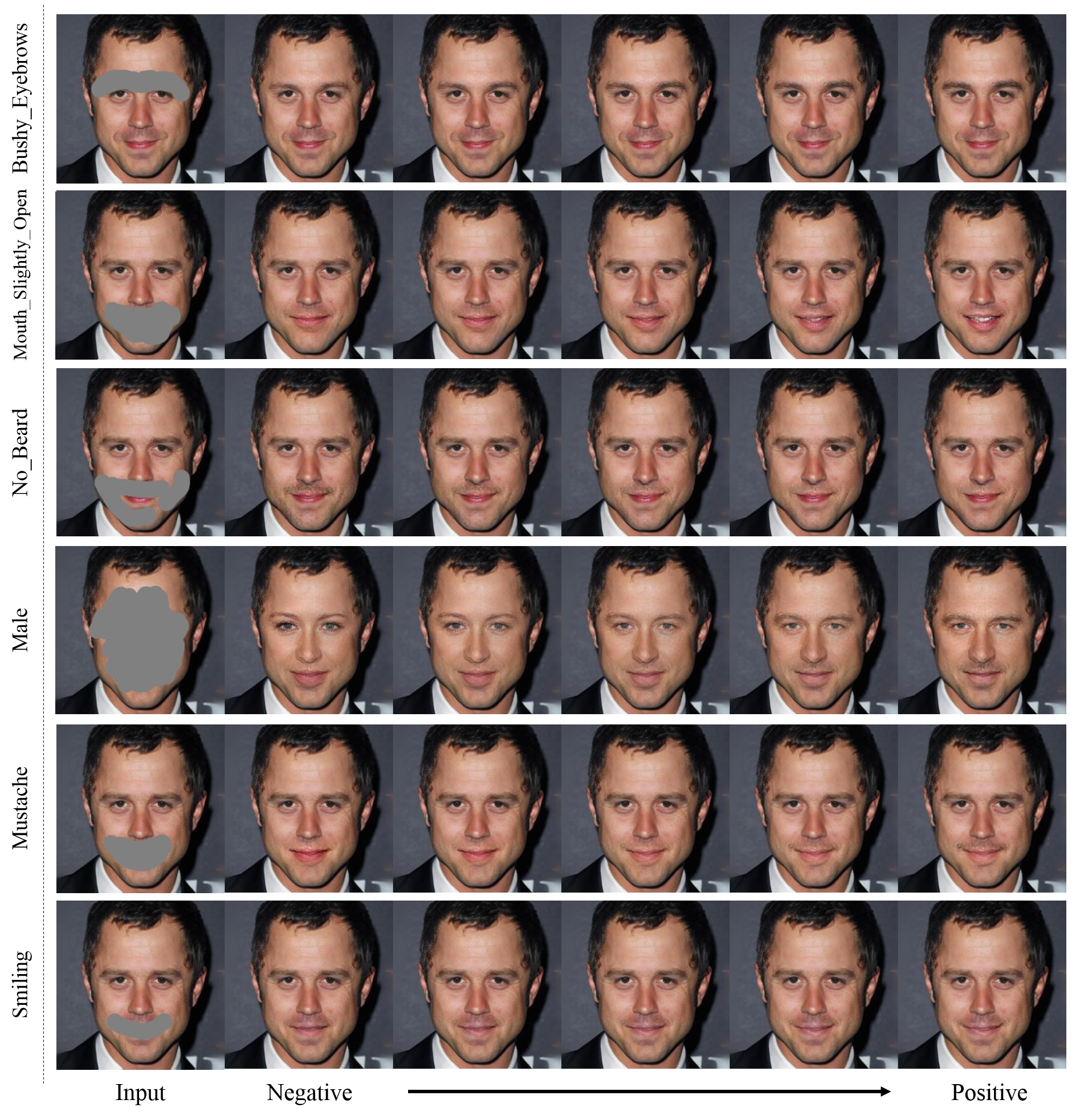
- 参照画像から属性値をランダムにサンプリングすることで、複数の出力を得られるようにし、1つの入力から多様な出力を生成可能にする。
実験結果
リサーチクエスチョン
- RQ1正確なユーザーのアノテーションを必要とせず、1枚の参照画像が顔補填を効果的にガイドできるか?
- RQ2参照画像からの属性転送が、補填領域における顔の構造とアイデンティティをどれほど正確に保持できるか?
- RQ3MS-SSIMと属性制約損失を統合することで、ベースライン手法と比較して構造的一致性と現実性が向上するか?
- RQ4参照画像からの属性値を変化させることで、多様で現実的な顔の補填を生成できるか?
- RQ5標準的な指標において、本手法は最先端の補填モデルと比較して定量的にどの程度の性能を示すか?
主な発見
- 本手法は、Quickdrawの不規則マスクベンチマークでSSIMスコア0.833を達成し、PConv(0.772)とEC(0.817)を上回った。
- マスクサイズ10-20%の条件下で、FIDスコア25.65を記録し、LBAM(27.63)とEC(27.49)を上回った。
- マスクサイズ40-50%の条件下でも、FIDスコア63.75を維持し、PConv(207.3)とEC(64.40)を著しく下回り、大規模な穴に対しても頑健であることが示された。
- QuickdrawマスクにおけるLPIPSスコア0.042は、すべての手法の中で最低であり、正解画像との知覚的類似度が高いことを示した。
- アブレーションスタディにより、MS-SSIM損失が顔の構造を保持するために不可欠であることが確認された一方で、知覚的損失とスタイル損失はぼやけを低減し、テクスチャの詳細を強化した。
- 正の極端から負の極端への属性の操作により、多様で現実的な顔の補填が成功裏に生成された。これは、効果的な属性制御が可能であることを示している。
この論文を読む
Nubintのビューアで原文を開き、読みながら気になる箇所をすぐに質問できます。
Nubintでこの論文を読むこのレビューはAIが論文の原文をもとに作成しました。引用する前に原文をご確認ください。