
[論文レビュー] SantaCoder: don't reach for the stars!
SantaCoder は The Stack の PII-redacted の Java、JavaScript、Python データで学習した 1.1B パラメータのデコーダー専用コードモデルで、以前のオープンソースモデルより小さいにもかかわらず、MultiPL-E でのテキスト-to-code およびインフィリング性能で競争力を発揮している。
The BigCode project is an open-scientific collaboration working on the responsible development of large language models for code. This tech report describes the progress of the collaboration until December 2022, outlining the current state of the Personally Identifiable Information (PII) redaction pipeline, the experiments conducted to de-risk the model architecture, and the experiments investigating better preprocessing methods for the training data. We train 1.1B parameter models on the Java, JavaScript, and Python subsets of The Stack and evaluate them on the MultiPL-E text-to-code benchmark. We find that more aggressive filtering of near-duplicates can further boost performance and, surprisingly, that selecting files from repositories with 5+ GitHub stars deteriorates performance significantly. Our best model outperforms previous open-source multilingual code generation models (InCoder-6.7B and CodeGen-Multi-2.7B) in both left-to-right generation and infilling on the Java, JavaScript, and Python portions of MultiPL-E, despite being a substantially smaller model. All models are released under an OpenRAIL license at https://hf.co/bigcode.
研究の動機と目的
- PII を redaction してトレーニングデータの前処理の影響を評価し、責任あるコード LLM を開発する。
- FIM (Fill-in-the-Middle) および Multi Query Attention (MQA) に関するアブレーションを通じてモデルアーキテクチャのリスクを低減する。
- データフィルタリング戦略(stars filter、comments-to-code 比率、near-deduplication、tokenizer fertility)の影響を評価する。
- 最終的に 1.1B モデルを訓練・公開し、既存のオープンソース多言語コードモデルと比較する。
- BigCode 努力の枠内でデータセットと前処理ツールをオープンアクセスで提供する。
提案手法
- The Stack のサブセット(Java、JavaScript、Python)上で FIM および MQA を用いた 1.1B デコーダー専用トランスフォーマーを訓練する。
- 事前トークン化されたデータで訓練された 49k トークンの Byte-Pair Encoding トークナイザーを使用する。
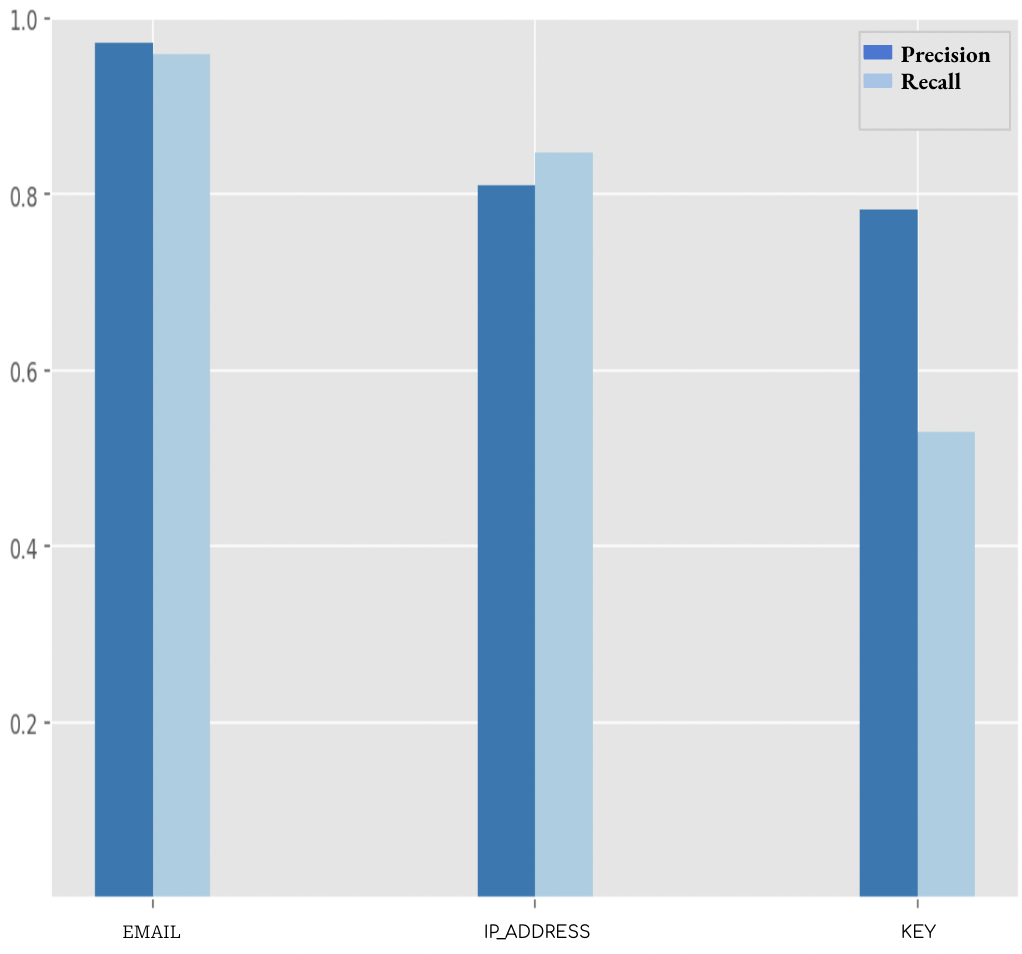
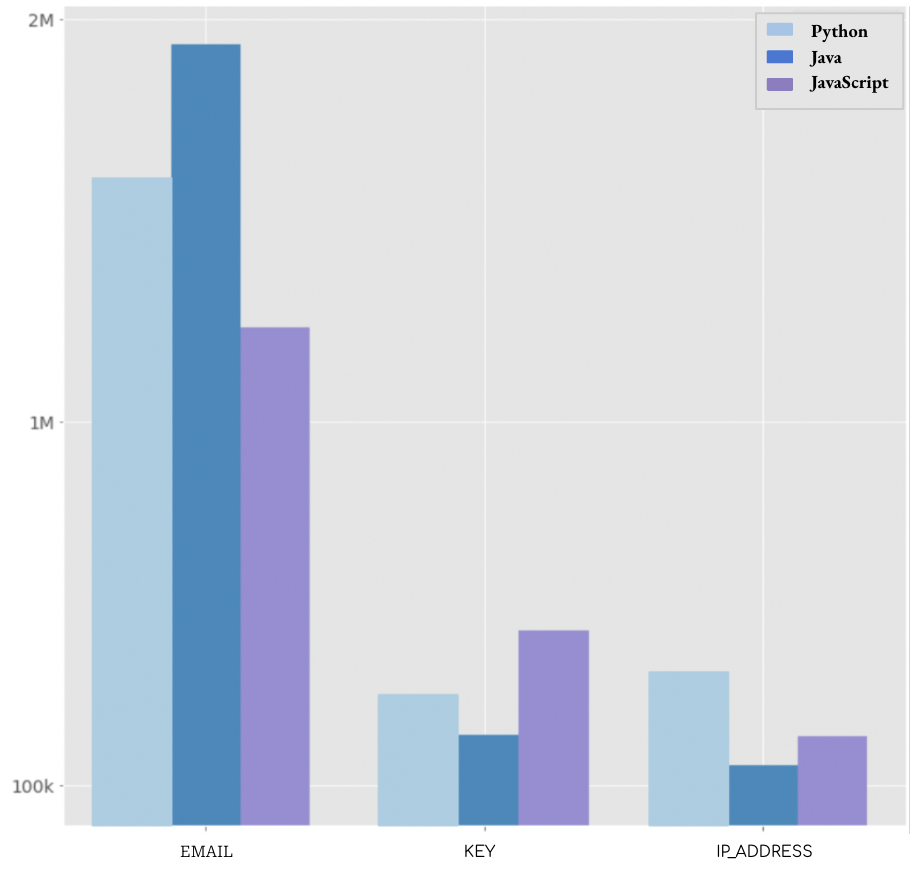
- メールアドレス、IP、秘密鍵を検出するフィルターと gibberish/ハッシュ検査を備えたパイプラインで PII redaction を実施する。
- アーキテクチャのアブレーション(FIM vs No-FIM; MQA vs MHA)とデータフィルタリングのアブレーション(stars、comments-to-code、near-deduplication、fertility)を行う。
- Java、JavaScript、Python に跨る MultiPL-E の text-to-code ベンチマークと fill-in-the-middle タスクを評価する。
- SantaCoder を InCoder、CodeGen、Codex ベースラインと比較し、OpenRAIL の下でリリースする。
実験結果
リサーチクエスチョン
- RQ1PII redaction はコードLLM の訓練におけるデータ品質とモデルの安全性にどう影響するか?
- RQ2FIM や MQA のようなアーキテクチャの選択がコード生成と infilling の性能に与える影響は何か?
- RQ3データフィルタリング戦略が text-to-code ベンチマークの下流性能にどのように影響するか?
- RQ4より小さい 1.1B モデルが、コード生成と infilling タスクでより大きなオープンソース多言語コードモデルを上回ることができるか?
- RQ5near-deduplication と stars-based filtering を用いた場合、データ量とデータ品質のトレードオフは何か?
主な発見
- PII redaction はベンチマークにおけるメールと IP の高い精度/再現率を達成し、鍵の精度は中程度である。
- FIM は左→右の text-to-code 性能に小さな劣化をもたらすが、インフィリングを効率化する。MQA は性能のわずかな変化とともに妥当なスピードアップを与える。
- GitHub stars フィルタはベンチマークと言語全般で一貫して性能を低下させる。
- Near-deduplication および comments-to-code フィルタは text-to-code ベンチマークで小〜中程度の性能向上をもたらし、tokenizer fertility は fill-in-the-middle の結果を助ける。
- SantaCoder (1.1B) は Java、JavaScript、Python における MultiPL-E の左から右への生成とインフィリングで InCoder-6.7B および CodeGen-Multi-2.7B を上回る。訓練反復を倍にすると、さらに text-to-code の性能が向上する。
この論文を読む
Nubintのビューアで原文を開き、読みながら気になる箇所をすぐに質問できます。
Nubintでこの論文を読むこのレビューはAIが論文の原文をもとに作成しました。引用する前に原文をご確認ください。