
[論文レビュー] Survey: Image Mixing and Deleting for Data Augmentation
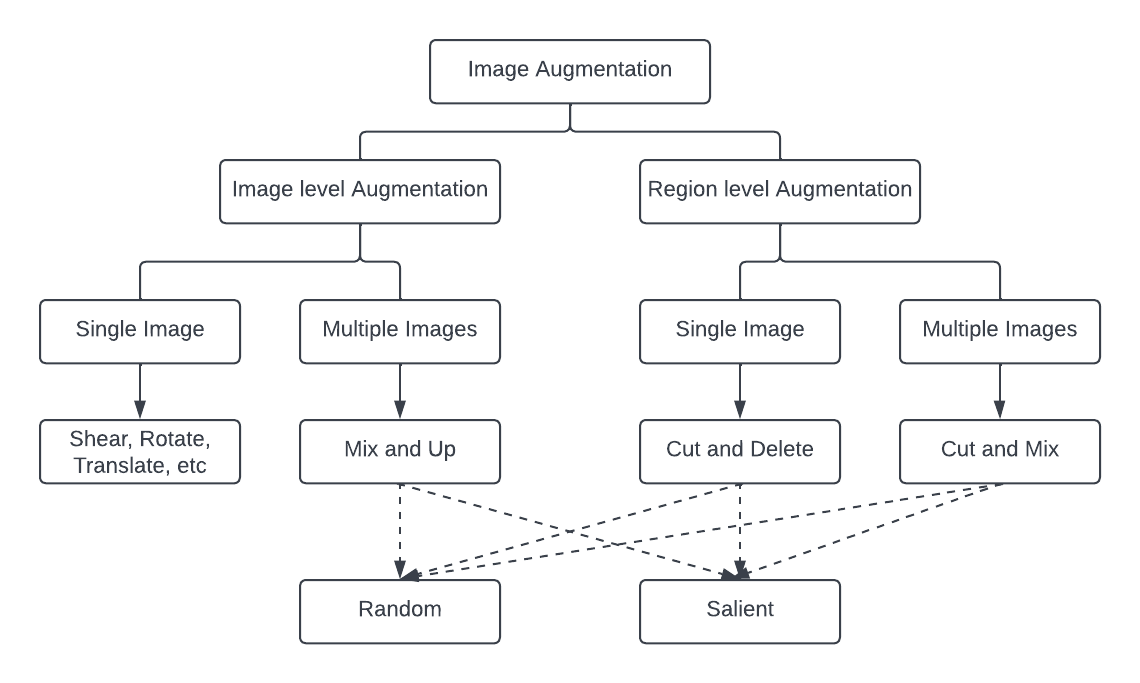
本調査は、深層学習におけるデータ拡張のための画像混合および削除技術について包括的な分析を提供し、それらをCut & Delete、Cut & Mix、Mix & Upの3つに分類している。これらの手法が、最小限の計算コストで、ベンチマークデータセット上で強く実証された結果を示す中で、モデルの汎化性能、ノイズや障害に対するロバスト性、画像分類や物体検出などのタスクにおける性能向上を実証している。
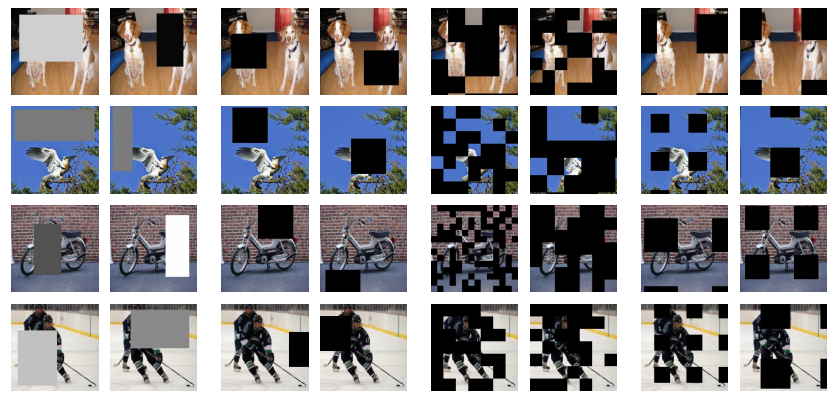
Neural networks are prone to overfitting and memorizing data patterns. To avoid over-fitting and enhance their generalization and performance, various methods have been suggested in the literature, including dropout, regularization, label smoothing, etc. One such method is augmentation which introduces different types of corruption in the data to prevent the model from overfitting and to memorize patterns present in the data. A sub-area of data augmentation is image mixing and deleting. This specific type of augmentation either deletes image regions or mixes two images to hide or make particular characteristics of images confusing for the network, forcing it to emphasize the overall structure of the object in an image. Models trained with this approach have proven to perform and generalize well compared to those trained without image mixing or deleting. An added benefit that comes with this method of training is robustness against image corruption. Due to its low computational cost and recent success, researchers have proposed many image mixing and deleting techniques. We furnish an in-depth survey of image mixing and deleting techniques and provide categorization via their most distinguishing features. We initiate our discussion with some fundamental relevant concepts. Next, we present essentials, such as each category's strengths and limitations, describing their working mechanism, basic formulations, and applications. We also discuss the general challenges and recommend possible future research directions for image mixing and deleting data augmentation techniques. Datasets and codes for evaluation are publicly available here.
研究の動機と目的
- 深層学習における画像混合および削除によるデータ拡張技術を体系的に分類し、分析すること。
- 各技術分野の強み、限界、および作動メカニズムを評価すること。
- 注視度に配慮した拡張および滑らかさ向上型拡張における主な課題と今後の研究方向性を特定すること。
- 研究者が最適な拡張戦略を選択するための比較分析を提供すること。
- これらの手法が、さまざまなビジョンタスクにおけるモデルのロバスト性、キャリブレーション、汎化性能の向上に与える利点を強調すること。
提案手法
- データ操作アプローチに基づき、画像混合および削除技術をCut & Delete、Cut & Mix、Mix & Upの3つの主要タイプに分類すること。
- 各カテゴリの作動メカニズムを分析し、領域レベルと画像レベルの拡張、およびランダムまたは注視度誘導戦略の使用を含めること。
- ImageNet、CIFAR-100、COCOなどの標準ベンチマークを用いたパフォーマンス指標を用いた手法の評価。
- モデルの注視度と特徴学習を評価するため、クラス活性化マップ(CAMs)への拡張の影響を検討すること。
- 計算コストを低減するための、拡張と分類ネットワークのエンドツーエンド訓練のための将来のフレームワークを提案すること。
- 特徴空間での混合(例:Manifold MixUp)および注視度に配慮した混合(例:Co-MixUp、PuzzleMix)の使用を調査し、画像の滑らかさと構造的一致性の向上を図ること。
実験結果
リサーチクエスチョン
- RQ1画像分類や物体検出などのビジョンタスクにおいて、異なる画像混合および削除技術は、パフォーマンス、ロバスト性、汎化性能の観点でどのように比較されるか?
- RQ2特に構造的一致性と計算コストの観点から、既存の注視度誘導型拡張手法の主な限界は何か?
- RQ3これらの拡張戦略は、モデルのキャリブレーション、敵対的ロバスト性、分布外検出にどのように影響を与えるか?
- RQ4CutMixおよびCutOutの正則化効果を、MixUpと比較して理論的または実証的根拠で裏付けるものはあるか?
- RQ5画像の滑らかさと現実性を向上させつつ、顕著な特徴を保持するための今後の方向性は何か?
主な発見
- 画像混合および削除技術は、モデルの汎化性能と画像のノイズ、遮蔽、敵対的例に対するロバスト性を顕著に向上させる。
- これらの手法で訓練されたモデルは、ベースラインモデルと比較して、画像分類、物体検出、細分化認識タスクで優れたパフォーマンスを達成する。
- Cut & MixおよびMix & Up手法は顕著な性能向上を示し、ImageNetおよびCIFAR-100で報告された改善効果があるが、抽象部では具体的な正確度値は明示されていない。
- 注視度に配慮した手法(例:Co-MixUp、PuzzleMix)は特徴学習を向上させるが、二重ネットワーク訓練のため、計算コストが高くなる。
- 特に領域レベルの拡張では、不規則なエッジや破壊された形状により、合成画像の構造的整合性が損なわれることが多い。
- 今後の研究は、エンドツーエンド訓練フレームワークおよび特徴空間での混合を重視すべきであり、滑らかさの向上と正則化効果の理論的理解を深めるべきである。
この論文を読む
Nubintのビューアで原文を開き、読みながら気になる箇所をすぐに質問できます。
Nubintでこの論文を読むこのレビューはAIが論文の原文をもとに作成しました。引用する前に原文をご確認ください。