
[論文レビュー] The foreground transfer function for HI intensity mapping signal reconstruction: MeerKLASS and precision cosmology applications
本稿は、MeerKLASS調査におけるH i強度マッピングで、前景の伝達関数を用いたパワー スペクトル再構成の有効性を検証し、大スケールで50%を超える負のバイアスが生じても、信号回復において1パーセント未満の精度を達成することを示している。シミュレーションを用いて、伝達関数の構築と適用のための堅牢なレシピを確立し、模擬のフィducialパラメータの誤差にも耐性を示し、激しい前景除去を行っても正確な宇宙論的推論が可能であることを示している。
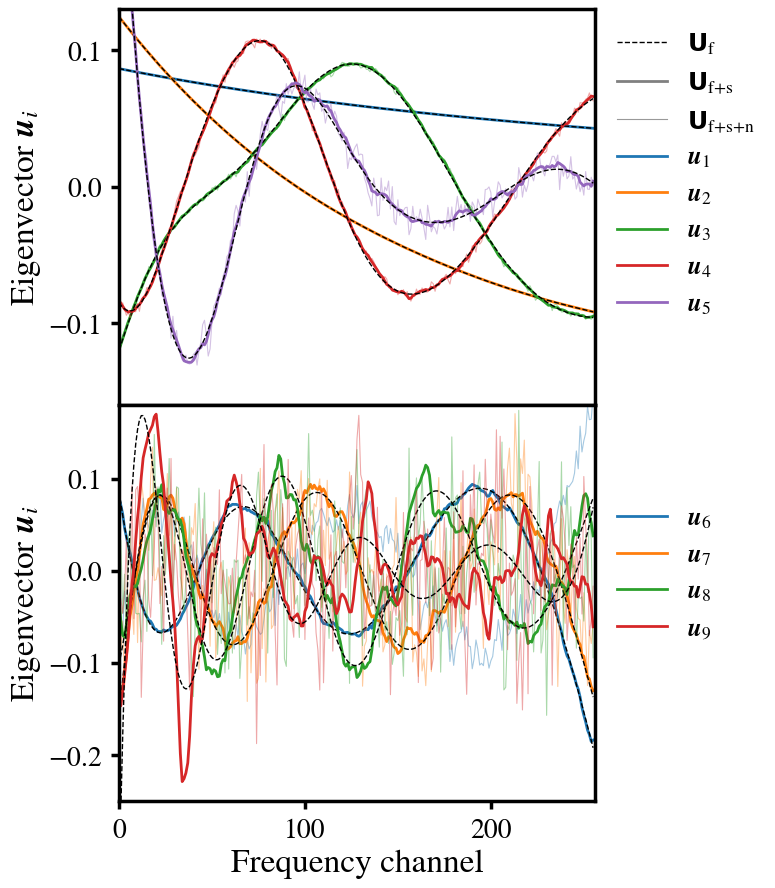
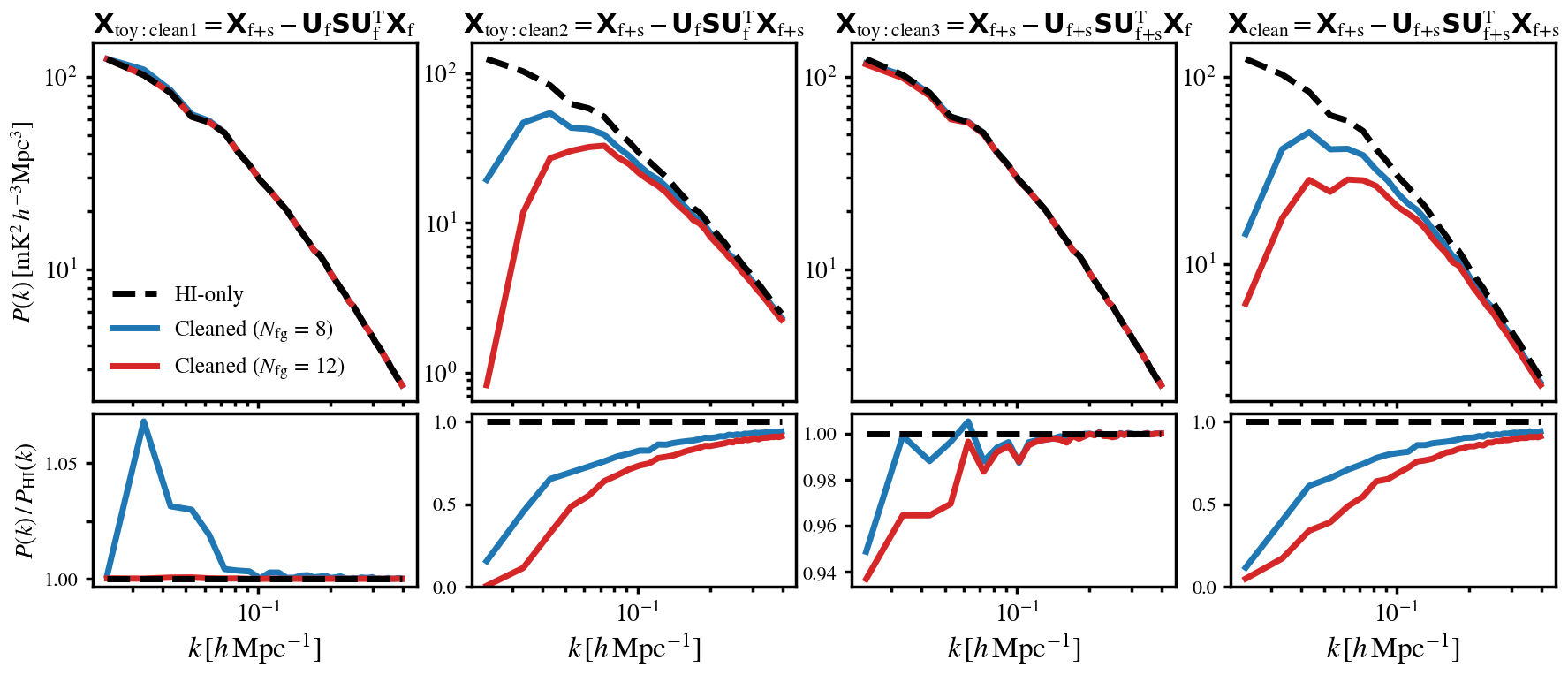
Blind cleaning methods are currently the preferred strategy for handling foreground contamination in single-dish HI intensity mapping surveys. Despite the increasing sophistication of blind techniques, some signal loss will be inevitable across all scales. Constructing a corrective transfer function using mock signal injection into the contaminated data has been a practice relied on for HI intensity mapping experiments. However, assessing whether this approach is viable for future intensity mapping surveys where precision cosmology is the aim, remains unexplored. In this work, using simulations, we validate for the first time the use of a foreground transfer function to reconstruct power spectra of foreground-cleaned low-redshift intensity maps and look to expose any limitations. We reveal that even when aggressive foreground cleaning is required, which causes ${>}\,50\%$ negative bias on the largest scales, the power spectrum can be reconstructed using a transfer function to within sub-percent accuracy. We specifically outline the recipe for constructing an unbiased transfer function, highlighting the pitfalls if one deviates from this recipe, and also correctly identify how a transfer function should be applied in an auto-correlation power spectrum. We validate a method that utilises the transfer function variance for error estimation in foreground-cleaned power spectra. Finally, we demonstrate how incorrect fiducial parameter assumptions (up to ${\pm}100\%$ bias) in the generation of mocks, used in the construction of the transfer function, do not significantly bias signal reconstruction or parameter inference (inducing ${<}\,5\%$ bias in recovered values).
研究の動機と目的
- 低赤方偏移のH i強度マッピング調査における、前景伝達関数を用いたパワー スペクトル再構成の実用可能性を評価すること。特に、精密宇宙論を目的としている。
- 信号回復や宇宙論的パラメータ推定にバイアスをもたらす可能性のある、伝達関数構築における系統的誤差を特定および是正すること。
- 激しい前景除去や不完全な模擬シミュレーションを伴う現実的な調査条件において、伝達関数手法の頑健性を示すこと。
- 自己相関パワー スペクトル解析における、伝達関数の構築と適用のための検証済みで再現可能なレシピを提供すること。
- 模擬生成に用いられるフィducial宇宙論的パラメータの不確実性に対する、伝達関数の誤差推定への有用性と耐性を評価すること。
提案手法
- 機器効果、ノイズ、および前景汚染を含む、MeerKLASS調査の現実的なH i強度マッピング観測をシミュレートする。
- シミュレートされたデータにブラインドな前景除去手法を適用し、スケール依存の信号損失を引き起こす。
- 清浄化されたデータに合成されたH iパワー スペクトルを注入し、回復されたパワー スペクトルと真のパワー スペクトルの比を測定することで、伝達関数を形成する。
- ノイズ、ビーム効果、および調査の幾何的配置を考慮した一貫性のある検証済みのレシピを用いて、伝達関数を構築する。
- 信号損失を全スケールにわたって補正するため、伝達関数を適用して真のパワー スペクトルを再構成する。
- 複数のシミュレーションにおける伝達関数の分散を用いて、再構成されたパワー スペクトルの誤差を推定する。
実験結果
リサーチクエスチョン
- RQ1激しい前景除去によって大スケールで50%を超える負のバイアスが生じる状況下でも、前景伝達関数が真のH iパワー スペクトルを正確に再構成できるか?
- RQ2信号回復や宇宙論的パラメータ推定に系統的バイアスをもたらさない伝達関数の構築における重要なステップは何か?
- RQ3フィducial宇宙論的パラメータの誤差が、シミュレーションのモック生成に用いられた場合、伝達関数再構成への感度はどの程度か?
- RQ4伝達関数の分散を、再構成されたパワー スペクトルの不確実性推定に信頼性を持って用いることができるか?
- RQ5複雑なビームパターンや$1/f$ノイズを有する単一電波望遠鏡H i強度マッピングデータに適用した場合、伝達関数手法の限界は何か?
主な発見
- 前景除去によって大スケールで50%を超える負のバイアスが生じても、伝達関数は真のH iパワー スペクトルを1パーセント未満の精度で再構成できる。
- 適切に構築された伝達関数は、模擬シミュレーションに用いられたフィducialパラメータの誤差に対しても頑健であり、パラメータの±100%のずれに対しても、回復された信号値のバイアスは5%未満にとどまる。
- 伝達関数の分散は、再構成されたパワー スペクトルの不確実性を信頼性を持って推定でき、宇宙論的解析における誤差の適切な伝搬が可能である。
- 伝達関数構築の推奨レシピから逸脱すると(例えば、正規化の誤りやスケール依存の取り扱いの誤り)、信号回復に顕著な系統的バイアスが生じる可能性がある。
- 本手法は、さまざまな調査規模や観測効果に対しても有効であり、将来的な強度マッピング調査への広範な適用可能性を示している。
- 本研究は、ブラインドな前景除去やフォワードモデリングの進展にもかかわらず、将来のデータ解析パイプラインにおける不確実性を考慮すると、伝達関数の継続的有用性を強調している。
この論文を読む
Nubintのビューアで原文を開き、読みながら気になる箇所をすぐに質問できます。
Nubintでこの論文を読むこのレビューはAIが論文の原文をもとに作成しました。引用する前に原文をご確認ください。