
[論文レビュー] Tianyu: search for the second solar system and explore the dynamic universe
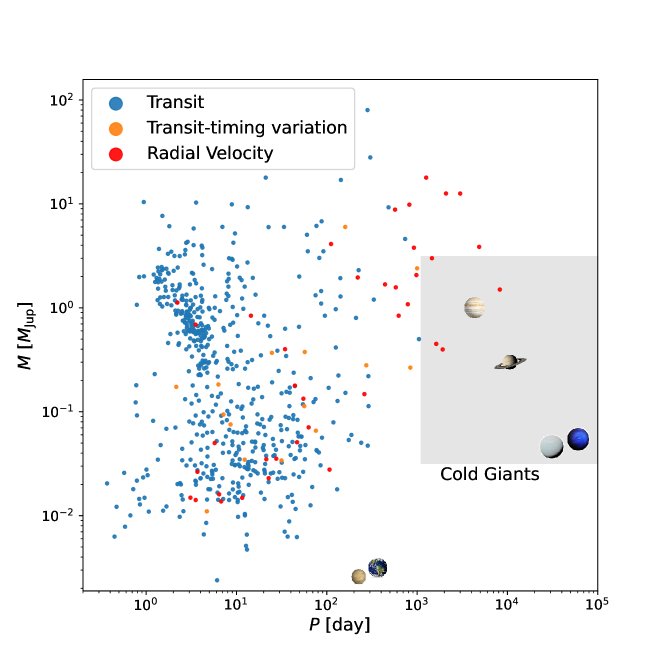
Tianyuプロジェクトは、中国・レングフーに位置する2台の1メートル望遠鏡を用い、高コマレート光度測定により長周期の transit を示す系外惑星、特に冷たい巨大惑星を検出するとともに、時間領域現象を調査する計画である。V<14の星に対して0.1%の光度測定精度を達成し、5年間で300個以上の軌道移行系外惑星(うち約12個が冷たい巨大惑星)と1〜2個の太陽系類似天体を発見することを目的としており、Earth 2.0などの追従観測施設を用いて確認が可能となる。
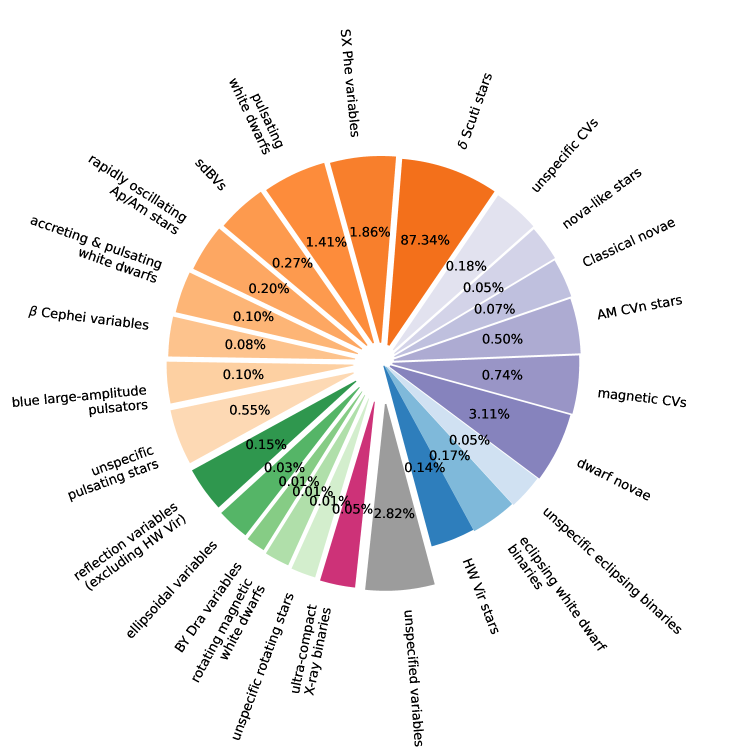
Giant planets like Jupiter and Saturn, play important roles in the formation and habitability of Earth-like planets. The detection of solar system analogs that have multiple cold giant planets is essential for our understanding of planet habitability and planet formation. Although transit surveys such as Kepler and TESS have discovered thousands of exoplanets, these missions are not sensitive to long period planets due to their limited observation baseline. The Tianyu project, comprising two 1-meter telescopes (Tianyu-I and II), is designed to detect transiting cold giant planets in order to find solar system analogs. Featuring a large field of view and equipped with a high-speed CMOS camera, Tianyu-I will perform a high-precision photometric survey of about 100 million stars, measuring light curves at hour-long cadence. The candidates found by Tianyu-I will be confirmed by Tianyu-II and other surveys and follow-up facilities through multi-band photometry, spectroscopy, and high resolution imaging. Tianyu telescopes will be situated at an elevation about 4000 meters in Lenghu, China. With a photometric precision of 1% for stars with V < 18 mag, Tianyu is expected to find more than 300 transiting exoplanets, including about 12 cold giant planets, over five years. A five-year survey of Tianyu would discover 1-2 solar system analogs. Moreover, Tianyu is also designed for non-exoplanetary exploration, incorporating multiple survey modes covering timescales from sub-seconds to months, with a particular emphasis on events occurring within the sub-second to hour range. It excels in observing areas such as infant supernovae, rare variable stars and binaries, tidal disruption events, Be stars, cometary activities, and interstellar objects. These discoveries not only enhance our comprehension of the universe but also offer compelling opportunities for public engagement in scientific exploration.
研究の動機と目的
- 複数の冷たい巨大惑星を有する太陽系類似天体の探索を通じて、惑星の居住可能性および形成に関する理解を深めること。
- ケプラーとTESSのような軌道移行調査では、短い観測期間のため長周期惑星に感度が欠けるという限界を克服すること。
- 広視野望遠鏡に高スルーレートCMOS撮像を組み合わせ、約1億顆の星に対して高精度な光度測定調査を実施すること。
- Tianyu-IIおよび他の施設を用いた多波長光度測定、分光測定、高分解能画像を活用して、系外惑星候補の確認を可能にすること。
- 系外惑星の検出を越えて、1秒未満から数か月にわたる時間スケールで、高速光度変動現象、レアな変光星、および太陽系天体を調査すること。
提案手法
- 青海・レングフーの標高4,000メートルの地点に、Tianyu-IおよびTianyu-IIの2台の1メートル望遠鏡を設置し、最適な大気条件を活用する。
- Tianyu-Iに大画素・高スルーレートCMOSカメラを搭載し、広視野で1時間のコマレート光度測定を実現する。
- 3モードの調査戦略を実施:80%が中コマレート(1時間)、10%が高コマレート(1秒未塔から1秒)、10%が低コマレート(1時間から1か月)。
- V<14の星に対して0.1%未満、V<18の星に対して1%未満の光度測定精度を達成し、深く長周期の軌道移行を検出可能にする。
- Tianyu-IIを用いて、多波長フィルター、分光計、および適応光学を活用して候補の分類と検証を実施する。
- TESS、ケプラー、および他の調査データを統合し、長周期軌道移行惑星の感度を向上させ、検出効率を向上させる。
実験結果
リサーチクエスチョン
- RQ11億顆の星を5年間かけて高コマレート光度測定する調査において、軌道移行を示す冷たい巨大惑星の予想される発見数はどれくらいか?
- RQ2地球型惑星の出現率が10%であると仮定した場合、同一平面に複数の冷たい巨大惑星を有する太陽系類似天体は、どの程度検出可能か?
- RQ3Tianyuがインファンティル超新星、潮汐破壊イベント、重力波イベントの電磁気的対応体といった高速光度変動現象を検出できる能力はどの程度か?
- RQ4この調査は、珍しい変光星、Be星、およびコメットやインターステラールオブジェクトのような活動的小天体をどの程度効果的に特定できるか?
- RQ5Tianyu調査は、近地小惑星および海王星外天体の検出および特徴付けに、どの程度貢献できるか?
主な発見
- Tianyuは、運用開始後5年間で300個以上の軌道移行系外惑星候補(うち約12個が冷たい巨大惑星)を検出すると予想される。
- V<14の星に対して0.1%、V<18の星に対して1%の光度測定精度を達成しており、深く長周期の軌道移行に高い感度を発揮する。
- 同一平面性と地球型惑星の出現率10%を仮定した場合、1〜2個の太陽系類似天体が発見されると予想され、将来的なミッション(例:Earth 2.0)によって確認可能となる。
- 高コマレートモードでは、5年間で約20,000個の高振幅変光星(HADS)と15件の潮汐破壊イベント(TDE)が予想される。
- 中コマレート調査では、約1,500個の超新星と12個の超コンパクト連星が検出され、58個の近地小惑星およびコメットが検出される見込みである。
- 低コマレート調査では、遠方の海王星外天体およびその他の太陽系外縁部天体が検出され、太陽系外縁部の研究に貢献する。
この論文を読む
Nubintのビューアで原文を開き、読みながら気になる箇所をすぐに質問できます。
Nubintでこの論文を読むこのレビューはAIが論文の原文をもとに作成しました。引用する前に原文をご確認ください。