
[논문 리뷰] A Safe Harbor for AI Evaluation and Red Teaming
본 논문은 독립적이고 공익적 평가 및 생성형 AI 시스템에 대한 레드팀을 법적 책임 및 계정 정지 위험으로부터 보호하기 위한 법적 및 기술적 안전항구를 제안한다.
Independent evaluation and red teaming are critical for identifying the risks posed by generative AI systems. However, the terms of service and enforcement strategies used by prominent AI companies to deter model misuse have disincentives on good faith safety evaluations. This causes some researchers to fear that conducting such research or releasing their findings will result in account suspensions or legal reprisal. Although some companies offer researcher access programs, they are an inadequate substitute for independent research access, as they have limited community representation, receive inadequate funding, and lack independence from corporate incentives. We propose that major AI developers commit to providing a legal and technical safe harbor, indemnifying public interest safety research and protecting it from the threat of account suspensions or legal reprisal. These proposals emerged from our collective experience conducting safety, privacy, and trustworthiness research on generative AI systems, where norms and incentives could be better aligned with public interests, without exacerbating model misuse. We believe these commitments are a necessary step towards more inclusive and unimpeded community efforts to tackle the risks of generative AI.
연구 동기 및 목표
- 독립적인 평가 및 생성형 AI 시스템의 레드팀핑을 촉진하여 위험을 식별한다.
- 연구자들이 선의의 안전 연구를 수행하는 것을 저해하는 법률, 정책 및 실질적 장벽을 강조한다.
- 연구자를 보호하기 위한 두 가지 자발적 약속—법적 및 기술적 안전항구—를 제안한다.
- 취약점 공개 규범과 신뢰할 수 있는 제3자를 활용한 구현 경로를 개요화한다.
- AI 안전성과 책임성을 개선하기 위해 더 넓고 독립적인 참여를 옹호한다.
제안 방법
- 안전항구, 선의의 연구, 취약점 공개의 핵심 용어를 정의하고 맥락화하여 규제 친화적 프레임워크를 지원한다.
- 주요 AI 개발자의 서비스 약관, 시행 관행, 연구자 접근 프로그램을 현재와 비교 분석한다.
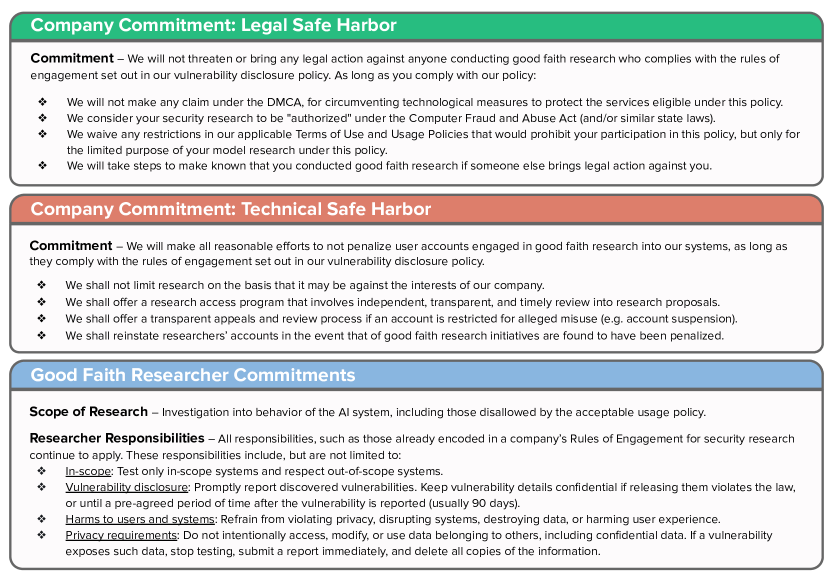
- 두 개의 조정된 약속—법적 안전항구와 독립 안전 연구를 위한 기술적 안전항구—를 옹호한다.
- 접근 권한의 위임을 신뢰할 수 있는 제3자(예: 대학, 비영리 단체)로 확대하여 접근을 확장하고 정치적 편향을 줄인다.
- 독립적 검토, 항소 및 투명한 절차를 위한 메커니즘을 개요화하여 연구자를 보호하면서 남용을 방지한다.
- 제안을 기존 안전 연구 및 거버넌스 문헌(예: 버그 바운티, NAIRR, 정책 지침) 내에서 위치시킨다.
실험 결과
연구 질문
- RQ1현재 서비스 약관 및 시행 관행은 독립 AI 평가와 레드팀핑을 어떻게 저해하는가?
- RQ2선의의 안전 연구를 수행하는 연구자를 보호하기 위해 어떤 법적 및 기술적 보호책이 필요한가?
- RQ3오용을 가능하게 하지 않으면서 독립적 평가를 확장하기 위해 안전항구를 실제로 어떻게 구현할 수 있는가?
- RQ4연구 접근 권한을 부여하는 데 대학, 비영리단체 또는 공익 단체는 어떤 역할을 해야 하는가?
- RQ5독립적 안전 연구를 유지하기 위해 어떤 거버넌스 메커니즘(항소, 투명성)이 필요한가?
주요 결과
- 독립 AI 평가는 정책의 비일관성과 불투명성, 계정 정지의 위협으로 방해받고 있다.
- 현재 연구자 접근 프로그램은 대표성이 부족하고, 자금이 부족하며, 기업 인센티브로부터 독립성이 결여되어 있다.
- 법적 안전항구와 기술적 안전항구의 한 쌍의 자발적 약속은 참여를 크게 늘리고 연구자를 보호할 수 있다.
- 신뢰할 수 있는 제3자에 접근 권한 위임과 투명한 항소 제도는 기업 편애와 냉담 효과를 감소시킬 수 있다.
- 법적 안전항구는 확립된 취약점 공개 정책 하에서 선의의 연구를 보호하고, 기술적 안전항구는 연구자의 계정 종료로부터 보호한다.
- 이러한 보호책은 모델 오용에 대한 안전장치를 약화시키지 않으면서 공익과 안전 연구를 정렬한다.
이 논문 읽기
누빈트 뷰어에서 원문을 열고, 읽으면서 궁금한 곳을 바로 물어보세요.
누빈트에서 이 논문 읽기이 리뷰는 AI가 논문 원문을 바탕으로 만들었습니다. 인용하기 전에 원문을 확인해 주세요.