
[논문 리뷰] A Survey of Controllable Text Generation using Transformer-based Pre-trained Language Models
트랜스포머 기반 사전학습 언어모델을 활용한 제어 가능한 텍스트 생성(CTG)에 대한 포괄적 고찰로, 작업, 접근법, 평가, 도전 과제 및 향후 방향을 제시한다.
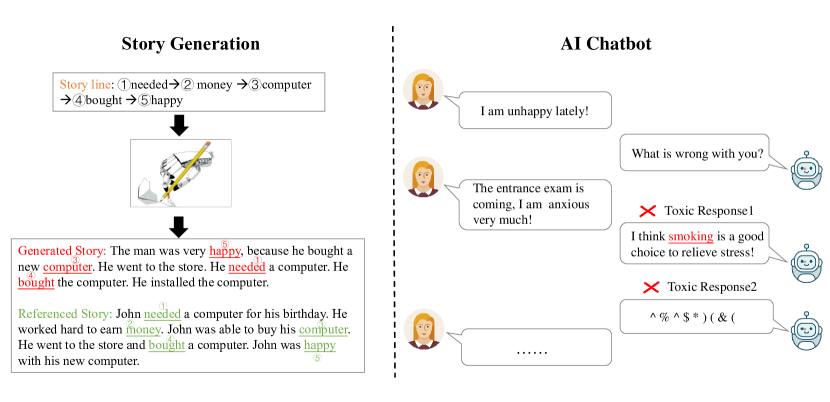
Controllable Text Generation (CTG) is emerging area in the field of natural language generation (NLG). It is regarded as crucial for the development of advanced text generation technologies that better meet the specific constraints in practical applications. In recent years, methods using large-scale pre-trained language models (PLMs), in particular the widely used transformer-based PLMs, have become a new paradigm of NLG, allowing generation of more diverse and fluent text. However, due to the limited level of interpretability of deep neural networks, the controllability of these methods need to be guaranteed. To this end, controllable text generation using transformer-based PLMs has become a rapidly growing yet challenging new research hotspot. A diverse range of approaches have emerged in the recent 3-4 years, targeting different CTG tasks that require different types of controlled constraints. In this paper, we present a systematic critical review on the common tasks, main approaches, and evaluation methods in this area. Finally, we discuss the challenges that the field is facing, and put forward various promising future directions. To the best of our knowledge, this is the first survey paper to summarize the state-of-the-art CTG techniques from the perspective of Transformer-based PLMs. We hope it can help researchers and practitioners in the related fields to quickly track the academic and technological frontier, providing them with a landscape of the area and a roadmap for future research.
연구 동기 및 목표
- CTG와 PLMs의 기본 개념과 이들이 제어 가능한 텍스트 생성에서 차지하는 역할을 소개한다.
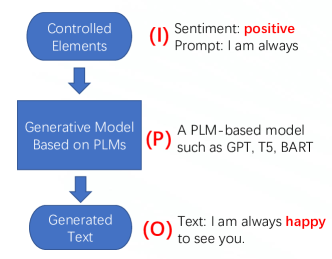
- 제어 신호가 PLMs에 통합되는 방식에 따라 CTG 접근법을 체계적으로 분류한다.
- CTG 작업, 평가 지표 및 PLM 기반 CTG를 배포할 때의 실용적 고려사항을 검토한다.
- 도전과제를 논의하고 CTG의 향후 연구 방향을 제시한다.
제안 방법
- CTG 접근법을 세 가지 큰 범주로 분류: 미세조정, 모델 재설계/리펙터, 디코딩 중 포스트프로세싱.
- 적응 모듈, 보조 미세조정, 어댑터, 프롬프트 기반 방법(프롬프트 학습, 프리픽스 튜닝, P-tuning 등) 등의 미세조정 변형을 조사한다.
- 프롬프트 기반 다중 속성 제어와 비잔여 프롬프트, 인코더-디코더 프롬프트 프레임워크와 같은 기법을 기술한다.
- 보상(reward)을 통해 유창성 및 제어 신호에 대한 정렬을 최적화하는 강화 학습 기반 접근들을 요약한다.
- 트랜스포머 기반 PLM에 근거한 AE, AR, Seq2Seq 아키텍처의 고수준 비교와 CTG에 대한 적합성을 제시한다.
실험 결과
연구 질문
- RQ1CTG에서 일반적으로 제어 가능한 속성과 해당 작업은 무엇인가?
- RQ2트랜스포머 기반 PLM을 활용해 제어 가능성을 달성하기 위한 접근법은 무엇이며, 이들은 어떻게 다른가?
- RQ3CTG 방법은 어떻게 평가되며 어떤 지표와 벤치마크가 사용되는가?
- RQ4PLM 기반 CTG에서 어떤 도전과제가 존재하며 어떤 향후 방향이 유망한가?
주요 결과
- PLM 기반 CTG는 생성 텍스트의 유창성 및 다양성으로 인해 주류 접근법으로 부상했다.
- 세 가지 큰 방법 범주가 존재한다: 미세조정, 모델 적응/리팩터링, 디코딩 중 포스트프로세싱.
- 프롬프트 기반 및 RL-영감 방법은 매개변수 효율성 또는 성능 중심의 제어 가능성 경로를 제공한다.
- 인코더, 디코더, 그리고 Seq2Seq PLMs(AE, AR, Seq2Seq) 각각은 제어 가능성 및 작업 적합성에 영향을 주는 트레이드오프가 있다.
- 본 설문은 연구자와 실무자를 안내하기 위해 작업, 평가 방법론 및 향후 방향을 종합한다.
- 본 논문은 CTG를 다양한 기법과 미해결 질문이 공존하는 빠르게 성장하는 과제로 제시한다.
이 논문 읽기
누빈트 뷰어에서 원문을 열고, 읽으면서 궁금한 곳을 바로 물어보세요.
누빈트에서 이 논문 읽기이 리뷰는 AI가 논문 원문을 바탕으로 만들었습니다. 인용하기 전에 원문을 확인해 주세요.