
[논문 리뷰] A Survey on Fairness-aware Recommender Systems
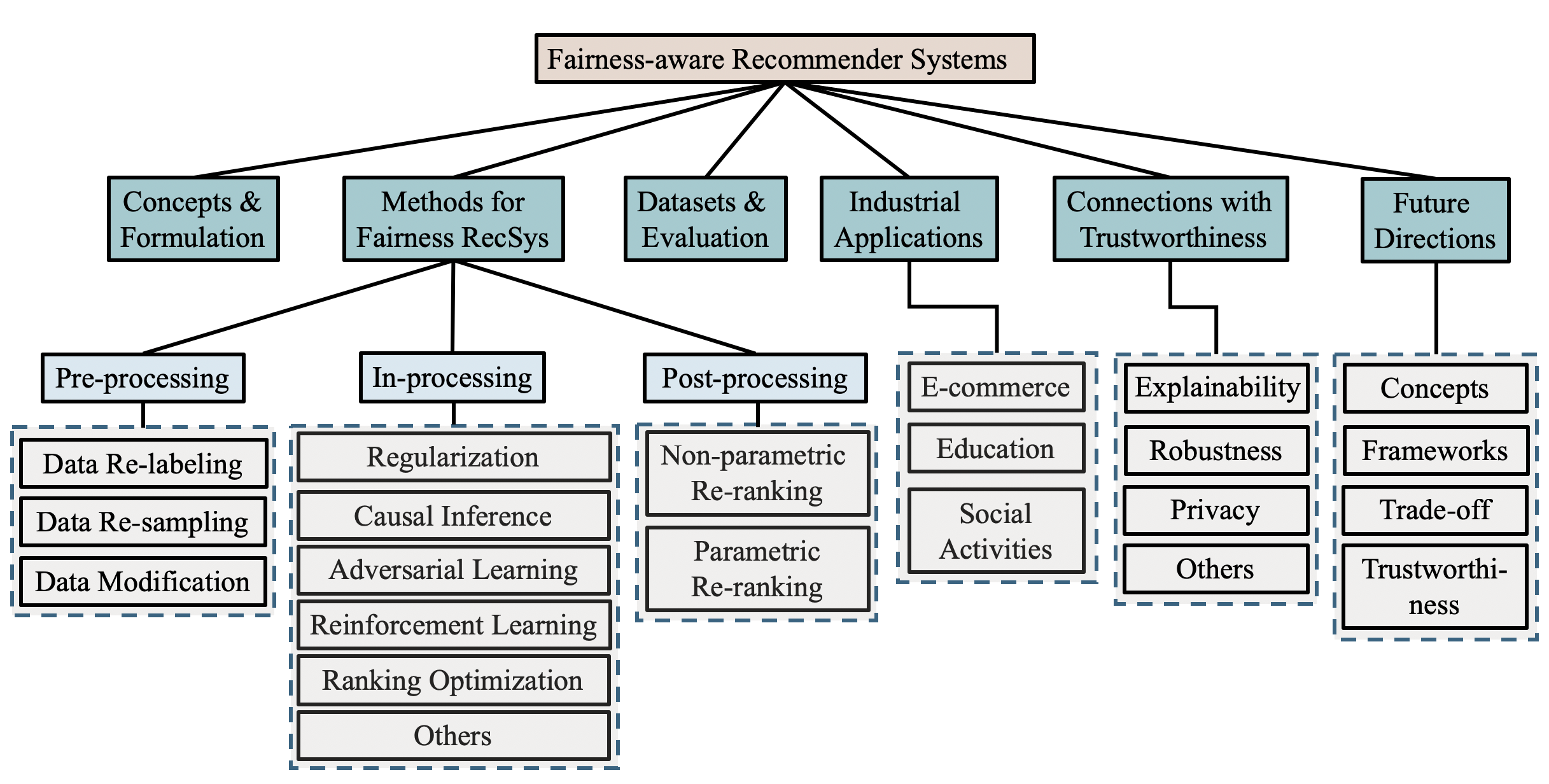
이 종합적 리뷰는 공정성 인지 추천 시스템에 대한 포괄적인 개요를 제공하며, 공정성 방법을 사전 처리, 처리 중, 사후 처리 단계로 분류한다. 추천 파이프라인 내 핵심적 편향을 특정하고, 공정성 메트릭스 및 데이터셋을 평가하며, 공정성과 정확성 간의 상충 관계를 분석하면서도 설명 가능성 및 내성성과 같은 신뢰할 수 있는 AI 성질과의 통합을 강조한다.
As information filtering services, recommender systems have extremely enriched our daily life by providing personalized suggestions and facilitating people in decision-making, which makes them vital and indispensable to human society in the information era. However, as people become more dependent on them, recent studies show that recommender systems potentially own unintentional impacts on society and individuals because of their unfairness (e.g., gender discrimination in job recommendations). To develop trustworthy services, it is crucial to devise fairness-aware recommender systems that can mitigate these bias issues. In this survey, we summarise existing methodologies and practices of fairness in recommender systems. Firstly, we present concepts of fairness in different recommendation scenarios, comprehensively categorize current advances, and introduce typical methods to promote fairness in different stages of recommender systems. Next, after introducing datasets and evaluation metrics applied to assess the fairness of recommender systems, we will delve into the significant influence that fairness-aware recommender systems exert on real-world industrial applications. Subsequently, we highlight the connection between fairness and other principles of trustworthy recommender systems, aiming to consider trustworthiness principles holistically while advocating for fairness. Finally, we summarize this review, spotlighting promising opportunities in comprehending concepts, frameworks, the balance between accuracy and fairness, and the ties with trustworthiness, with the ultimate goal of fostering the development of fairness-aware recommender systems.
연구 동기 및 목표
- 다양한 추천 시나리오에서 추천 시스템 내 공정성 문제를 체계적으로 분류하기.
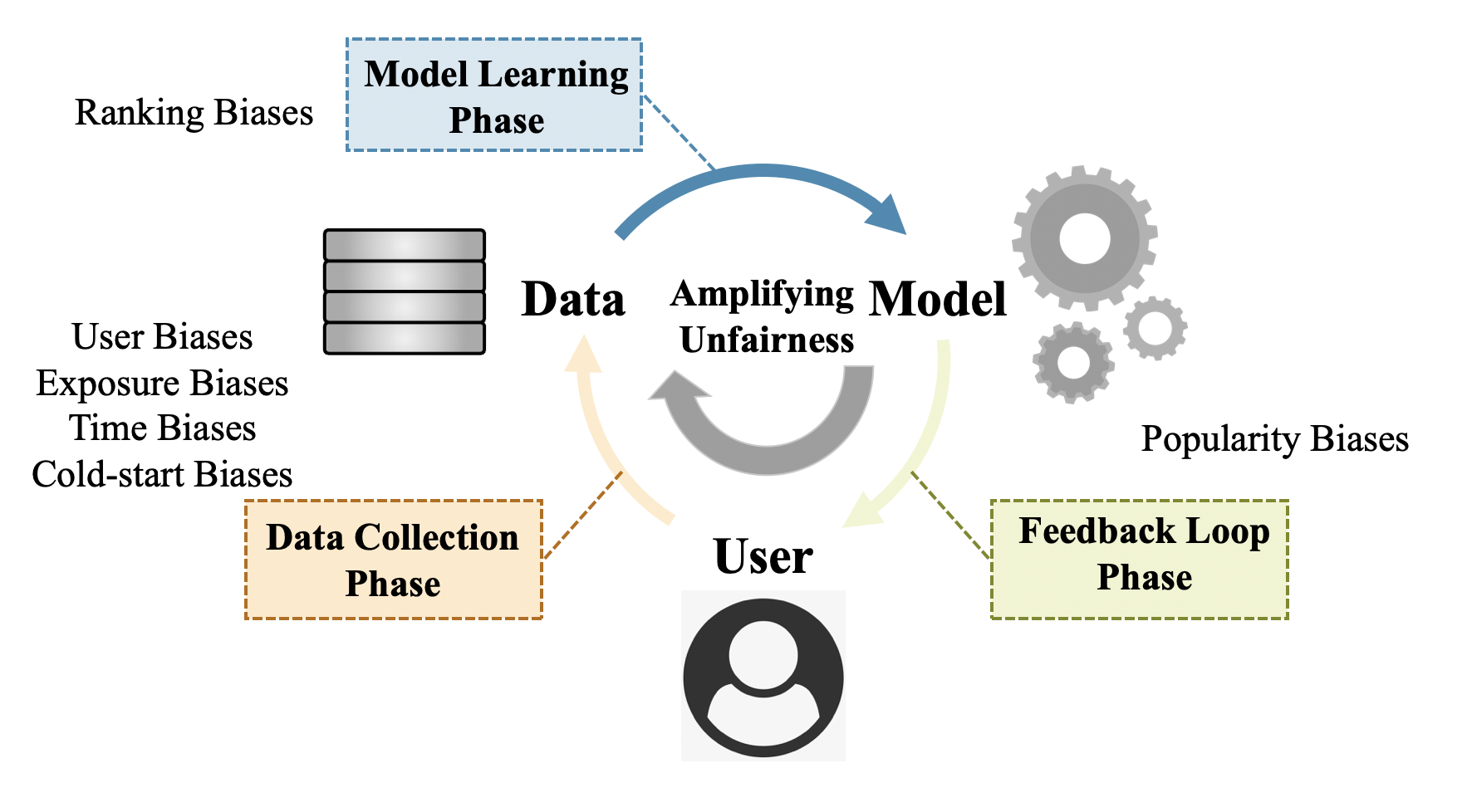
- 데이터 편향 및 모델 편향을 포함한 추천 라이프사이클 전반에서의 부당성의 근본 원인 분석하기.
- 사전 처리, 처리 중, 사후 처리 단계의 공정성 인지 방법을 요약하기.
- 표준화된 데이터셋과 메트릭스를 사용하여 공정성 평가를 통해 재현 가능한 연구 가능하게 하기.
- 설명 가능성, 내성성, 기밀성과 같은 다른 신뢰할 수 있는 AI 성질과의 상호작용 탐색하기.
제안 방법
- 공정성 방법을 세 단계로 분류: 사전 처리(데이터 내 편향 완화), 처리 중(모델 학습 시 공정성 제약), 사후 처리(출력에 대한 공정성 조정).
- 인구 통계적 평등, 동일 기회, 대우 공정성과 같은 공정성 메트릭스를 도입하여 추천 내 편향을 정량화한다.
- 전자상거래, 콘텐츠, 교육 분야에서의 공정성 평가를 위한 벤치마크 데이터셋인 Amazon, MovieLens, MOOC를 검토한다.
- 다양한 추천 시나리오에서의 실증적 평가를 통해 정확성과 공정성 간의 상충 관계 분 析한다.
- 사례 연구 및 문헌 종합을 통해 설명 가능성 및 내성성과 같은 다른 신뢰성 성질과의 통합을 분석한다.
- 공정성과 다수의 AI 윤리 원칙을 통합함으로써 통합된 신뢰성 강화를 목표로 향후 연구를 위한 프레임워크 제안
실험 결과
연구 질문
- RQ1추천 시스템 라이프사이클의 다양한 단계에서 어떤 유형의 편향이 발생하는가?
- RQ2사전 처리, 처리 중, 사후 처리 단계에서 가장 효과적인 공정성 인지 방법은 무엇이며, 성능과 공정성 측면에서 어떻게 비교되는가?
- RQ3추천 시스템의 공정성 측정에 사용되는 주요 데이터셋과 평가 메트릭스는 무엇인가?
- RQ4실제 응용에서 공정성은 설명 가능성 및 내성성과 같은 다른 신뢰할 수 있는 AI 성질과 어떻게 상호작용하는가?
- RQ5공정성과 추천 정확성의 균형을 맞추는 데 있어 주요 과제는 무엇이며, 이를 어떻게 완화할 수 있는가?
주요 결과
- 공정성 인지 추천 시스템은 직업 또는 대출 추천에서 성별 또는 인종 편향을 포함한 차별적 결과를 크게 감소시킨다.
- 재가중 및 데이터 증강과 같은 사전 처리 방법은 이력 데이터의 편향을 완화하는 데 도움을 주며, 적대적 훈련과 같은 처리 중 방법은 모델 학습 중 공정성을 강제한다.
- 재랭킹 및 校정과 같은 사후 처리 기법은 재학습 없이도 추천 출력을 공정성 기준에 맞게 효과적으로 조정할 수 있다.
- 공정성 향상과 정확성 감소 사이의 상충 관계는 일관되게 관찰되며, 일반적으로 공정성 향상은 약간의 정확성 감소를 동반한다.
- 설명 가능성 및 내성성과의 통합이 전체 시스템의 신뢰성과 사용자 수용도를 향상시킨다는 증거가 점점 더 많아지고 있다.
- 현재 연구는 다수의 신뢰성 성질과 동시에 공정성을 최적화하는 종합적 프레임워크가 부족하여 심각한 연구 격차가 존재한다.
이 논문 읽기
누빈트 뷰어에서 원문을 열고, 읽으면서 궁금한 곳을 바로 물어보세요.
누빈트에서 이 논문 읽기이 리뷰는 AI가 논문 원문을 바탕으로 만들었습니다. 인용하기 전에 원문을 확인해 주세요.