
[논문 리뷰] AI-Powered Augmented Reality for Satellite Assembly, Integration and Test
이 논문은 인공지능 기반 증강현실 시스템을 제안하며, Microsoft HoloLens 2를 사용하여 컴퓨터 시각 기반의 물체 검출, 6자리 자세 추정 및 OCR을 통해 실시간으로 맥락 인식이 가능한 가이던스를 제공한다. 시스템은 합성 데이터와 새로운 자동 주석 모델(SAMAL)을 활용하여 물체 검출 정확도가 95% 이상, 숫자 OCR 정확도가 최대 98.36%에 이를 정도로 달성한다. 이는 데이터 레이블링을 최대 20배 빠르게 가속화한다.
The integration of Artificial Intelligence (AI) and Augmented Reality (AR) is set to transform satellite Assembly, Integration, and Testing (AIT) processes by enhancing precision, minimizing human error, and improving operational efficiency in cleanroom environments. This paper presents a technical description of the European Space Agency's (ESA) project "AI for AR in Satellite AIT," which combines real-time computer vision and AR systems to assist technicians during satellite assembly. Leveraging Microsoft HoloLens 2 as the AR interface, the system delivers context-aware instructions and real-time feedback, tackling the complexities of object recognition and 6D pose estimation in AIT workflows. All AI models demonstrated over 70% accuracy, with the detection model exceeding 95% accuracy, indicating a high level of performance and reliability. A key contribution of this work lies in the effective use of synthetic data for training AI models in AR applications, addressing the significant challenges of obtaining real-world datasets in highly dynamic satellite environments, as well as the creation of the Segmented Anything Model for Automatic Labelling (SAMAL), which facilitates the automatic annotation of real data, achieving speeds up to 20 times faster than manual human annotation. The findings demonstrate the efficacy of AI-driven AR systems in automating critical satellite assembly tasks, setting a foundation for future innovations in the space industry.
연구 동기 및 목표
- 청정실 환경에서 위성 AIT 과정의 인간 실수를 줄이고 효율성을 향상시키기 위해.
- 변화가 빠른 위성 제조 환경에서 AI 모델 훈련을 위한 실제 데이터 부족 문제를 해결하기 위해.
- 위성 조립 중 현장 기술자 가이던스를 위한 실시간, 오프라인 작동이 가능한 AR 시스템을 개발하기 위해.
- 새로운 합성 데이터 및 자동 주석 파이프라인을 통해 데이터 레이블링을 가속화하기 위해.
- 복잡하고 변화가 빠른 위성 작업 환경에서 물체 검출, 6자리 자세 추정 및 OCR에 대해 강력하고 정확한 AI 추론을 가능하게 하기 위해.
제안 방법
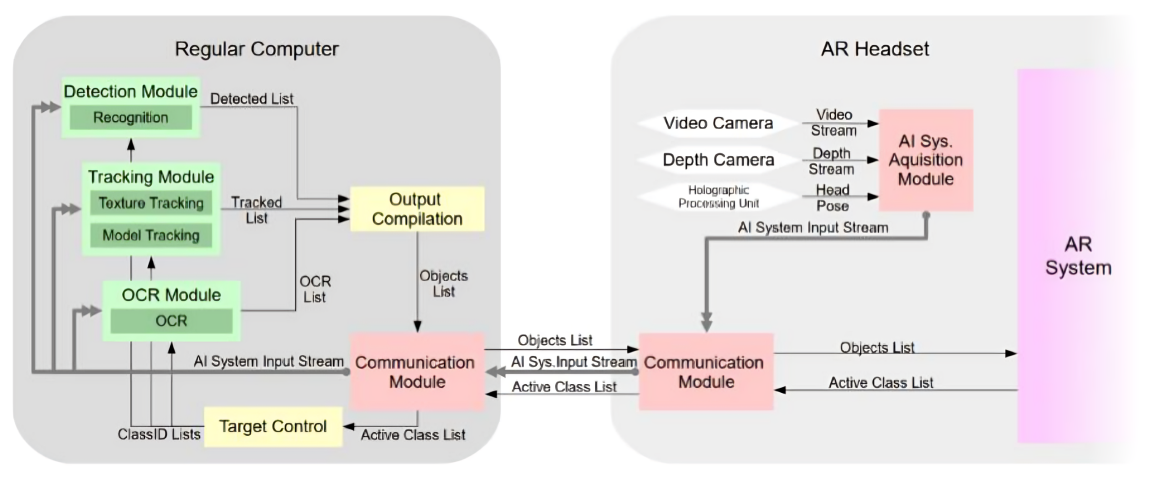
- 시스템은 실시간으로 RGB, 깊이 및 관성 센서 데이터를 Microsoft HoloLens 2를 통해 캡처하여 현장 및 외부 처리를 수행한다.
- 두 단계로 구성된 컴퓨터 비전 파이프라인은 YOLOv5 기반 모델을 사용한 물체 검출과 전용 회귀 헤드를 통한 6자리 자세 추정을 수행한다.
- 광학 문자 인식(OCR)은 숫자 및 알파벳 판독을 위해 합성 데이터로 훈련된 CRNN 기반 모델을 구현한다.
- 합성 데이터는 위성 구성 요소의 3D 모델을 사용하여 다양한 조명 및 시야 조건을 시뮬레이션하여 모델의 일반화 능력을 강화한다.
- 세그먼티드 어芮스 모델을 위한 자동 주석(SAMAL)은 자동 인스턴스 세그먼테이션 및 바운딩 박스 주석을 가능하게 하여 레이블링 시간을 최대 20배 감소시킨다.
- 시스템은 오프라인 작동을 설계하여 보안성과 통제된 청정실 환경에서의 신뢰성을 확보한다.
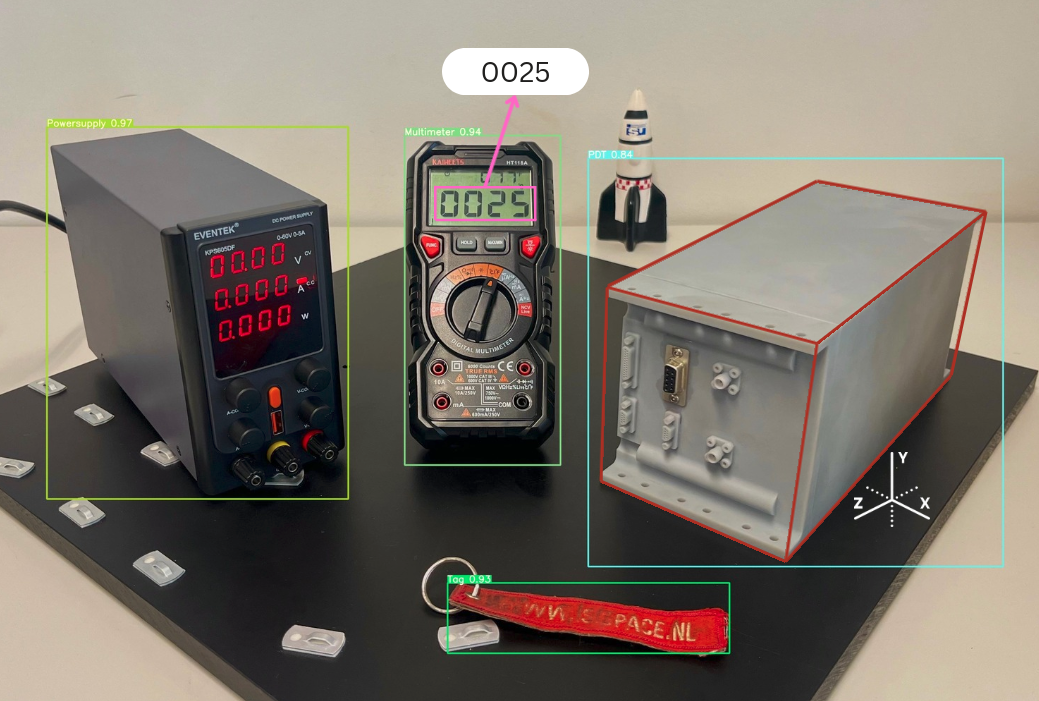
실험 결과
연구 질문
- RQ1AI 기반 AR 시스템은 위성 AIT 워크플로우에서 실시간으로 고정확도의 물체 검출 및 6자리 자세 추정을 달성할 수 있는가?
- RQ2실제 데이터가 부족한 상황에서 합성 데이터가 동적인 위성 구성 요소 인식을 위한 AI 모델 훈련에 얼마나 효과적인가?
- RQ3SAMAL을 통한 자동 데이터 주석화가 성능 저하 없이 레이블링 시간을 얼마나 줄일 수 있는가?
- RQ4실제 환경 조건에서 정적 또는 천천히 변화하는 계기판 표시를 읽는 OCR 모델이 높은 정확도를 달성할 수 있는가?
- RQ5실시간 컴퓨터 비전과 AR 헤드셋의 통합이 위성 조립 중 기술자의 가이던스 향상과 실수 감소에 얼마나 기여하는가?
주요 결과
- 물체 검출 모델은 95.3%의 정확도를 달성하여 신뢰할 수 있는 AIT 응용을 위한 70% 기준을 크게 초월했다.
- 6자리 자세 추정 모델은 실시간 제약 조건에도 불구하고 70% 이상의 정확도를 보이며 뛰어난 성능을 입증했다.
- OCR 파이프라인은 숫자 판독에서 96.03%의 정확도를 기록했으며, 훈련된 CRNN 모델은 지문 기반 바운딩 박스에서 98.36%의 정확도를 달성했다.
- SAMAL 모델은 수동 인간 주석보다 최대 20배 더 빠른 자동 데이터 주석화를 가능하게 하여 데이터 파이프라인의 효율성을 극도로 향상시켰다.
- OCR 인식에 대해 188.82 FPS의 추론 속도를 확보하여 높은 정확도에도 불구하고 실시간 요구 조건을 충족했다.
- 훈련된 OCR 모델은 사전 훈련된 EasyOCR 모델보다 정확도에서 96% 이상 높은 성능을 보이며 합성 데이터 토양에서의 미세조정의 효과를 입증했다.
이 논문 읽기
누빈트 뷰어에서 원문을 열고, 읽으면서 궁금한 곳을 바로 물어보세요.
누빈트에서 이 논문 읽기이 리뷰는 AI가 논문 원문을 바탕으로 만들었습니다. 인용하기 전에 원문을 확인해 주세요.