
[논문 리뷰] Bootstrapping LLM-based Task-Oriented Dialogue Agents via Self-Talk
이 논문은 두 개의 LLM이 임무 중심 대화에서 고객과 에이전트 역할을 시뮬레이션하여 고품질의 훈련 데이터를 생성하고, 자동화된 메트릭을 사용해 성공한 대화를 필터링하는 자기대화 프레임워크를 제안한다. 이 방법은 최소한의 인간 데이터로도 대화 정책 학습을 크게 향상시키며, 기준선 미세조정 대비 자동 평가 및 인간 평가 모두에서 뛰어난 성능을 달성한다.
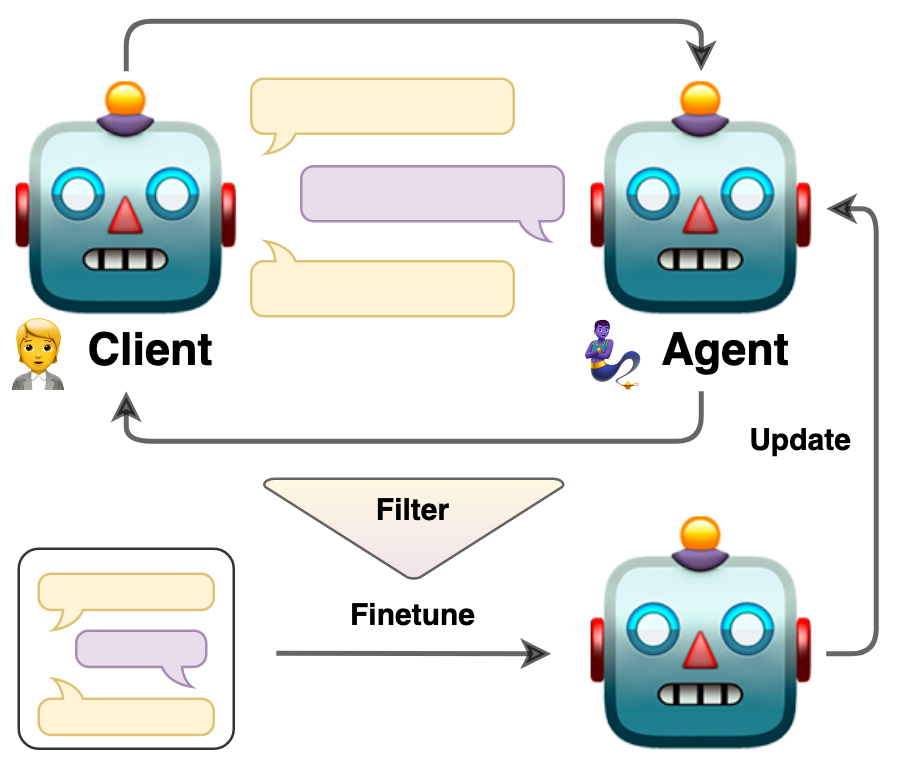
Large language models (LLMs) are powerful dialogue agents, but specializing them towards fulfilling a specific function can be challenging. Instructing tuning, i.e. tuning models on instruction and sample responses generated by humans (Ouyang et al., 2022), has proven as an effective method to do so, yet requires a number of data samples that a) might not be available or b) costly to generate. Furthermore, this cost increases when the goal is to make the LLM follow a specific workflow within a dialogue instead of single instructions. Inspired by the self-play technique in reinforcement learning and the use of LLMs to simulate human agents, we propose a more effective method for data collection through LLMs engaging in a conversation in various roles. This approach generates a training data via "self-talk" of LLMs that can be refined and utilized for supervised fine-tuning. We introduce an automated way to measure the (partial) success of a dialogue. This metric is used to filter the generated conversational data that is fed back in LLM for training. Based on our automated and human evaluations of conversation quality, we demonstrate that such self-talk data improves results. In addition, we examine the various characteristics that showcase the quality of generated dialogues and how they can be connected to their potential utility as training data.
연구 동기 및 목표
- 인간 레이블이 부족하거나 비용이 많이 드는 상황에서, 고품질의 임무 특화 대화 데이터를 확보하는 데 도전하는 것.
- LLM이 고객과 에이전트 간 역할극 대화를 통해 자율적으로 유용하고 구조화된 대화 데이터를 생성할 수 있는지 탐색하는 것.
- 대화 성공 여부와 일관성을 평가하기 위한 자동화된 메트릭을 개발하여 저품질 또는 주제에서 벗어난 대화를 필터링하는 것.
- 자기대화로 생성된 데이터가 감독 미세조정을 통해 임무 중심 대화 에이전트의 성능을 향상시키는 데 얼마나 효과적인지 평가하는 것.
- 훈련 데이터 정제를 위한 다양한 필터링 전략(부목표 이행 여부 및 대화 구조 기반)의 유효성을 평가하는 것.
제안 방법
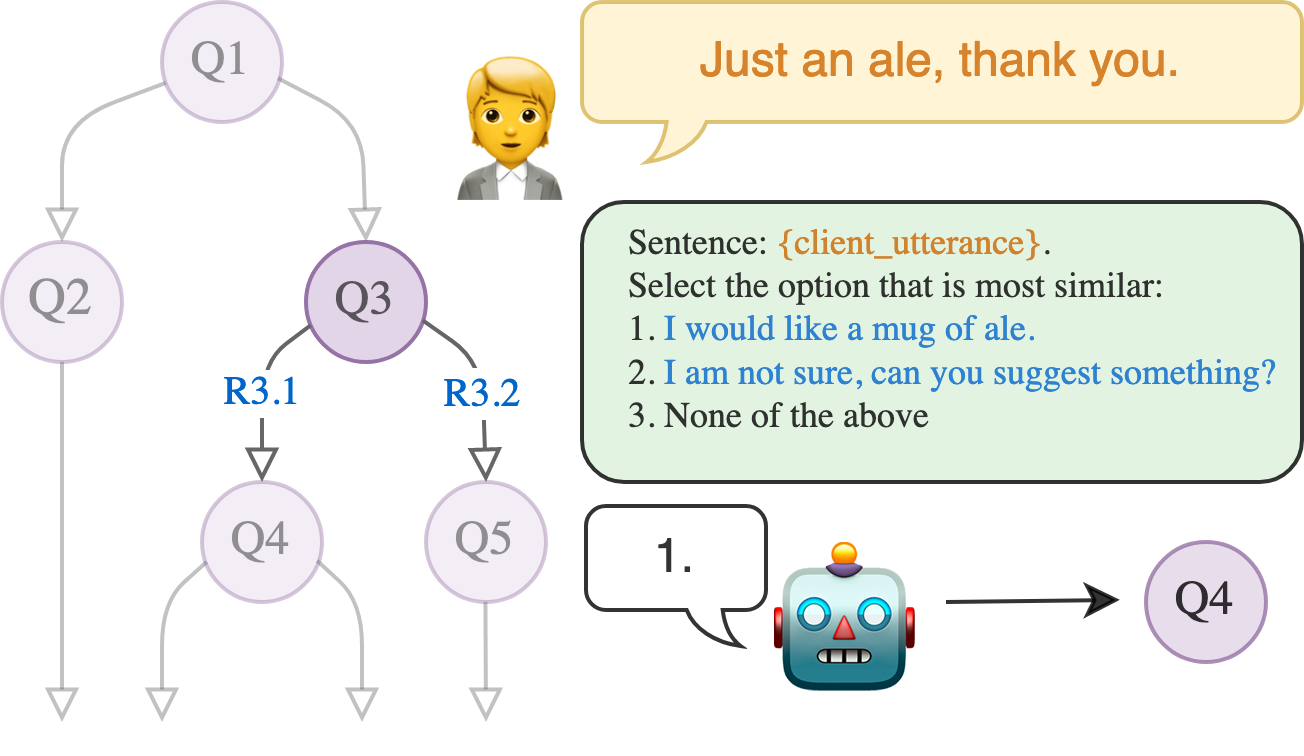
- 두 개의 LLM이 고객(개인정보 및 목표가 있는 경우)과 에이전트(고정된 대화 정책을 가진 경우) 역할을 하여 시뮬레이션된 임무 중심 대화를 수행한다.
- 각 대화는 부목표 이행 및 대화 일관성 기반의 성공 메트릭을 사용해 자동 평가되어 고품질 샘플을 필터링할 수 있다.
- 필터링된 대화는 감독 미세조정을 통해 에이전트 모델을 미세조정하여 의도한 대화 워크플로우 준수 능력을 향상시킨다.
- 다양한 필터링 전략(부목표 완료 비율 및 절대 부목표 수)을 탐색하여 모델 성능에 미치는 영향을 평가한다.
- 자동화된 메트릭과 인간 평가를 모두 활용하여, 기준선 인간 데이터 기반 미세조정과의 성능을 비교 평가한다.
- 이 방법은 소원 이행, 저주 걸기, 물품 판매, 재산 부여 등 다양한 임무 시나리오에 적용되어 일반화 능력을 입증한다.
실험 결과
연구 질문
- RQ1LLM은 역할극을 통해 자율적으로 고품질의 임무 특화 대화 데이터를 생성할 수 있는가? 이는 고비용의 인간 레이블 데이터 의존도를 줄이는 데 기여하는가?
- RQ2자동화된 메트릭은 LLM이 생성한 대화에서 성공적이고 일관성 있는 대화를 식별하는 데 얼마나 효과적인가?
- RQ3부목표 이행 기반으로 자기대화 데이터를 필터링하면, 미세조정된 대화 에이전트의 성능 향상에 기여하는가?
- RQ4자동화된 평가 및 인간 평가 모두에서, 자기대화 데이터로 미세조정된 에이전트의 성능은 인간 레이블 데이터로 미세조정된 모델과 비교해 어떻게 되는가?
- RQ5임무 중심 대화 에이전트의 훈련 데이터로 유용한 성질을 지닌 생성된 대화의 특성은 무엇인가?
주요 결과
- 자기대화 방법은 인간 레이블 데이터 없이도 다양한 구조적 대화를 성공적으로 생성하여 의도한 임무 워크플로우와 일치시킨다.
- 자동화된 성공 메트릭을 사용한 대화 필터링은 훈련 데이터 품질을 크게 향상시켜 일반화 능력 향상과 환상 감소에 기여한다.
- 부목표 기반 필터링을 사용할 경우, 자기대화 데이터로 미세조정된 에이전트가 인간 데이터로 미세조정된 기준선 모델보다 대화 성공률과 일관성 면에서 뛰어난 성능을 보인다.
- 인간 평가 결과, 필터링된 자기대화 데이터로 훈련된 모델이 필터링되지 않은 데이터나 인간 레이블 데이터만으로 훈련된 모델보다 더 자연스럽고 목표 중심적이며 일관성 있는 대화를 생성하는 것으로 확인되었다.
- 대화 중 부목표 완료 비율은 훈련 데이터 품질의 강력한 예측 지표이며, 높은 부목표 완료 비율은 후속 성능 향상과 상관관계가 있다.
- 이 방법은 소원 이행, 저주 걸기, 물품 판매, 재산 부여 등 다양한 작업 유형에 대해 뛰어난 내재성과 넓은 적용 가능성을 보였다.
이 논문 읽기
누빈트 뷰어에서 원문을 열고, 읽으면서 궁금한 곳을 바로 물어보세요.
누빈트에서 이 논문 읽기이 리뷰는 AI가 논문 원문을 바탕으로 만들었습니다. 인용하기 전에 원문을 확인해 주세요.