
[논문 리뷰] BurstGPT: A Real-world Workload Dataset to Optimize LLM Serving Systems
BurstGPT를 도입하며, 최초의 실세계 LLM 서빙 워크로드 트레이스와 버스트형 워크로드 아래 LLM 서빙 시스템을 평가하고 최적화하기 위한 벤치마크 세트를 소개합니다.
Serving systems for Large Language Models (LLMs) are often optimized to improve quality of service (QoS) and throughput. However, due to the lack of open-source LLM serving workloads, these systems are frequently evaluated under unrealistic workload assumptions. Consequently, performance may degrade when systems are deployed in real-world scenarios. This work presents BurstGPT, an LLM serving workload with 10.31 million traces from regional Azure OpenAI GPT services over 213 days. BurstGPT captures LLM serving characteristics from user, model and system perspectives: (1) User request concurrency: burstiness variations of requests in Azure OpenAI GPT services, revealing diversified concurrency patterns in different services and model types. (2) User conversation patterns: counts and intervals within conversations for service optimizations. (3) Model response lengths: auto-regressive serving processes of GPT models, showing statistical relations between requests and their responses. (4) System response failures: failures of conversation and API services, showing intensive resource needs and limited availability of LLM services in Azure. The details of the characteristics can serve multiple purposes in LLM serving optimizations, such as system evaluation and trace provisioning. In our demo evaluation with BurstGPT, frequent variations in BurstGPT reveal declines in efficiency, stability, or reliability in realistic LLM serving. We identify that the generalization of KV cache management, scheduling and disaggregation optimizations can be improved under realistic workload evaluations. BurstGPT is publicly available now at https://github.com/HPMLL/BurstGPT and is widely used to develop prototypes of LLM serving frameworks in the industry.
연구 동기 및 목표
- 실제 LLM 서빙 워크로드의 특성을 강조하여 시스템 설계 및 프로비저닝에 지침을 제공합니다.
- 실제 GPT 서비스(ChatGPT 및 GPT-4)에서 버스트성, 동시성 패턴 및 실패율을 정량화합니다.
- BurstGPT의 워크로드 패턴을 반영하는 확장 가능한 벤치마크 세트를 개발하여 서빙 시스템을 평가합니다.
- LLM 서빙에서의 탄력적 자원 관리 및 QoS 개선에 대한 통찰을 제공합니다.
제안 방법
- 캠퍼스 환경에서 ChatGPT 및 GPT-4 API와 대화 서비스의 실시간 워크로드 트레이스를 두 달에 걸쳐 수집하고 분석합니다.
- LLM 워크로드의 시간적(주기적/비주기적) 및 공간적(요청/응답 길이) 패턴을 특징화합니다.
- 감마 분포를 이용해 버스트성을 모델링하고 GPU 메모리 및 서비스 신뢰도에 대한 영향을 시연합니다.
- 관찰된 워크로드 패턴을 반영하고 서로 다른 시스템 규모에 확장 가능한 미러링된 BurstGPT 벤치마크를 개발합니다.
- 프롬프트 풀, 동시성 생성기, HTTP 기반 추론 드라이버를 갖춘 워크로드 제너레이터를 프로토타입화하여 LLM 서빙 시스템을 평가합니다.
- BurstGPT와 유사한 워크로드에서 Llama-2-chat 모델에 대한 vLLM의 성능을 평가하여 지연, 처리량 및 실패 동작을 연구합니다.
실험 결과
연구 질문
- RQ1실제-world LLM-서빙 워크로드의 시간적 및 공간적 특성은 무엇인가?
- RQ2버스트성이 LLM 서빙 시스템의 신뢰도와 GPU 메모리 사용량에 어떤 영향을 미치는가?
- RQ3BurstGPT를 기반으로 한 벤치마크 세트가 다양한 규모의 서빙 시스템을 충실하게 평가할 수 있는가?
- RQ4BurstGPT-유사 버스트 워크로드에서 주요 LLM 서빙 프레임워크(vLLM)의 성능은 어떤가?
주요 결과
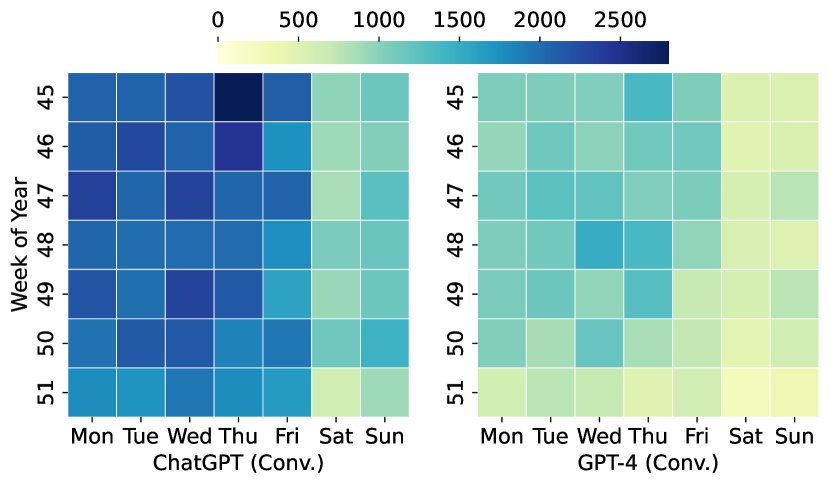
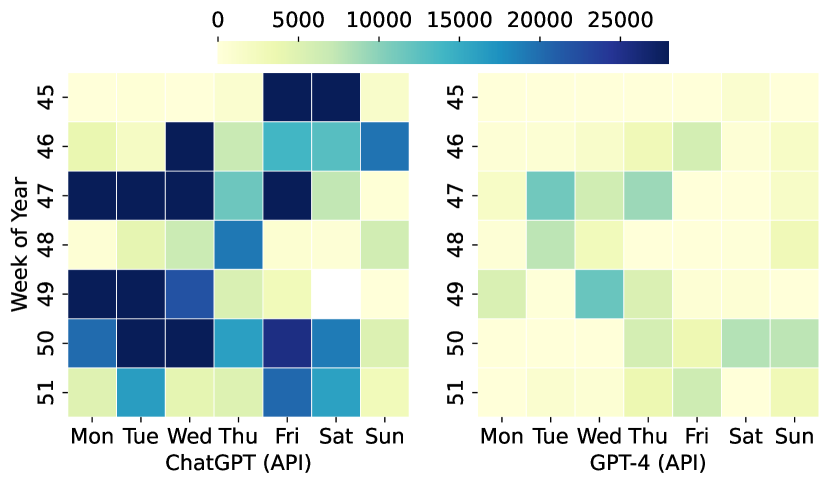
- LLM 워크로드의 버스트성은 서비스 유형(대화 vs API) 및 모델(ChatGPT vs GPT-4)에 따라 주기적 및 비주기적 패턴 모두를 보인다.
- 대화 서비스는 더 규칙적인 일일 패턴을 보이는 반면 API 서비스는 더 불규칙하고 버스트성 트래픽이 더 큰 가변성을 보인다.
- 요청 길이는 Zipf와 유사한 분포를 따르는 반면 응답 길이는 모델 의존적이며 종종 이중모드 또는 긴 꼬리 분포를 보인다.
- 버스트형 워크로드로 인한 GPU 메모리 압박은 더 높은 실패율과 상관관계가 있어 메모리 병목이 주요 신뢰성 위험으로 작용한다.
- BurstGPT 벤치마크는 실제 버스트성을 반영하고 단기간 버스트에서 기존 시스템의 성능 저하를 드러낸다.
- BurstGPT-유사 워크로드에서의 vLLM 평가 결과는 버스트성과 메모리 관리에 민감하고 지연 및 성공률에 영향을 준다.
이 논문 읽기
누빈트 뷰어에서 원문을 열고, 읽으면서 궁금한 곳을 바로 물어보세요.
누빈트에서 이 논문 읽기이 리뷰는 AI가 논문 원문을 바탕으로 만들었습니다. 인용하기 전에 원문을 확인해 주세요.