
[논문 리뷰] Call for Papers -- The BabyLM Challenge: Sample-efficient pretraining on a developmentally plausible corpus
본 연구 발표 공모는 BabyLM Challenge에 대한 논문 공모로, 발달적으로 타당한 데이터와 공유 평가 파이프라인을 갖춘 소규모 사전 학습에 세 가지 트랙을 제공합니다.
We present the call for papers for the BabyLM Challenge: Sample-efficient pretraining on a developmentally plausible corpus. This shared task is intended for participants with an interest in small scale language modeling, human language acquisition, low-resource NLP, and cognitive modeling. In partnership with CoNLL and CMCL, we provide a platform for approaches to pretraining with a limited-size corpus sourced from data inspired by the input to children. The task has three tracks, two of which restrict the training data to pre-released datasets of 10M and 100M words and are dedicated to explorations of approaches such as architectural variations, self-supervised objectives, or curriculum learning. The final track only restricts the amount of text used, allowing innovation in the choice of the data, its domain, and even its modality (i.e., data from sources other than text is welcome). We will release a shared evaluation pipeline which scores models on a variety of benchmarks and tasks, including targeted syntactic evaluations and natural language understanding.
연구 동기 및 목표
- 인간의 언어 입력을 닮은 제한된 데이터 규모로의 사전 학습 연구에 대한 동기를 부여한다.
- 대학 예산으로도 참여할 수 있도록 사전 학습 연구의 민주화를 촉진한다.
- 데이터 효율성과 인지 가능성을 향상시키는 기법을 탐구한다.
- 자연어처리에서 인지과학 및 언어학의 통찰을 제공하는 플랫폼을 제공한다.
- 여러 과제에 걸친 벤치마크를 포함한 투명한 평가 파이프라인을 제공한다.
제안 방법
- 고정된 데이터셋 또는 유연한 데이터 한계를 갖춘 세 트랙(Strict, Strict-small, Loose).
- 전사된 음성에 초점을 둬 100M 단어 이하의 발달적으로 타당한 사전 학습 코퍼스.
- 점수 매기기 및 다운스트림 작업에 사용할 HuggingFace 트랜스포머와 호환되는 공유 평가 파이프라인.
- 고정 데이터셋에서 학습된 확립된 언어모델(OPT, RoBERTa, T5)에서 도출된 기본 모델.
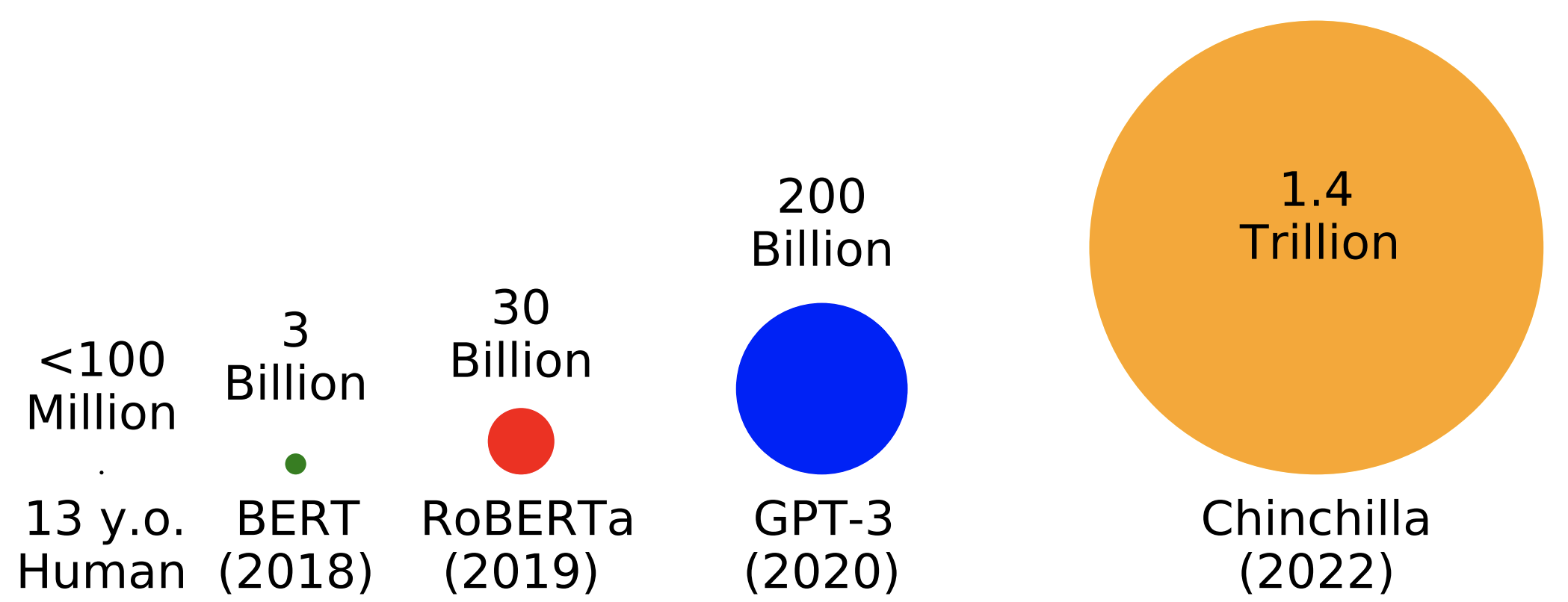
실험 결과
연구 질문
- RQ1데이터가 인간과 유사한 규모(10M 대 100M 단어)로 제한될 때 언어 모델의 사전 학습 성능은 어떨까?
- RQ2발달적으로 타당한 데이터 제약 하에서 데이터 효율성을 높이는 건축적, 목표적 또는 커리큘럼 전략은 무엇인가?
- RQ3제한된 데이터에서 목표된 구문 평가 및 자연어 이해에서 모델은 어떻게 성능을 보이나?
- RQ4엄격한 대 느슨한 데이터 제한에서 학습할 때 자원 및 효율성의 트레이드오프는 무엇인가?
주요 결과
- 명확하게 정의된 데이터 제약과 공유 평가 파이프라인을 갖춘 세 트랙 구성이 있다.
- 다양한 도메인에 걸친 약 100M 단어의 고정 데이터세트 세트(아동 대상 화법, 대화, 아동 도서, 위키피디아, 자막).
- 10M 단어의 Strict 트랙과 100M 단어의 Loose 트랙은 데이터 효율적인 사전 학습 접근법을 탐구할 수 있게 한다.
- OPT, RoBERTa, T5 계열의 기본 모델이 비교를 위한 순진한 시작점을 제공하기 위해 제공될 것이다.
- 평가는 효율성, 인지적 타당성 및 다운스트림 NLP 작업에 중점을 두며, 광범위한 접근성을 위해 Colab 기반 파이프라인을 제공한다.
이 논문 읽기
누빈트 뷰어에서 원문을 열고, 읽으면서 궁금한 곳을 바로 물어보세요.
누빈트에서 이 논문 읽기이 리뷰는 AI가 논문 원문을 바탕으로 만들었습니다. 인용하기 전에 원문을 확인해 주세요.