
[논문 리뷰] Combining Generative Artificial Intelligence (AI) and the Internet: Heading towards Evolution or Degradation?
이 논문은 현실 데이터와 AI가 생성한 데이터의 혼합으로 학습된 생성 AI 모델의 출력 품질 저하 여부를 조사하고, 가능성이 있는 퇴행을 보이는 초기 확산 모델 실험을 제시한다.
In the span of a few months, generative Artificial Intelligence (AI) tools that can generate realistic images or text have taken the Internet by storm, making them one of the technologies with fastest adoption ever. Some of these generative AI tools such as DALL-E, MidJourney, or ChatGPT have gained wide public notoriety. Interestingly, these tools are possible because of the massive amount of data (text and images) available on the Internet. The tools are trained on massive data sets that are scraped from Internet sites. And now, these generative AI tools are creating massive amounts of new data that are being fed into the Internet. Therefore, future versions of generative AI tools will be trained with Internet data that is a mix of original and AI-generated data. As time goes on, a mixture of original data and data generated by different versions of AI tools will populate the Internet. This raises a few intriguing questions: how will future versions of generative AI tools behave when trained on a mixture of real and AI generated data? Will they evolve with the new data sets or degenerate? Will evolution introduce biases in subsequent generations of generative AI tools? In this document, we explore these questions and report some very initial simulation results using a simple image-generation AI tool. These results suggest that the quality of the generated images degrades as more AI-generated data is used for training thus suggesting that generative AI may degenerate. Although these results are preliminary and cannot be generalised without further study, they serve to illustrate the potential issues of the interaction between generative AI and the Internet.
연구 동기 및 목표
- AI가 생성한 데이터가 인터넷으로 역흘러 들어오는 것이 미래의 생성 AI 모델에 어떤 영향을 미칠 수 있는지 동기 부여 및 탐구한다.
- 혼합된 실제 데이터와 AI가 생성한 데이터로 학습된 연속 세대가 품질 저하를 보이는지 평가한다.
- 진화하는 AI 시스템에서 퇴행 및 편향에 영향을 주는 요인을 식별한다.
제안 방법
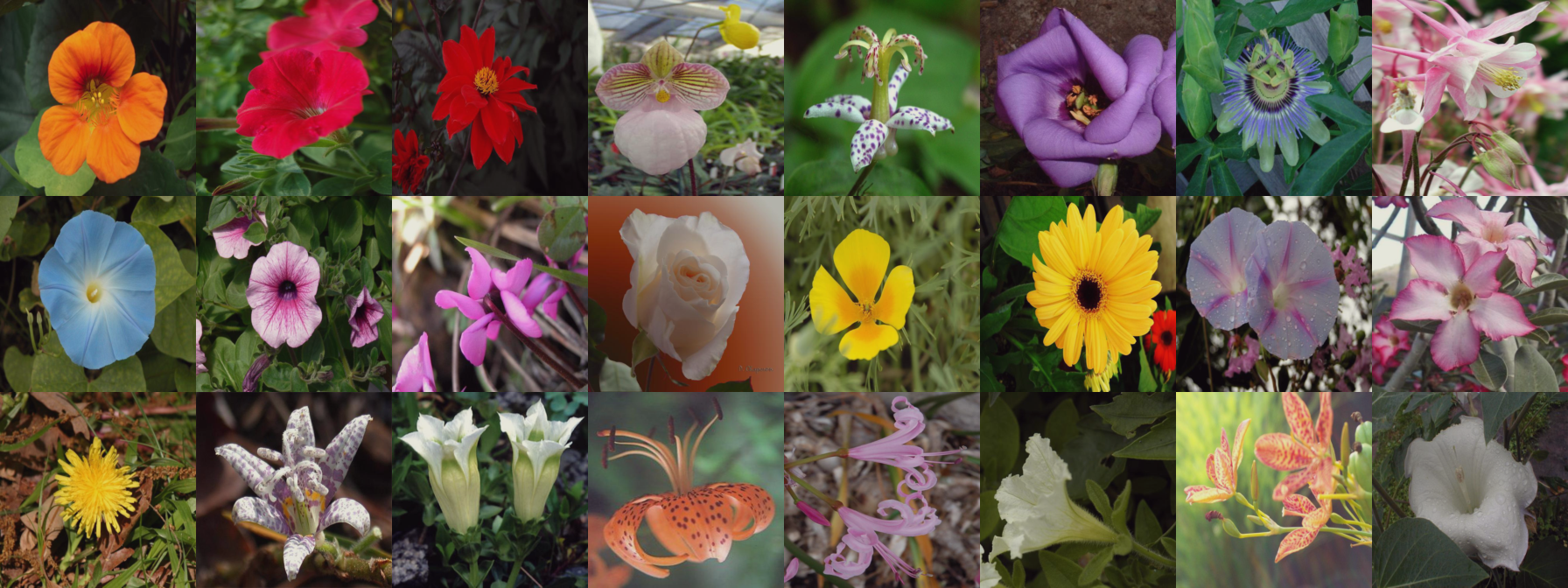
- Oxford Flowers 데이터셋에서 학습된 간단한 denoising diffusion implicit model (DDIM)을 사용하여 합성 이미지를 생성한다.
- 훈련 데이터에 AI가 생성한 이미지를 추가하여 모델의 여러 세대를 생성한다 (V1, V2, V3 등).
- α를 기존 훈련 세트에 추가된 AI 생성 데이터의 비율로 도입한다.
- 다른 α 값들(0.5, 1, 2)을 실험하여 세대별 이미지 품질에 미치는 영향을 평가한다.
- 퇴행 효과를 관찰하기 위해 더 긴 학습 에포크(예: 80 에포크)로 완화 여부를 테스트한다.
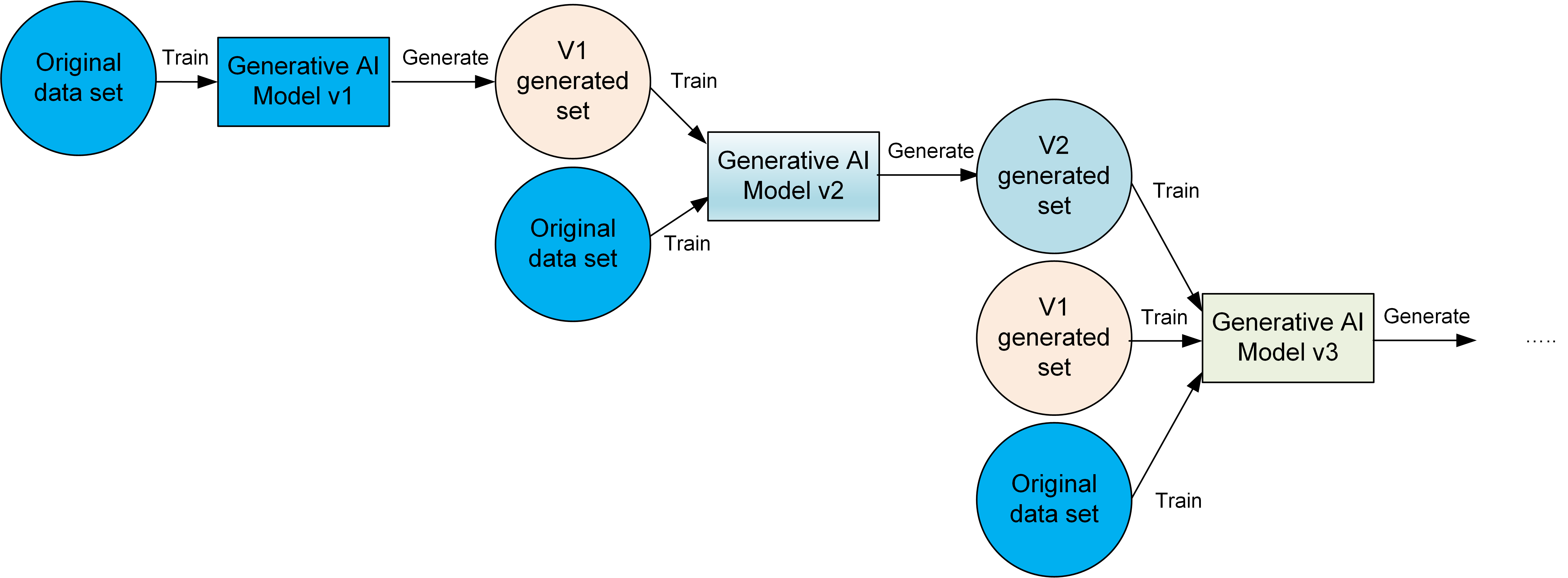
실험 결과
연구 질문
- RQ1실제 이미지와 AI가 생성한 이미지의 혼합으로 학습할 때 확산 모델의 이후 세대에서 퇴행이 발생하는가?
- RQ2AI가 생성한 데이터의 비율(α)이 세대별 생성 이미지의 품질에 어떻게 영향을 미치는가?
- RQ3학습 노력을 늘리면(예: 더 많은 에포크) 퇴행을 완화하거나 지연시킬 수 있는가?
주요 결과
- 이전 AI 생성 데이터로 학습될 때 새 세대마다 품질이 저하된다(α=1).
- 낮은 α(0.5)은 저하를 줄이지만 제거하지 못하며, 높은 α(2)은 저하를 가속시킨다.
- 실험에서 α=1의 경우 더 많은 학습 에포크에도 퇴행이 지속된다.
- Oxford Flowers 데이터셋을 사용한 간단한 확산-모델 설정에서 퇴행이 입증된다.
이 논문 읽기
누빈트 뷰어에서 원문을 열고, 읽으면서 궁금한 곳을 바로 물어보세요.
누빈트에서 이 논문 읽기이 리뷰는 AI가 논문 원문을 바탕으로 만들었습니다. 인용하기 전에 원문을 확인해 주세요.