
[논문 리뷰] DPAdapter: Improving Differentially Private Deep Learning through Noise Tolerance Pre-training
DPAdapter는 수정된 두 배치 전략을 사용한 예측된 날카기 인식 최소화(SAM)를 통해 노이즈 내성에 대한 사전 훈련을 수행함으로써 차별적 개인정보 보호(DP) 딥 러닝을 향상시킨다. 이는 모델의 강인성과 정확도를 크게 향상시키며, ε=4일 때 평균 정확도를 72.92%에서 77.09%로 끌어올린다. 이는 기존 DPML 방법에 즉각 통합 가능한 플러그 앤 플레이 개선 기법이다.
Recent developments have underscored the critical role of extit{differential privacy} (DP) in safeguarding individual data for training machine learning models. However, integrating DP oftentimes incurs significant model performance degradation due to the perturbation introduced into the training process, presenting a formidable challenge in the {differentially private machine learning} (DPML) field. To this end, several mitigative efforts have been proposed, typically revolving around formulating new DPML algorithms or relaxing DP definitions to harmonize with distinct contexts. In spite of these initiatives, the diminishment induced by DP on models, particularly large-scale models, remains substantial and thus, necessitates an innovative solution that adeptly circumnavigates the consequential impairment of model utility. In response, we introduce DPAdapter, a pioneering technique designed to amplify the model performance of DPML algorithms by enhancing parameter robustness. The fundamental intuition behind this strategy is that models with robust parameters are inherently more resistant to the noise introduced by DP, thereby retaining better performance despite the perturbations. DPAdapter modifies and enhances the sharpness-aware minimization (SAM) technique, utilizing a two-batch strategy to provide a more accurate perturbation estimate and an efficient gradient descent, thereby improving parameter robustness against noise. Notably, DPAdapter can act as a plug-and-play component and be combined with existing DPML algorithms to further improve their performance. Our experiments show that DPAdapter vastly enhances state-of-the-art DPML algorithms, increasing average accuracy from 72.92\% to 77.09\% with a privacy budget of $ε=4$.
연구 동기 및 목표
- 딥 러닝 모델에서 차별적 개인정보 보호(DP) 노이즈로 인한 성능 저하 문제를 해결한다.
- 알고리즘 수정이나 완화된 개인정보 보호 정의에 의존하는 기존 DPML 방법의 한계를 극복한다.
- DP 노이즈에 대한 직접적인 방어 수단으로서 매개변수 강인성을 활용하여 모델 유틸리티를 유지한다.
- 기존의 하류 DP 훈련 파이프라인을 변경하지 않고도 노이즈에 강건한 모델의 내성을 높이는 사전 훈련 기법을 개발한다.
- 다양한 하류 작업에 걸쳐 보편적으로 성능을 향상시킬 수 있도록 기존 DPML 알고리즘과의 플러그 앤 플레이 통합을 가능하게 한다.
제안 방법
- 두 배치 전략을 도입한 예측된 날카기 인식 최소화(SAM) 프레임워크를 변형하여, 정확한 악성 경우의 변형 추정을 위한 큰 배치와 효율적인 기울기 하강을 위한 작은 배치를 사용한다.
- SAM 목표를 노이즈에 대한 매개변수 간의 강인성을 우선시하도록 재구성하여, 변형에 노출되었을 때도 매개변수의 안정성을 확보한다.
- 증강된 SAM 변형을 사용해 공공 데이터에서 모델을 사전 훈련하여 노이즈에 대한 민감도를 최소화하고, 이후 DP 미세조정 동안의 내성을 향상시킨다.
- 기존 DP-SGD 또는 DP-FedAvg 파이프라인에 사전 훈련된 DPAdapter 모델을 플러그인 컴포넌트로 통합하여 하류의 개인 정보 보호 훈련을 수행한다.
- 이론적 분석을 통해 두 배치 전략이 최악의 경우 변형 추정을 더 정확하게 하여 매개변수 강인성을 향상시킨다.
- 연합 학습 환경에서도 호환되도록 설계되어, DP-FedAvg에서 모델 집계 시에 노이즈를 적용하는 데 적용 가능하다.
실험 결과
연구 질문
- RQ1매개변수 강인성에 대한 사전 훈련이 딥 러닝 모델에서 차별적 개인정보 보호 노이즈로 인한 성능 저하를 크게 줄일 수 있는가?
- RQ2SAM의 두 배치 개선 전략은 표준 SAM 대비 차별적 개인정보 보호 모델의 정확도를 어떻게 향상시키는가?
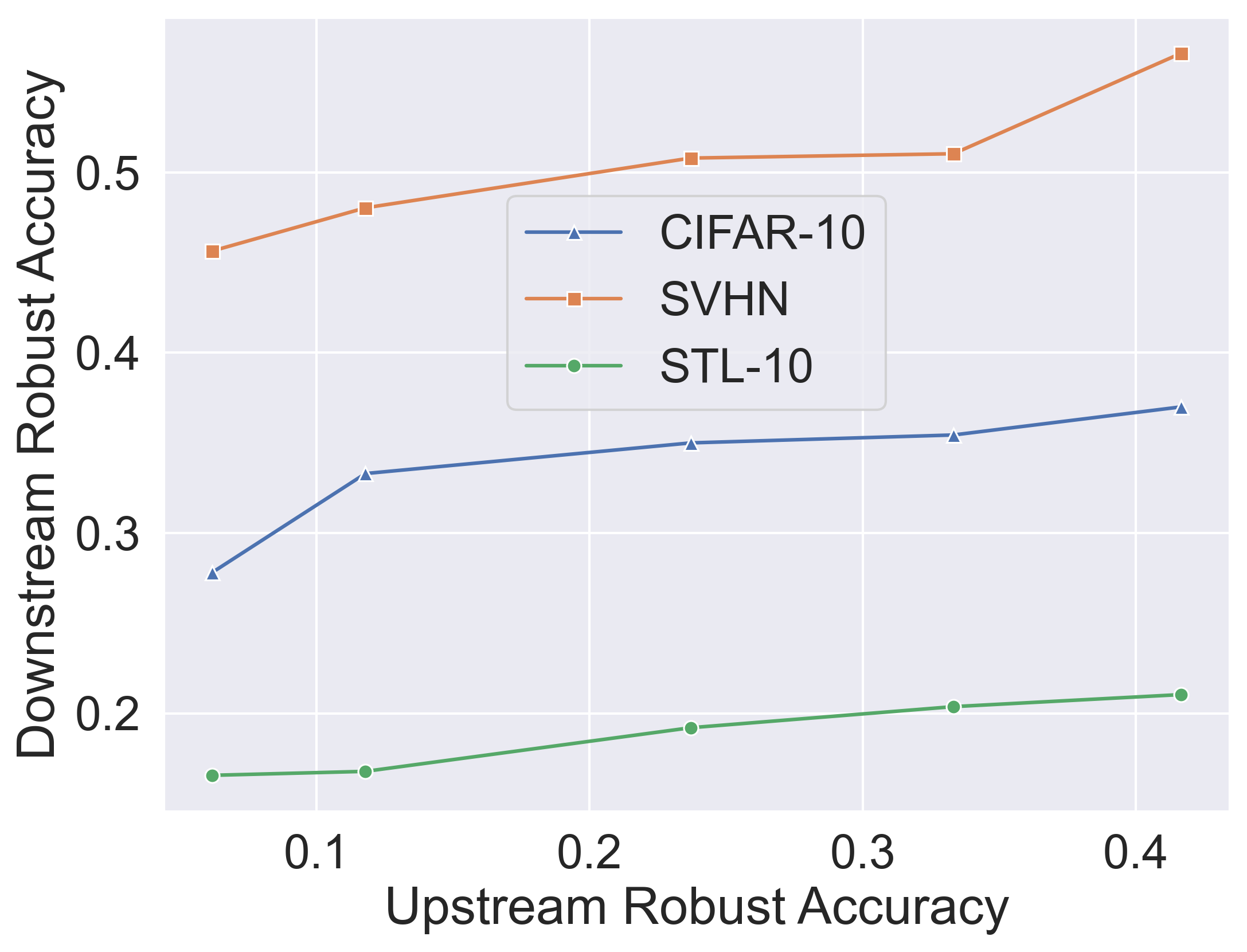
- RQ3노이즈에 강건한 사전 훈련된 모델은 CIFAR-10, SVHN, STL-10와 같은 다양한 개인 정보 보호 데이터셋에서 하류 성능 향상에 얼마나 기여하는가?
- RQ4DPAdapter는 아키텍처 변경 없이 기존 DPML 프레임워크인 DP-SGD 및 DP-FedAvg에 효과적으로 통합될 수 있는가?
- RQ5사전 훈련 단계에서 명시적으로 최적화된 매개변수 강인성이 입력 강인성이나 알고리즘 재설계보다 더 효과적인 방어 수단이 되는가?
주요 결과
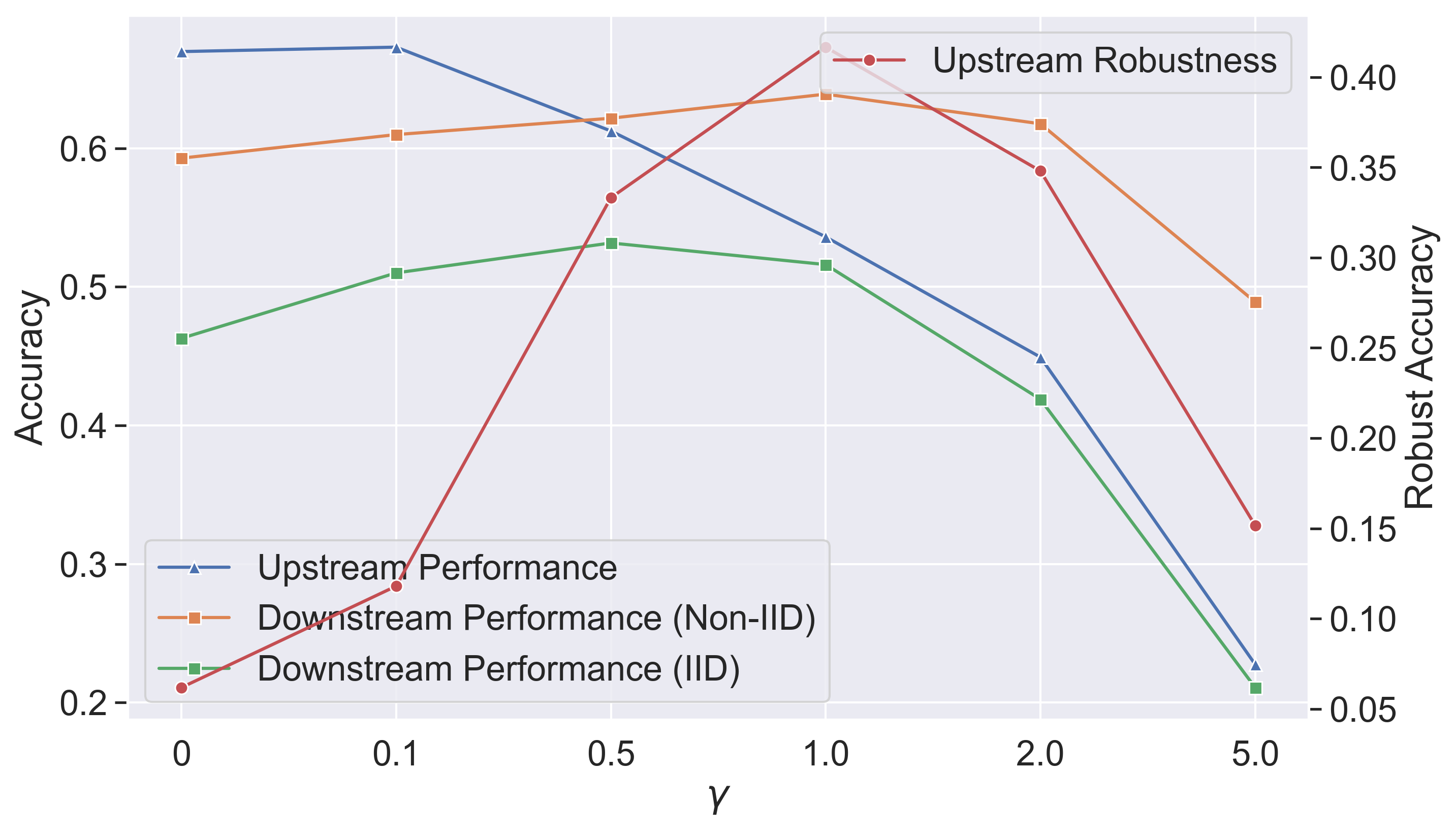
- ε=4의 개인 정보 보호 예산 하에서, DPAdapter는 CIFAR-10, SVHN, STL-10에서 평균 모델 정확도를 72.92%에서 77.09%로 향상시켰다.
- DPAdapter의 두 배치 전략은 최악의 경우 변형 추정을 더 정확하게 하여 매개변수 간의 강인성이 크게 향상된다.
- 이 방법은 여러 하류 작업에서 일관된 성능 향상을 달성하여 단일 데이터셋을 넘어서도 광범위하게 적용 가능함을 보여준다.
- DPAdapter는 플러그 앤 플레이 컴포넌트로 기능하여, 기존의 최첨단 DPML 알고리즘의 성능을 향상시키되, 기반 훈련 파이프라인의 변경 없이 가능하다.
- 이론적 분석은 두 배치 설계가 변형 추정의 분산을 줄여 더 안정적인 매개변수 업데이트를 가능하게 하여 강인성을 향상시킨다는 것을 확인한다.
- 이 방법은 연합 학습으로 확장 가능하여, DP-FedAvg에 적용되어 모델 업데이트 집계 시 보호 조치를 제공할 수 있다.
이 논문 읽기
누빈트 뷰어에서 원문을 열고, 읽으면서 궁금한 곳을 바로 물어보세요.
누빈트에서 이 논문 읽기이 리뷰는 AI가 논문 원문을 바탕으로 만들었습니다. 인용하기 전에 원문을 확인해 주세요.