
[논문 리뷰] Evaluating Large Language Models for Public Health Classification and Extraction Tasks
이 논문은 17개의 공중 보건 분류/추출 작업에서 개방 가중치 LLM(7–70B)을 평가하고, 부담, 위험 요인, 개입 범주를 넘어 제로샷 프롬프트와 파샷 프롬프트를 비교하며, subset 작업에서 GPT-4를 벤치마크로 사용합니다.
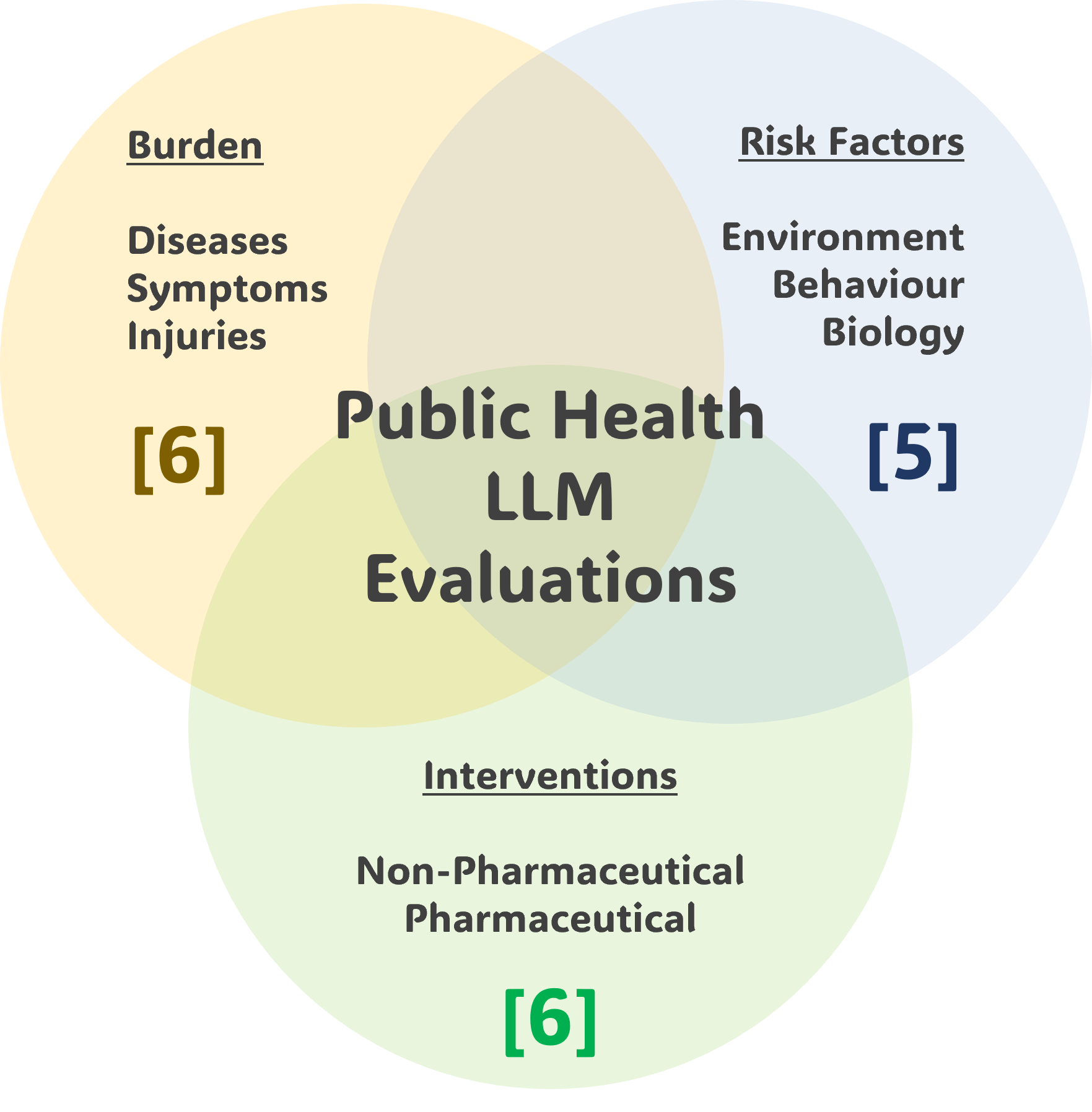
Advances in Large Language Models (LLMs) have led to significant interest in their potential to support human experts across a range of domains, including public health. In this work we present automated evaluations of LLMs for public health tasks involving the classification and extraction of free text. We combine six externally annotated datasets with seven new internally annotated datasets to evaluate LLMs for processing text related to: health burden, epidemiological risk factors, and public health interventions. We evaluate eleven open-weight LLMs (7-123 billion parameters) across all tasks using zero-shot in-context learning. We find that Llama-3.3-70B-Instruct is the highest performing model, achieving the best results on 8/16 tasks (using micro-F1 scores). We see significant variation across tasks with all open-weight LLMs scoring below 60% micro-F1 on some challenging tasks, such as Contact Classification, while all LLMs achieve greater than 80% micro-F1 on others, such as GI Illness Classification. For a subset of 11 tasks, we also evaluate three GPT-4 and GPT-4o series models and find comparable results to Llama-3.3-70B-Instruct. Overall, based on these initial results we find promising signs that LLMs may be useful tools for public health experts to extract information from a wide variety of free text sources, and support public health surveillance, research, and interventions.
연구 동기 및 목표
- 개방 가중 LLM이 광범위한 공중 보건 자유 형식 텍스트 분류 및 추출 작업에서 어떻게 성능을 발휘하는지 평가한다.
- 모델, 작업 및 데이터 소스 간 성능 차이를 이끄는 요인을 식별한다.
- 공중 보건 특화 LLM의 향후 미세조정 및 통제된 배치를 위한 기준선을 제공한다.
- 일부 작업에서 GPT-4와의 비교를 제공하여 비공개 모델과의 동등성을 평가한다.
제안 방법
- 외부 13개 데이터세트와 내부 7개 데이터세트에서 세 하위 영역(부담, 위험 요인, 개입)에 걸친 17개 공중 보건 작업을 수집한다.
- 표준화된 프롬프트/후처리 프레임워크를 사용하여 7–70B 규모의 5개 개방 가중 LLM을 제로샷 프롬프트로 평가한다.
- 데이터 거버넌스와 재현성을 보장하기 위해 UKHSA HPC 자원에서 내부 LLM API를 사용한다.
- 가장 어려운 작업들에서 제로샷 결과를 비교하고 10샷/7샷의 소수샷 프롬프트를 선택한다.
- 마이크로-F1(주요 지표)과 매크로-F1 지표를 계산한다; 추출에 대해 정확 매치를 사용하고 출력은 실제 정답 라벨과 일치하도록 후처리한다.
- 외부 벤치마킹을 위해 12개 작업에서 GPT-4 결과를 포함한다.
실험 결과
연구 질문
- RQ1제로샷 프롬프트 하에서 개방 가중 LLM이 광범위한 공중 보건 분류 및 추출 작업에서 어떻게 성능을 발휘하는가?
- RQ2작업 유형, 데이터 소스, 모델 크기가 성능에 미치는 영향은 무엇인가?
- RQ3소수샷 프롬프트가 어려운 공중 보건 작업에서 성능을 크게 향상시키는가?
- RQ4일부 작업에서 GPT-4가 주요 개방 가중 모델과 어떻게 비교되는가?
- RQ5현재 LLM에게 남아 있는 도전적인 작업은 무엇이며 향후 개선이 필요한가?
주요 결과
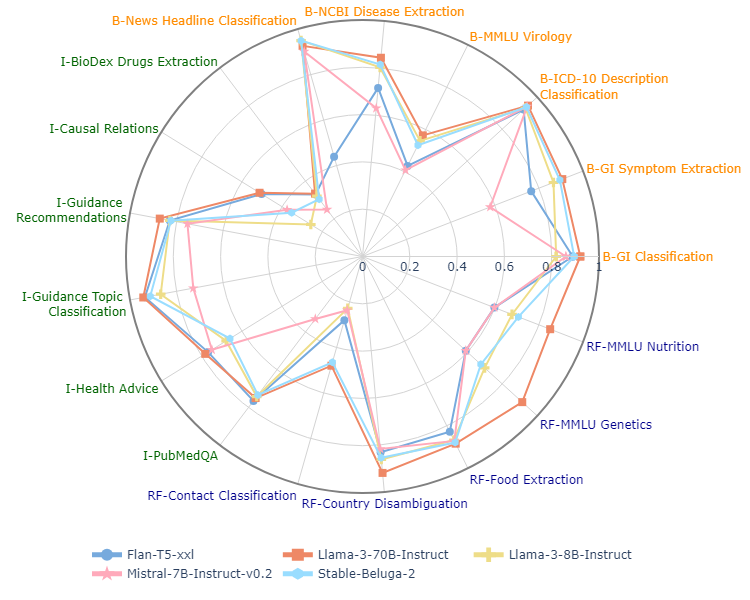
- Llama-3-70B-Instruct는 제로샷 프롬프트에서 17개 작업 중 15개에서 가장 높은 micro-F1을 달성했다.
- 일부 작업은 모든 개방 가중 모델에 여전히 도전적이며 (예: BioDex Drugs Extraction, Contact Classification, MMLU Virology) micro-F1이 60% 아래이다.
- GPT-4는 검토된 12개의 작업 중 대략 절반에서 개방 가중 모델과 동등하거나 더 우수하지만, 여러 작업에서 Llama-3-70B-Instruct에 의해 능가된다.
- 소수샷 프롬프트는 Contact Classification, Health Causal Claims Classification와 같은 어려운 작업에서 모델 간 Flan-T5-xxl을 제외하고 종종 micro-F1에서 15포인트 이상 큰 개선을 낸다.
- 모델 크기와 아키텍처(예: Llama-3-8B-Instruct에서 Llama-3-70B-Instruct로 이동)는 주요 작업에서 10포인트 이상 micro-F1 이득을 가져올 수 있다(예: MMLU Genetics, MMLU Nutrition, Health Advice, Causal Relation).
- 전반적으로 개방 가중 LLM은 공중 보건 자유 텍스트를 구성하고 감시를 지원하는 데 가능성을 보이나 전문 지식 작업에 대한 주의사항이 있다.
이 논문 읽기
누빈트 뷰어에서 원문을 열고, 읽으면서 궁금한 곳을 바로 물어보세요.
누빈트에서 이 논문 읽기이 리뷰는 AI가 논문 원문을 바탕으로 만들었습니다. 인용하기 전에 원문을 확인해 주세요.