
[논문 리뷰] Explainability for Large Language Models: A Survey
이 논문은 Transformer 기반 LLM의 설명가능성 기법을 조사하고, 전통적 미세조정과 프롬프트 패러다임으로 방법을 조직하며, 평가, 디버깅, 향후 과제에 대해 논의한다.
Large language models (LLMs) have demonstrated impressive capabilities in natural language processing. However, their internal mechanisms are still unclear and this lack of transparency poses unwanted risks for downstream applications. Therefore, understanding and explaining these models is crucial for elucidating their behaviors, limitations, and social impacts. In this paper, we introduce a taxonomy of explainability techniques and provide a structured overview of methods for explaining Transformer-based language models. We categorize techniques based on the training paradigms of LLMs: traditional fine-tuning-based paradigm and prompting-based paradigm. For each paradigm, we summarize the goals and dominant approaches for generating local explanations of individual predictions and global explanations of overall model knowledge. We also discuss metrics for evaluating generated explanations, and discuss how explanations can be leveraged to debug models and improve performance. Lastly, we examine key challenges and emerging opportunities for explanation techniques in the era of LLMs in comparison to conventional machine learning models.
연구 동기 및 목표
- LLMs에 대한 설명가능성 기법의 분류 체계를 제공한다.
- 설명을 학습 패러다임(미세조정 vs 프롬프트)으로 조직한다.
- 각 패러다임에 대한 로컬 및 글로벌 설명 접근법을 요약한다.
- 설명의 평가 지표와 이를 디버깅 및 모델 개선에 활용하는 방법을 논의한다.
- LLM 설명가능성의 과제와 향후 방향을 강조한다.
제안 방법
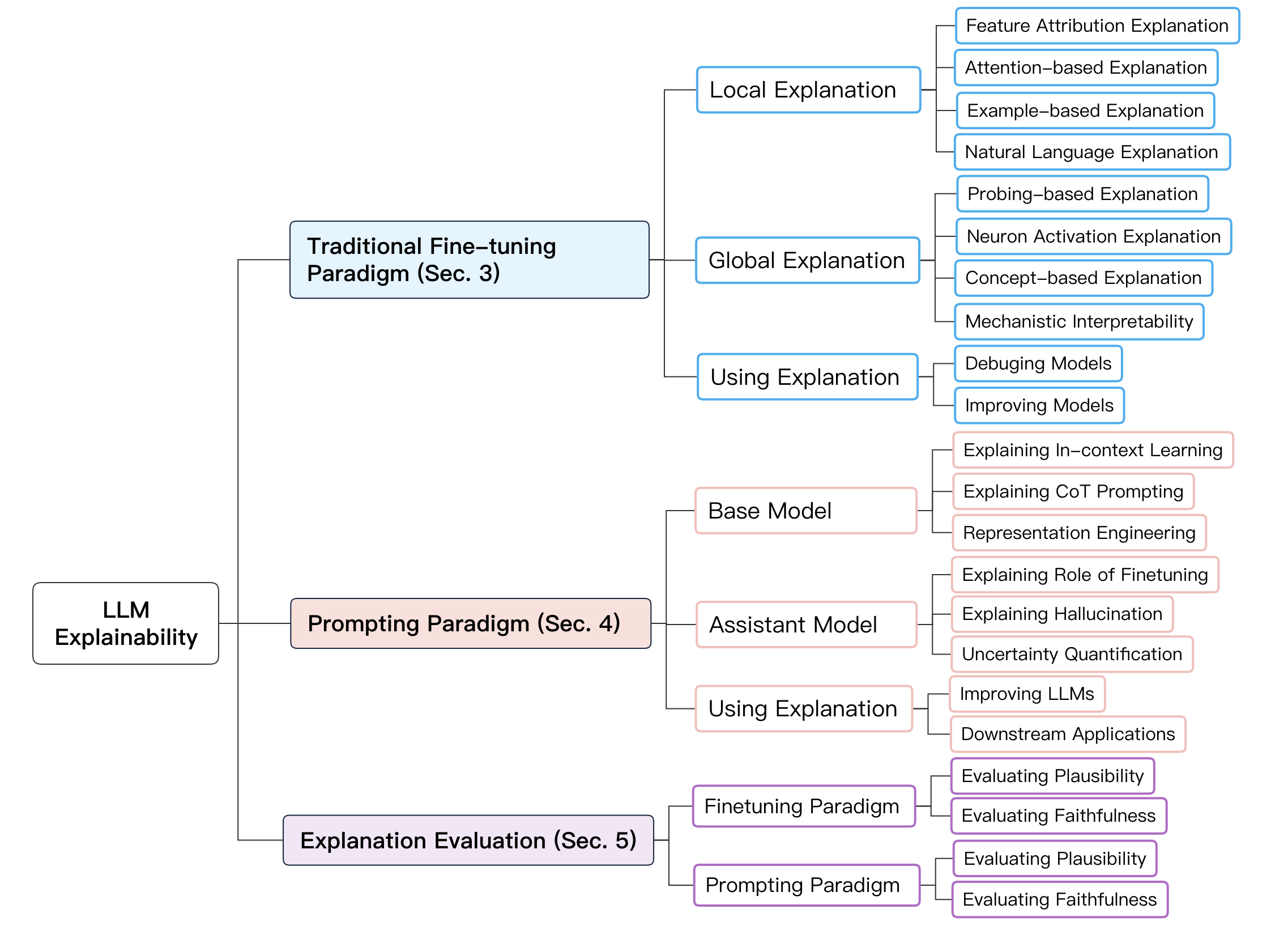
- 트랜스포머 기반 LLM에 대한 설명가능성 기법의 분류 체계를 제안한다.
- 전통적 미세조정 vs 프롬프트 패러다임에 따라 방법을 분류한다.
- 각 패러다임에 대해 로컬 설명(특성 기여도, 어텐션, 예시 기반, 자연어)과 글로벌 설명(프로빙, 뉴런 활성화, 개념 기반)을 요약한다.
- 설명에 대한 평가 지표와 그 적용 가능성을 검토한다.
- 설명가능성에서의 디버깅, 성능 개선 및 향후 연구 방향을 논의한다.
실험 결과
연구 질문
- RQ1LLM에 대한 설명가능성 기법을 체계적으로 어떻게 분류할 수 있는가?
- RQ2미세조정 및 프롬프트 LLM에 대해 어떤 로컬 및 글로벌 설명 방법이 존재하는가?
- RQ3설명의 질과 유용성을 평가하는 지표는 무엇인가?
- RQ4설명을 어떻게 모델 디버깅과 성능 개선에 활용할 수 있는가?
- RQ5전통적인 DL 모델과 비교하여 LLM 설명가능성의 주요 과제와 기회는 무엇인가?
주요 결과
- LLM 설명가능성 기법의 분류 체계가 제공되며, 전통적 미세조정 및 프롬프트 패러다임으로 나뉜다.
- 각 패러다임 내에서 로컬 설명(특성 기여도, 어텐션 기반, 예시 기반, 자연어)과 글로벌 설명(프로빙, 뉴런 활성화, 개념 기반)을 조사한다.
- 이 연구는 생성된 설명에 대한 평가 지표와 패러다임 간의 적용 가능성을 논의한다.
- 설명이 모델 디버깅 및 성능 향상에 어떻게 활용될 수 있는지 다룬다.
- LLM 설명가능성과 기존 DL 모델 간의 도전과제 및 새로운 기회를 식별한다.

이 논문 읽기
누빈트 뷰어에서 원문을 열고, 읽으면서 궁금한 곳을 바로 물어보세요.
누빈트에서 이 논문 읽기이 리뷰는 AI가 논문 원문을 바탕으로 만들었습니다. 인용하기 전에 원문을 확인해 주세요.