
[논문 리뷰] Knowledge-guided Machine Learning: Current Trends and Future Prospects
KGML의 조사: 과학 지식과 데이터를 ML에 통합하는 방법을 개관하여 일반화, 일관성 및 설명 가능성을 향상시키고, 방법과 사용 사례를 3차원 분류 및 탐색.
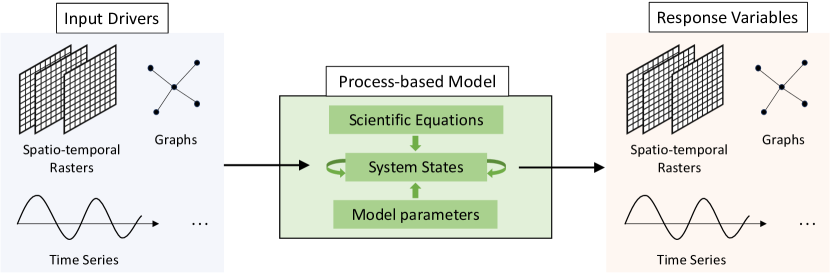
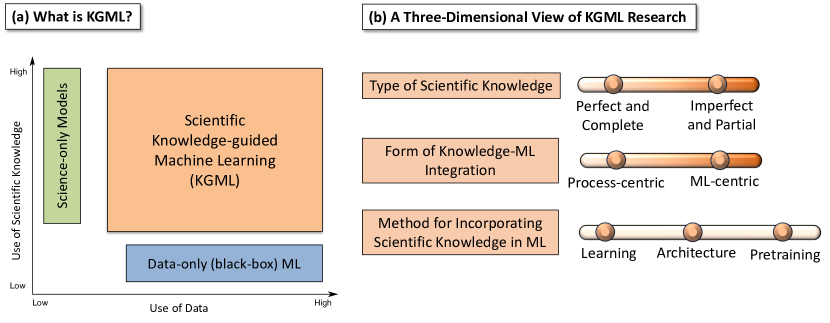
This paper presents an overview of scientific modeling and discusses the complementary strengths and weaknesses of ML methods for scientific modeling in comparison to process-based models. It also provides an introduction to the current state of research in the emerging field of scientific knowledge-guided machine learning (KGML) that aims to use both scientific knowledge and data in ML frameworks to achieve better generalizability, scientific consistency, and explainability of results. We discuss different facets of KGML research in terms of the type of scientific knowledge used, the form of knowledge-ML integration explored, and the method for incorporating scientific knowledge in ML. We also discuss some of the common categories of use cases in environmental sciences where KGML methods are being developed, using illustrative examples in each category.
연구 동기 및 목표
- 과학적 모델링 및 KGML 분야를 소개한다.
- 프로세스 기반 모델과 ML 접근법을 비교하고 상보성을 논의한다.
- 지식 유형, 통합 형태, 도입 방법의 3차원 KGML 프레임워크를 제시한다.
- 환경 과학에서의 주요 KGML 방법과 사용 사례를 설명한다.
- 환경 과학에서의 기초 모델을 포함한 향후 방향과 기회를 강조한다.
제안 방법
- 과학적 모델링을 위한 프로세스 기반 모델과 ML 모델의 강점과 약점을 설명한다.
- 지식 유형, 통합 형태, 도입 방법의 3차원 KGML 분류체계를 제안한다.
- 지식 주도 학습, 아키텍처, 프리트레이닝/초기화의 세 가지 주요 KGML 통합 방법을 요약한다.
- 예시를 제시하고 주요 KGML 연구를 참조한다(예: PGNN, PINNs, PGRNN, PGA-LSTM).
- 전방 모델링, 역방향 모델링, 생성 모델링, 다운스케일링의 사용 사례를 논의한다.
- 기초 모델과 향후 연구 방향과 같은 기회를 강조한다.
실험 결과
연구 질문
- RQ1KGML에서 사용되는 과학 지식의 유형은 무엇이며 부분적 지식과 완전한 지식이 모델링에 어떤 영향을 미치는가?
- RQ2지식-ML 통합의 형태에는 어떤 것이 있으며 어떻게 차이가 있는가(ML 중심 vs. 프로세스 중심)?
- RQ3과학 지식을 ML 모델에 통합하는 데 사용되는 방법은 무엇인가(학습, 아키텍처, 프리트레이닝)?
- RQ4환경 과학에서의 주요 KGML 사용 사례는 무엇이며 향후 연구 기회는 무엇인가?
- RQ5KGML이 환경 과학의 기초 모델에 어떻게 기여할 수 있는가?
주요 결과
- KGML은 검은상자 ML에 비해 일반화성과 과학적 일관성을 향상시키기 위해 과학 지식과 데이터를 결합한다.
- KGML은 지식 유형, 지식-ML 통합 형태, 도입 방법의 세 차원으로 분류될 수 있다.
- 주요 세 가지 도입 방법이 있다: 지식 주도 학습(손실 함수), 지식 주도 아키텍처, 지식 주도 프리트레이닝/초기화.
- KGML 방법의 예로 PINNs, PGNNs, PGRNN, PGA-LSTM, 그리고 서브그리드 매개변수화가 있으며, ML 중심 및 프로세스 중심 접근을 보여준다.
- KGML 사용 사례는 환경 과학에서 전방 모델링, 역방향 모델링, 생성 모델링, 다운스케일링에 걸친다.
- 환경 과학에서 기초 모델로의 진보를 향해 나아가고 있으며, 폭넓고 이전 가능한 지식의 기회를 시사한다.
이 논문 읽기
누빈트 뷰어에서 원문을 열고, 읽으면서 궁금한 곳을 바로 물어보세요.
누빈트에서 이 논문 읽기이 리뷰는 AI가 논문 원문을 바탕으로 만들었습니다. 인용하기 전에 원문을 확인해 주세요.