
[논문 리뷰] Learn Global and Optimize Local: A Data-Driven Methodology for Last-Mile Routing
이 논문은 이력 배송 데이터에서 글로벌 영역 순서를 학습하고 영역 내 정류장 순서를 최적화하여 실제 운전사 행동과 더 잘 일치하는 데이터 기반의 계층적 라우팅 방법론을 제안한다. 이동 시간과 이력 영역 전이를 가중치가 부여된 비용 행렬에 통합함으로써, 이 접근 방식은 고정밀도 라우트 예측 성능(0.991 AUC)을 달성하고 최소마일 라우팅 연구 챌린지에서 베이스라인 TSP 모델을 능가한다.
In last-mile routing, the task of finding a route is often framed as a Traveling Salesman Problem to minimize travel time and associated cost. However, solutions stemming from this approach do not match the realized paths as drivers deviate due to navigational considerations and preferences. To prescribe routes that incorporate this tacit knowledge, a data-driven model is proposed that aligns well with the hierarchical structure of delivery data wherein each stop belongs to a zone - a geographical area. First, on the global level, a zone sequence is established as a result of a minimization over a cost matrix which is a weighted combination of historical information and distances (travel times) between zones. Subsequently, within zones, sequences of stops are determined, such that, integrated with the predetermined zone sequence, a full solution is obtained. The methodology is particularly promising as it propels itself within the top-tier of submissions to the Last-Mile Routing Research Challenge, while it maintains an elegant decomposition that ensures a feasible implementation into practice. The concurrence between prescribed and realized routes underpins the adequateness of a hierarchical breakdown of the problem and the fact that drivers make a series of locally optimal decisions when navigating. Furthermore, experimenting with the balance between historical information and distance exposes that historic information is pivotal in deciding a starting zone of a route. The experiments also reveal that at the end of a route, historical information can best be discarded, making the time it takes to return to the station the primary concern.
연구 동기 및 목표
- 이론적으로 최적화된 루트와 실제 운전사의 이탈 간 격차를 해소하기 위해.
- 운전사의 암묵적 지식과 선호도를 반영하는 확장 가능하고 실용적인 라우팅 방법론을 개발하기 위해.
- 정류장 수준이 아닌 영역 수준에서의 이력 라우팅 데이터를 활용해 라우트 예측 정확도를 향상시키기 위해.
- TSP를 글로벌(영역) 및 로컬(영역 내) 최적화로 계층적으로 분해함으로써 실제 적용 가능성과 성능을 향상시킬 수 있음을 입증하기 위해.
- 매일 실현된 루트를 사용해 실시간으로 업데이트할 수 있는 프레임워크를 제공하기 위해.
제안 방법
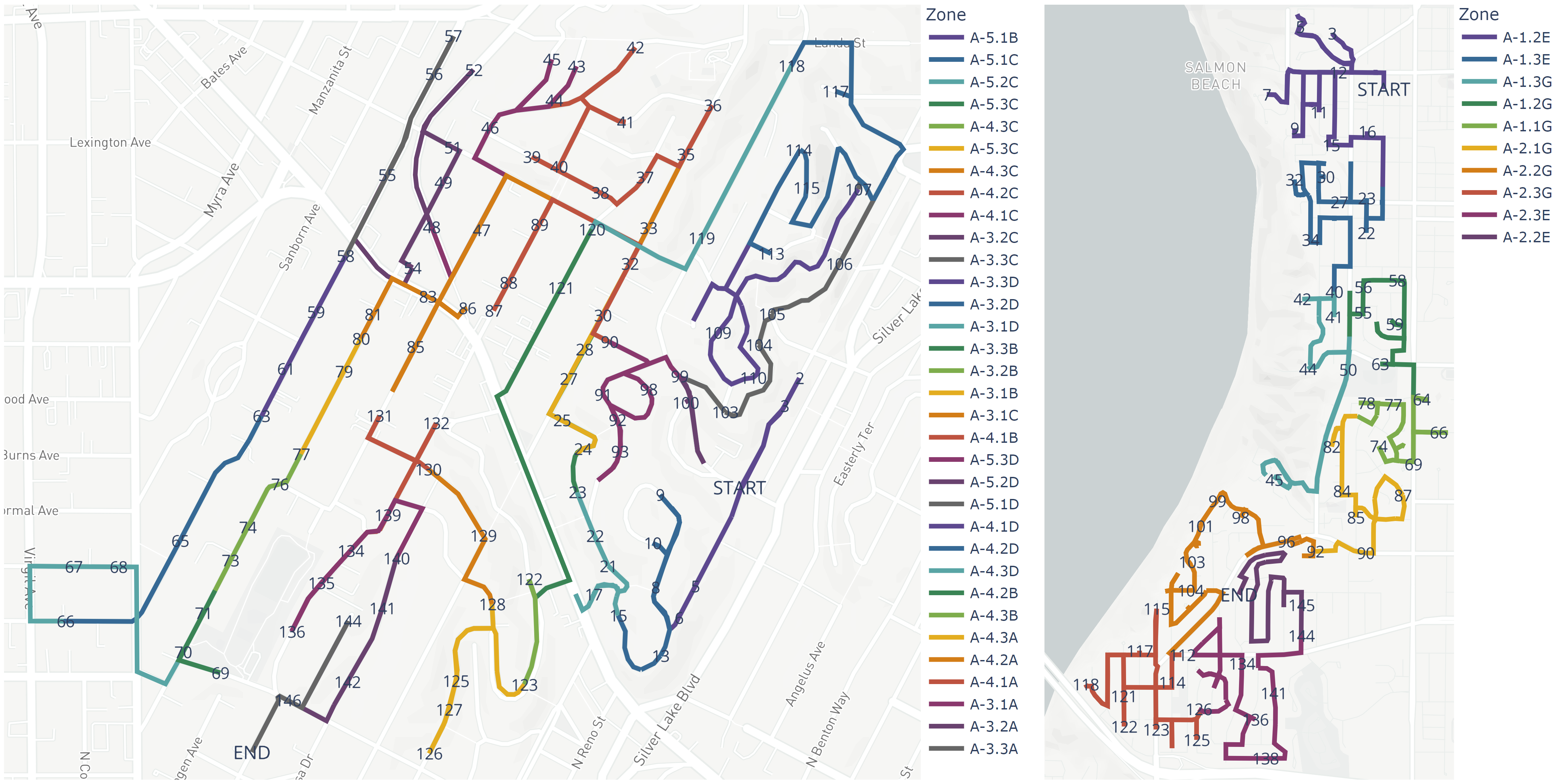
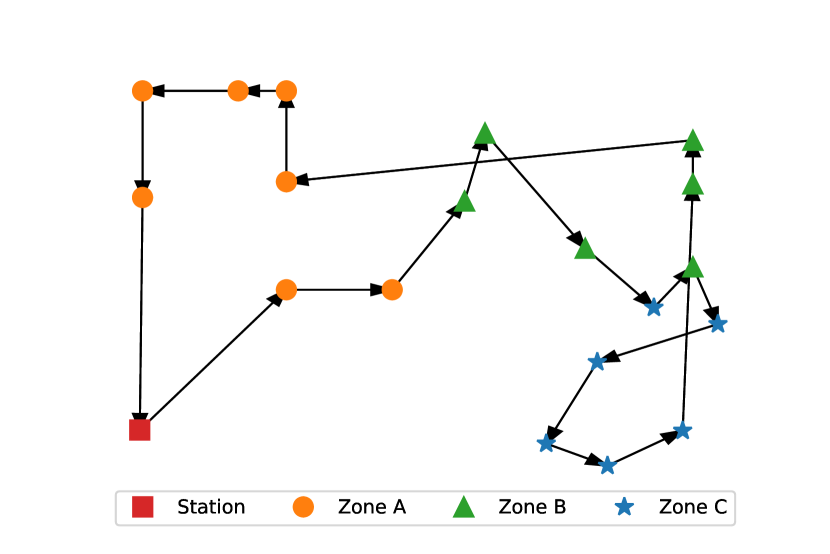
- 이동 시간과 이력 영역 전이 빈도를 조합한 비용 행렬에 기반한 TSP를 사용해 영역의 최적 순서를 결정하는 이중 단계 과정으로 최소마일 라우팅을 모델링한다.
- 거리(이동 시간)와 이력 전이 빈도를 조합한 가중치가 부여된 비용 행렬을 구성하며, 조정 가능한 가중치 파rameter(최적값은 약 0.9)를 사용한다.
- 각 영역에 대해 별도의 TSP(또는 OTSP)를 해결하여 정류장의 최적 순서를 결정함으로써 각 영역 내 국지 최적성을 확보한다.
- 정류장 수준의 모델링보다 영역 수준의 데이터를 사용해 전이 확률을 학습함으로써 데이터 희소성 문제를 감소시킨다.
- 정거장에서 영역으로, 영역에서 정거장으로의 전이에 대해 다른 가중치를 적용하여, 운전사가 루트 종료 시점의 복귀 시간을 우선시한다는 점을 반영한다.
- 매일의 루트 데이터로 새로운 이력 전이 빈도 행렬을 업데이트함으로써 실시간 재학습을 가능하게 한다.
실험 결과
연구 질문
- RQ1기존 TSP 수식보다 역사적 배송 데이터를 어떻게 활용해 운전사 루트를 더 정확하게 예측할 수 있는가?
- RQ2최소마일 라우팅을 영역 수준과 영역 내 최적화로 계층적으로 분해할 경우, 실제 운전사 행동과의 일치도는 어느 정도 향상되는가?
- RQ3영역 순서 예측을 위한 비용 행렬에서 이동 시간과 이력 전이 빈도 간 최적의 균형은 무엇인가?
- RQ4루트 시작 시점과 종료 시점에서 운전사 선호도가 비용 행렬 구성 요소의 가중치에 미치는 영향은 어떠한가?
- RQ5매일 실현된 루트를 사용해 실시간으로 모델을 업데이트할 수 있는가?
주요 결과
- 제안된 방법은 라우트 예측에서 AUC 0.991을 달성하여 기존 TSP 모델을 크게 능가했으며, 최소마일 라우팅 연구 챌린지에서 상위 등수를 기록했다.
- 이동 시간과 이력 영역 전이의 가중 조합(최적 가중치 약 0.9)이 가장 우수한 성능을 보였으며, 이는 거리와 운전사 선호도 사이의 강력한 트레이드오프를 시사한다.
- 영역 간 전이에서는 이동 시간을 더 높게 가중할수록 성능이 향상되며, 이는 운전사가 루트 시작 결정 시 시간보다 순서를 더 우선시한다는 점을 반영한다.
- 루트 종료 시점에서는 이력 정보의 중요성이 감소하고, 정거장으로의 복귀 시간 최소화가 라우트 선택의 주요 요소가 된다.
- 가중치 파rameter의 잘못된 설정에 대해서도 모델 성능이 안정적이며, 넓은 범위의 값에서 유사한 성능를 유지한다.
- 남은 학습 격차는 매우 작으며, 단지 0.009 AUC에 불과하여, 5,112건의 훈련 루트만으로도 운전사 행동의 대부분 예측 가능한 구조를 잘 포착하고 있음을 시사한다.
더 나은 연구,지금 바로 시작하세요
논문 읽기부터 검토까지, 연구 시간을 획기적으로 줄여보세요.
카드 등록 없음 · 무료 플랜 제공
이 리뷰는 AI가 만들고, 인간 에디터가 검토했습니다.