
[논문 리뷰] Leveraging ChatGPT As Text Annotation Tool For Sentiment Analysis
본 논문은 ChatGPT를 텍스트 주석 도구로 활용하여 감성 분석을 평가하고, 두 데이터셋(축구 트윗, Amazon 리뷰)에서 어휘 기반 방법보다 상당한 정확도 향상을 보고한다.
Sentiment analysis is a well-known natural language processing task that involves identifying the emotional tone or polarity of a given piece of text. With the growth of social media and other online platforms, sentiment analysis has become increasingly crucial for businesses and organizations seeking to monitor and comprehend customer feedback as well as opinions. Supervised learning algorithms have been popularly employed for this task, but they require human-annotated text to create the classifier. To overcome this challenge, lexicon-based tools have been used. A drawback of lexicon-based algorithms is their reliance on pre-defined sentiment lexicons, which may not capture the full range of sentiments in natural language. ChatGPT is a new product of OpenAI and has emerged as the most popular AI product. It can answer questions on various topics and tasks. This study explores the use of ChatGPT as a tool for data labeling for different sentiment analysis tasks. It is evaluated on two distinct sentiment analysis datasets with varying purposes. The results demonstrate that ChatGPT outperforms other lexicon-based unsupervised methods with significant improvements in overall accuracy. Specifically, compared to the best-performing lexical-based algorithms, ChatGPT achieves a remarkable increase in accuracy of 20% for the tweets dataset and approximately 25% for the Amazon reviews dataset. These findings highlight the exceptional performance of ChatGPT in sentiment analysis tasks, surpassing existing lexicon-based approaches by a significant margin. The evidence suggests it can be used for annotation on different sentiment analysis events and taskss.
연구 동기 및 목표
- 광범위한 인간 라벨링 없이도 효율적이고 고품질의 감정 주석의 필요성을 제시한다.
- 다양한 도메인에서 ChatGPT가 제로샷 텍스트 주석자 역할을 할 수 있는지 평가한다.
- 표준 지표를 사용하여 ChatGPT와 어휘 기반 기준선(VADER, TextBlob)을 비교한다.
- 감정 분류에서 이모지, 풍자 및 장문 리뷰를 처리하는 ChatGPT의 잠재력을 보여준다.
제안 방법
- 고정 프롬프트를 사용하여 API 응답에서 추출된 감성 점수를 라벨링하기 위해 GPT-3.5 터보(ChatGPT)를 사용한다.
- 두 데이터셋에서 평가한다: 축구 트윗(6,201 행; 1,214 이모지; 2,551 긍정, 2,710 부정, 943 중립) 및 2,000개 Amazon 리뷰(긍정 1,002, 부정 998).
- 기준선으로 어휘 기반 도구 VADER와 TextBlob과 비교한다.
- ChatGPT 출력에서 숫자형 감성 점수를 추출하여 라벨을 할당한다.
- 각 라벨 및 데이터셋에 대해 정밀도, 재현율, F1, 정확도를 보고한다.
- 이모지 처리 및 풍자 인식과 같은 정성적 측면을 논의한다.
실험 결과
연구 질문
- RQ1ChatGPT가 다양한 도메인에서 효과적인 제로샷 텍스트 주석자로서 작용할 수 있는가?
- RQ2소셜 미디어와 장문 리뷰에서 ChatGPT의 감정 라벨링은 어휘 기반 접근법과 어떻게 비교되는가?
- RQ3전통적인 어휘 기반 방법보다 이모지, 풍자, 아이러니를 더 잘 다루는가?
- RQ4주석 작업에 ChatGPT를 사용할 때의 실용적 고려사항(속도, 비용, 편향)은 무엇인가?
주요 결과
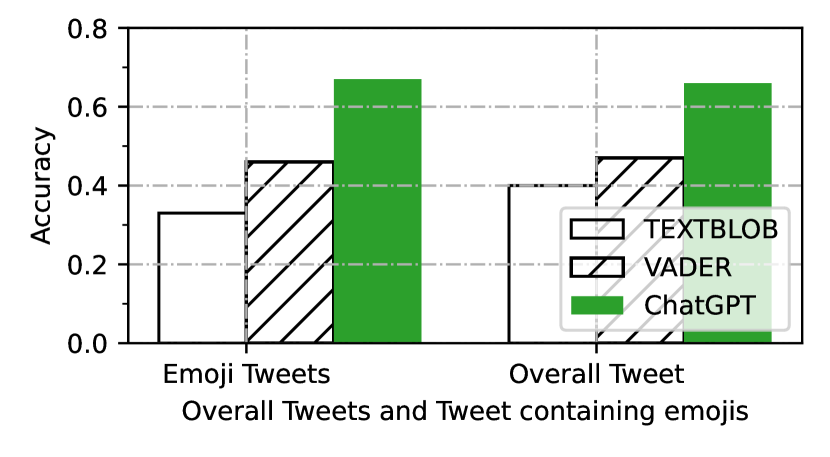
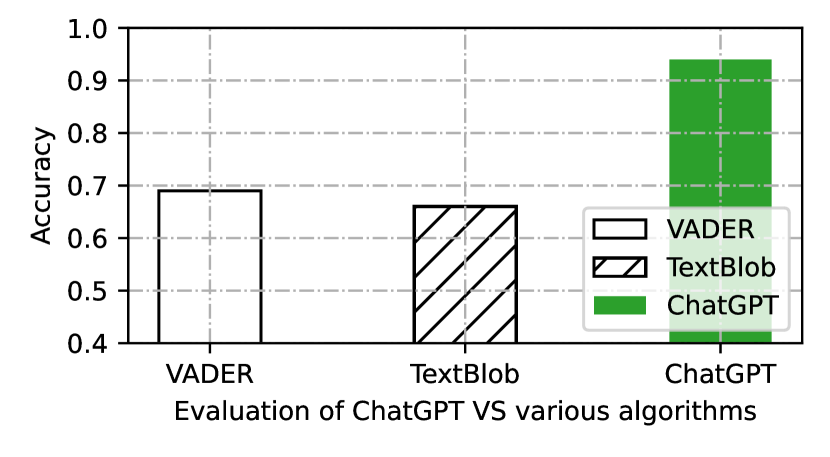
- ChatGPT는 두 데이터셋 모두에서 VADER 및 TextBlob보다 더 높은 정확도를 달성한다(예: Soccer Tweets: 67% 종합 vs 47% VADER 및 40% TextBlob; Amazon Reviews: 94% vs 69% VADER 및 66% TextBlob).
- ChatGPT는 감정 분류에서 이모지를 효과적으로 처리하여 이모지 포함 트윗의 성능을 향상시킨다.
- 보고된 표에서 긍정, 중립, 부정 클래스 각각에 대해 더 높은 per-label 정밀도, 재현율 및 F1을 보여준다.
- ChatGPT의 제로샷 감정 분석은 강력한 성능을 보이며, 장문 리뷰뿐만 아니라 짧은 소셜 미디어 텍스트에서도 어휘 기반 방법에 비해 뚜렷한 향상을 보인다.
- 연구는 프롬프트 의존성, 응답 편향 가능성, 일부 도구에 비해 느린 처리 속도/비용 등의 한계를 지적한다.
이 논문 읽기
누빈트 뷰어에서 원문을 열고, 읽으면서 궁금한 곳을 바로 물어보세요.
누빈트에서 이 논문 읽기이 리뷰는 AI가 논문 원문을 바탕으로 만들었습니다. 인용하기 전에 원문을 확인해 주세요.