
[논문 리뷰] LuSEE 'Night': The Lunar Surface Electromagnetics Experiment
LuSEE Night는 달의 뒷면에 위치한 저주파 라디오 천문학 실험으로, 14-Earth-day lunar night 동안 작동하도록 설계되었으며 50 MHz 대역폭을 사용하고, 직교식 6 m dipole과 EMI가 없는 환경에서 50 MHz 이하의 전 세계 라디오 하늘을 측정하기 위해 4-channel Nyquist baseband spectrometer를 활용합니다.
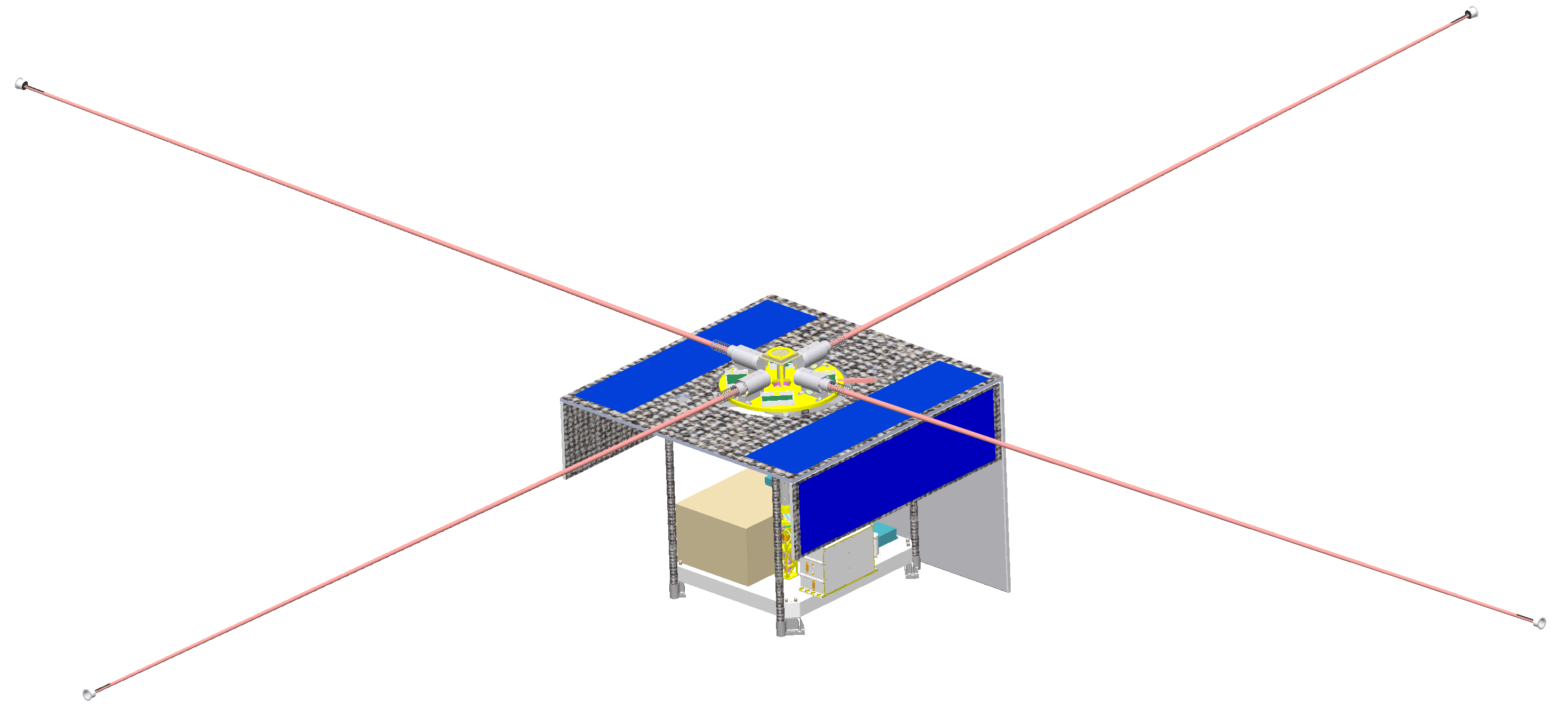
The Lunar Surface Electromagnetics Explorer 'LuSEE Night' is a low frequency radio astronomy experiment that will be delivered to the farside of the Moon by the NASA Commercial Lunar Payload Services (CLPS) program in late 2025 or early 2026. The payload system is being developed jointly by NASA and the US Department of Energy (DOE) and consists of a 4 channel, 50 MHz Nyquist baseband receiver system and 2 orthogonal $\sim$6m tip-to-tip electric dipole antennas. LuSEE Night will enjoy standalone operations through the lunar night, without the electromagnetic interference (EMI) of an operating lander system and antipodal to our noisy home planet.
연구 동기 및 목표
- pristine lunar farside 환경에서 50 MHz 미만의 전 세계 라디오 하늘 특성화
- lander EMI 없이 달의 밤 동안의 장기간 저주파 라디오 관측 가능성 평가
- 미래의 달 라디오 천문학 사업을 뒷받침하기 위한 보정 및 시스템 특성화 제공
- 높은 적색편이 21 cm 우주론(어둠의 시대)을 위한 전방향 분석에 대한 포렌도 보강 데이터 제공
- 미래의 LuSEE 유사 임무를 위한 설계 및 운용 교훈 도출
제안 방법
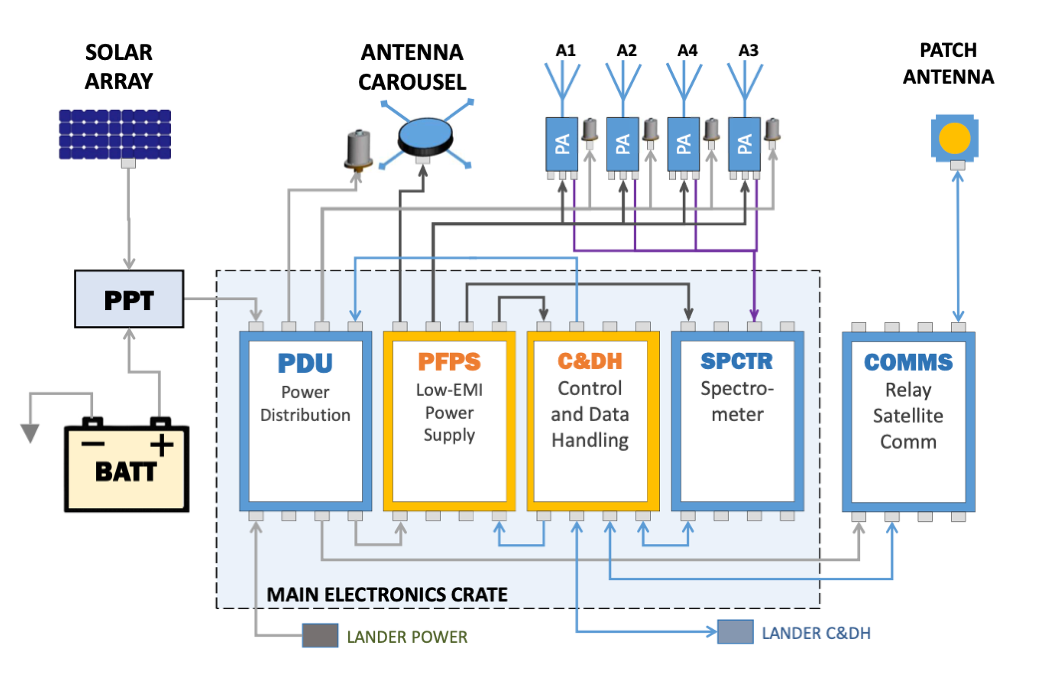
- 4-channel, 50 MHz Nyquist baseband 수신기 시스템 배치
- 방향성 연구를 위해 회전 캐로셀에 구성된 직교 약 6 m tip-to-tip 전기 다이폴 안테나 두 개 사용
- 102.4 Msamples/sec로 네 가지 단일 끝 안테나 전압을 기록하고 자동상관/교차상관 스펙트럼을 FPGA 기반 스펙트로미터로 계산
- 안테나 샷노이즈를 피하기 위해 교차상관으로 스톡스 파라미터 계산
- 디지털 신호 처리 촉진과 전력 공급 노이즈 완화를 위해 안정적인 스위칭 주파수를 가지는 DC-DC 컨버터 사용
- 달의 밤 동안 구동하기 위한 대형 배터리와 lander C&DH 및 통신 인터페이스를 위한 DCB 포함
실험 결과
연구 질문
- RQ1달의 뒷면에서 관측된 50 MHz 미만의 글로벌 저주파 라디오 하늘 스펙트럼은 무엇인가?
- RQ2달 환경( EMI-free, 수평선, 레골리트) 은 지구 기반 또는 다른 달 실험과 비교하여 측정 및 스펙트럼 색차에 어떤 영향을 미치는가?
- RQ3LuSEE Night가 고적색편이 21 cm 우주론(어둠의 시대)에 relevant한 포렌도 모델 및 보정 전략에 정보를 제공할 수 있는가?
주요 결과
- LuSEE Night는 달의 밤을 ~40 kg의 배터리와 회전 안테나 캐로셀로 현장 보정 연구를 수행하며 작동할 것이다
- 스펙트로미터는 102.4 Msamples/sec로 샘플링하고 교차상관을 사용하여 스펙트럴 정보 및 잠재적 스톡스 파라미터를 생성한다
- 페커 태양탐사선(Parker Solar Probe) 계승의 페이로드 아키텍처를 달 환경과 EMI-free 관측에 맞게 수정했다
- FFCS(합성 전파 소스) 개념(CS-4)은 Antenna 패턴 및 시스템 응답 보정을 위해 30회의 패스를 ~50 Earth days에 걸쳐 알려진 신호를 제공하도록 제안된다
- 착륙 지점 및 열 설계는 지구계 RFI 영향과 열 문제를 최소화하여 장기간 자율 운용을 가능하게 하는 것을 목표로 한다
이 논문 읽기
누빈트 뷰어에서 원문을 열고, 읽으면서 궁금한 곳을 바로 물어보세요.
누빈트에서 이 논문 읽기이 리뷰는 AI가 논문 원문을 바탕으로 만들었습니다. 인용하기 전에 원문을 확인해 주세요.