
[논문 리뷰] Machine Learning with a Reject Option: A survey
본 조사는 거부 옵션이 있는 머신러닝에 대한 포괄적 개요를 제공하고, 모호성 및 참신성 거절의 형식화, 아키텍처, 평가 방법, 학습 전략, 그리고 관련 분야와의 연결을 다룬다.
Machine learning models always make a prediction, even when it is likely to be inaccurate. This behavior should be avoided in many decision support applications, where mistakes can have severe consequences. Albeit already studied in 1970, machine learning with rejection recently gained interest. This machine learning subfield enables machine learning models to abstain from making a prediction when likely to make a mistake. This survey aims to provide an overview on machine learning with rejection. We introduce the conditions leading to two types of rejection, ambiguity and novelty rejection, which we carefully formalize. Moreover, we review and categorize strategies to evaluate a model's predictive and rejective quality. Additionally, we define the existing architectures for models with rejection and describe the standard techniques for learning such models. Finally, we provide examples of relevant application domains and show how machine learning with rejection relates to other machine learning research areas.
연구 동기 및 목표
- 예측 모델에서 거절(본래 abstention)의 조건을 형식화한다(모호성 대 참신성).
- 거절을 가능하게 하는 아키텍처와 학습 전략을 검토하고 분류한다.
- 거절이 있는 모델의 평가 프레임워크와 비용을 개요로 제시한다.
- 여러 거절기(rejectors)를 결합하는 방법과 거절을 더 넓은 ML 주제와 관련지어 설명한다.
- 신뢰 가능한 ML 및 관련 분야의 응용과 향후 방향을 강조한다.
제안 방법
- 거절 학습 문제를 정의하고 출력 공간에 거부 기호를 포함하도록 확장한다.
- 편향-분산 및 데이터 분포 해석을 사용하여 거절을 모호성 거절과 참신성 거절로 분류한다.
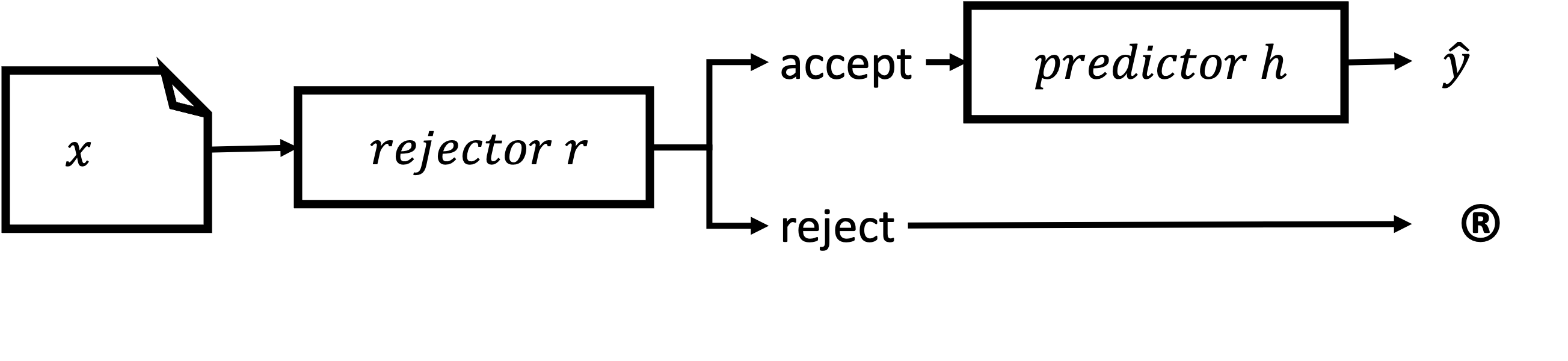
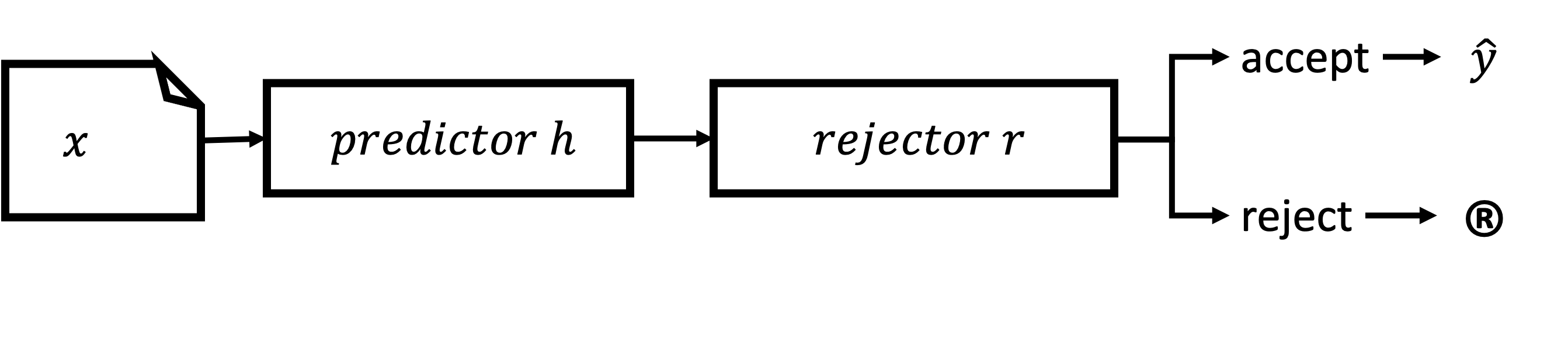
- 아키텍처(분리형, 의존형, 통합형)를 검토하고 예측에서 거절이 어떻게 구현되는지 살펴본다.
- 고정 거절율, 트레이드오프 곡선(ARC/AURC), 비용 기반 지표 등 평가 방법론을 요약한다.
- 거절자에 대한 학습 전략(밀도 추정, 단일 클래스 분류기, 참신성 점수, 신뢰도 함수)을 설명한다.
- 여러 거절기의 통합 및 결합 방법과 불확실성 정량화, 활성 학습 및 관련 분야와의 연결점을 논의한다.
실험 결과
연구 질문
- RQ1모델이 예측을 중단해야 하는 시점을 어떻게 형식화할 것인가(모호성 vs. 참신성)?
- RQ2예측 품질과 거절 품질을 어떻게 평가하고, 트레이드오프와 비용을 포함할 것인가?
- RQ3거절을 가능하게 하는 아키텍처는 무엇이며 거절이 가능한 모델은 어떻게 학습할 수 있는가?
- RQ4분리형, 의존형 및 통합형 거절기의 장단점은 무엇인가?
- RQ5여러 거절기를 어떻게 결합할 수 있으며 다른 ML 연구 분야와의 관계는 무엇인가?
주요 결과
- 모호성(Ambiguity) 및 참신성(Novelty) 거절 유형의 구조화된 분류체계와 세 가지 아키텍처 계열(Separated, Dependent, Integrated)을 제시한다.
- 고정 거절율, ARC/AURC 트레이드오프, 비용 기반 지표를 포함한 포괄적 평가 프레임워크를 개요로 제시한다.
- 거절자를 위한 학습 패러다임(밀도/확률 추정, 원클래스 방법, 참신성 점수, 신뢰도 함수)을 자세히 설명한다.
- 배포 시 신뢰성, 안전성, 공정성을 향상시키는 거절의 가능성을 보여주며 예측 품질과 커버리지의 균형을 맞춘다.
- 거절을 불확실성 정량화, 이상 탐지, 활성 학습, 메타러닝 및 관련 분야와 연결한다.
- 응용에 대한 실무적 고려사항을 다루고 향후 연구 방향을 제시한다.
이 논문 읽기
누빈트 뷰어에서 원문을 열고, 읽으면서 궁금한 곳을 바로 물어보세요.
누빈트에서 이 논문 읽기이 리뷰는 AI가 논문 원문을 바탕으로 만들었습니다. 인용하기 전에 원문을 확인해 주세요.