
[논문 리뷰] MGTBench: Benchmarking Machine-Generated Text Detection
MGTBench는 강력한 LLM에 대해 기계 생성 텍스트 탐지 방법을 평가하기 위한 모듈식 벤치마크 프레임워크를 제안하며, 메트릭 기반 및 모델 기반 접근법을 비교하고 전이성, 강인성, 텍스트 귀속성(텍스트 출처 식별)을 평가한다.
Nowadays, powerful large language models (LLMs) such as ChatGPT have demonstrated revolutionary power in a variety of tasks. Consequently, the detection of machine-generated texts (MGTs) is becoming increasingly crucial as LLMs become more advanced and prevalent. These models have the ability to generate human-like language, making it challenging to discern whether a text is authored by a human or a machine. This raises concerns regarding authenticity, accountability, and potential bias. However, existing methods for detecting MGTs are evaluated using different model architectures, datasets, and experimental settings, resulting in a lack of a comprehensive evaluation framework that encompasses various methodologies. Furthermore, it remains unclear how existing detection methods would perform against powerful LLMs. In this paper, we fill this gap by proposing the first benchmark framework for MGT detection against powerful LLMs, named MGTBench. Extensive evaluations on public datasets with curated texts generated by various powerful LLMs such as ChatGPT-turbo and Claude demonstrate the effectiveness of different detection methods. Our ablation study shows that a larger number of words in general leads to better performance and most detection methods can achieve similar performance with much fewer training samples. Moreover, we delve into a more challenging task: text attribution. Our findings indicate that the model-based detection methods still perform well in the text attribution task. To investigate the robustness of different detection methods, we consider three adversarial attacks, namely paraphrasing, random spacing, and adversarial perturbations. We discover that these attacks can significantly diminish detection effectiveness, underscoring the critical need for the development of more robust detection methods.
연구 동기 및 목표
- 강력한 LLM에 대해 MGT 탐지 및 귀속을 위한 포괄적이고 모듈식 벤치마크 프레임워크를 만든다.
- 다양한 데이터셋과 LLM에서 메트릭 기반 및 모델 기반 탐지 방법의 광범위한 세트를 평가한다.
- 데이터셋과 LLM 간의 전이성, 적대적 교란에 대한 강인성, 실용적인 탐지 효율성을 분석한다.
- 텍스트 길이와 학습 데이터 크기가 탐지 성능에 미치는 영향을 제공한다.
제안 방법
- 입력, 탐지 및 평가 모듈로 구성된 모듈형 설계.
- 열 개의 탐지 방법 통합(여덟 개의 메트릭 기반, 다섯 개의 모델 기반 통합 가능).
- 공개 LLM(예: ChatGPT-turbo, Claude, ChatGLM, Dolly, GPT4All, StableLM)을 사용하여 인간이 작성한 텍스트로부터 MGT를 생성.
- 샘플 수준 로깅과 함께 정확도, 정밀도, 재현율, F1-점수, AUC를 포함한 평가 지표.
- 텍스트 길이, 학습 세트 크기, 크로스 데이터셋 및 크로스-LLM 전이, 그리고 적대적 공격에 대한 강인성 분석.
실험 결과
연구 질문
- RQ1다양한 데이터셋과 LLM에서 메트릭 기반 및 모델 기반 MGT 탐지 방법은 어떻게 성능을 발휘하는가?
- RQ2하나의 데이터셋이나 하나의 LLM에서 학습하고 다른 데이터셋이나 LLM에서 테스트할 때 탐지 방법의 전이 특성은 무엇인가?
- RQ3재구성(paraphrasing), 임의 간격, 적대적 교란과 같은 공격에 대해 탐지 방법은 얼마나 강인한가?
- RQ4텍스트 길이가 탐지 성능에 어떤 영향을 미치며 신뢰할 수 있는 탐지를 위해 필요한 학습 샘플 수는 얼마나 되는가?
- RQ5탐지 방법을 텍스트 귀속(즉 텍스트의 원출 모델 식별)으로 확장할 수 있는가?
주요 결과
- 언어지향 탐지기(LM Detector)가 일반적으로 데이터셋과 LLM 전반에서 최고 성능을 보인다. 예를 들어 Essay 대 ChatGPT-turbo 같은 작업에서 높은 F1-점수를 달성한다(예: 0.993).
- 메트릭 기반 방법(예: Log-Likelihood, Log-Rank, GLTR, LRR)은 견고한 성능을 제공하며 일부 모델 기반 방법보다 LLM 간의 전이성이 더 좋을 때가 많다.
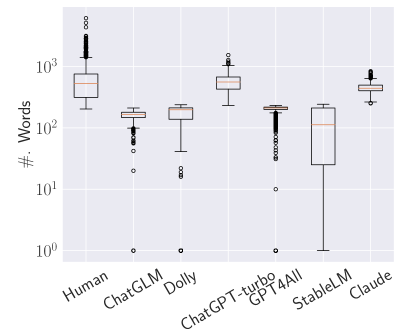
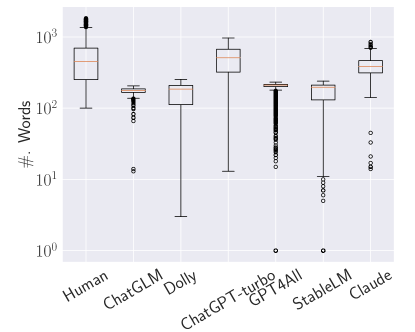
- 더 긴 텍스트는 일반적으로 탐지 성능을 향상시키며 200 단어가 근사 최적의 결과에 충분한 경우가 많다.
- 모델 기반 탐지기는 텍스트 귀속 작업에서 메트릭 기반 방법보다 더 강한 성능을 보인다.
- 모든 방법은 재구성, 간격 배치, perturbation 공격에 대해 상당한 취약성을 보이며 더 강인한 접근이 필요하다는 점을 시사한다.
더 나은 연구,지금 바로 시작하세요
논문 읽기부터 검토까지, 연구 시간을 획기적으로 줄여보세요.
카드 등록 없음 · 무료 플랜 제공
이 리뷰는 AI가 만들고, 인간 에디터가 검토했습니다.