
[논문 리뷰] Posterior Collapse and Latent Variable Non-identifiability
본 논문은 VAE의 포스터리어 붕괴가 잠재 변수의 비식별성과 동치임을 보이고 Brenier 맵과 입력-볼록 신경망(icNN)을 사용한 잠재 식별 가능 VAE(lidvae)를 도입하여 VAE 목적을 변경하지 않고 식별가능성을 보장한다.
Variational autoencoders model high-dimensional data by positing low-dimensional latent variables that are mapped through a flexible distribution parametrized by a neural network. Unfortunately, variational autoencoders often suffer from posterior collapse: the posterior of the latent variables is equal to its prior, rendering the variational autoencoder useless as a means to produce meaningful representations. Existing approaches to posterior collapse often attribute it to the use of neural networks or optimization issues due to variational approximation. In this paper, we consider posterior collapse as a problem of latent variable non-identifiability. We prove that the posterior collapses if and only if the latent variables are non-identifiable in the generative model. This fact implies that posterior collapse is not a phenomenon specific to the use of flexible distributions or approximate inference. Rather, it can occur in classical probabilistic models even with exact inference, which we also demonstrate. Based on these results, we propose a class of latent-identifiable variational autoencoders, deep generative models which enforce identifiability without sacrificing flexibility. This model class resolves the problem of latent variable non-identifiability by leveraging bijective Brenier maps and parameterizing them with input convex neural networks, without special variational inference objectives or optimization tricks. Across synthetic and real datasets, latent-identifiable variational autoencoders outperform existing methods in mitigating posterior collapse and providing meaningful representations of the data.
연구 동기 및 목표
- 변분 오토인코더에서의 포스터리어 붕괴와 잠재 변수 비식별성 간의 연결 고리를 명확히 한다.
- 포스터리어 붕괴가 신경망-보강 VAE뿐만 아니라 정확한 추정(inference) 모델에서도 발생할 수 있음을 보인다.
- 변분 목표를 수정하지 않고 식별가능성을 강제하는 잠재 식별 가능 VAE(lidvae)를 제안하고 검증한다.
- lidvae가 합성 및 실제 데이터 전반에서 데이터 충실도를 유지하면서 포스터리어 붕괴를 완화하는지 입증한다.
제안 방법
- 포스터리어 붕괴와 잠재 변수 비식별성을 형식적으로 정의하고 그 등가성을 증명한다(정리 1).
- 식별가능성은 모델과 데이터에 의존하며 추론이나 최적화에만 의존하지 않는다고 주장한다.
- Brenier 맵을 입력-볼록 신경망(icNNs)으로 매개변수화하여.injective한 가능도(likelihood) 를 강제함으로써 lidvae를 구성한다.
- p(x|z)에 대해 대각-제로-일 행렬을 이용한 두 단계 Brenier 맵 합성을 사용하여 주사도(injective) 매핑을 구축한다.
- lidvae가 식별가능성을 보장하는 동시에 고전적 VAE와 동일한 추론 절차(ELBO 최적화)를 유지한다는 것을 보인다(제2제).
- lidvae를 잠재 식별 혼합(lidmvae) 및 순차 변형(lidsvae)으로 확장하여 유사한 injective 매핑을 가진다.
실험 결과
연구 질문
- RQ1생성 모델에서의 포스터리어 붕괴가 잠재 변수 비식별성과 본질적으로 연결되어 있는가?
- RQ2VAE 목적이나 추론 절차를 바꾸지 않고 잠재 변수 식별가능성을 달성할 수 있는가?
- RQ3lidvae가 데이터 적합도에 미치는 영향은 유지되거나 향상되면서 포스터리어 붕괴를 완화하는가?
- RQ4Brenier 맵과 입력-볼록 신경망이 VAE에서 식별가능성을 제공하는 실용적이고 확장 가능한 경로를 제공하는가?
- RQ5lidmvae, lidsvae와 같은 identifiable 변형이 표준 VAE를 넘어 식별성 이점을 일반화하는가?
주요 결과
- 정리 1에 의해 생성 모델에서의 잠재 변수 비식별성 여부가 포스터리어 붕괴의 필요충분조건이다.
- 잠재 식별 가능 VAE(lidvae)는 Brenier 맵으로 매개변수화된 injective 가능도를 구성함으로써 잠재 변수의 식별가능성을 보장한다.
- lidvae는 표준 VAE 추론 목표와 용량을 유지하면서도 posterior collapse를 피하는 비용이 증가하는 계산 복잡성을 수반한다.
- 잠재 식별 가능한 변형인 lidmvae와 lidsvae는 혼합 및 순차 VAE로 식별성 이점을 확장한다.
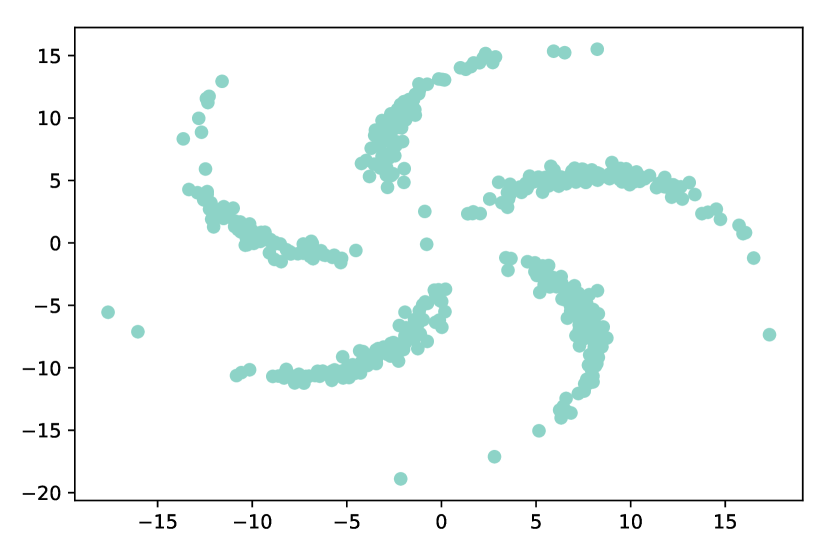
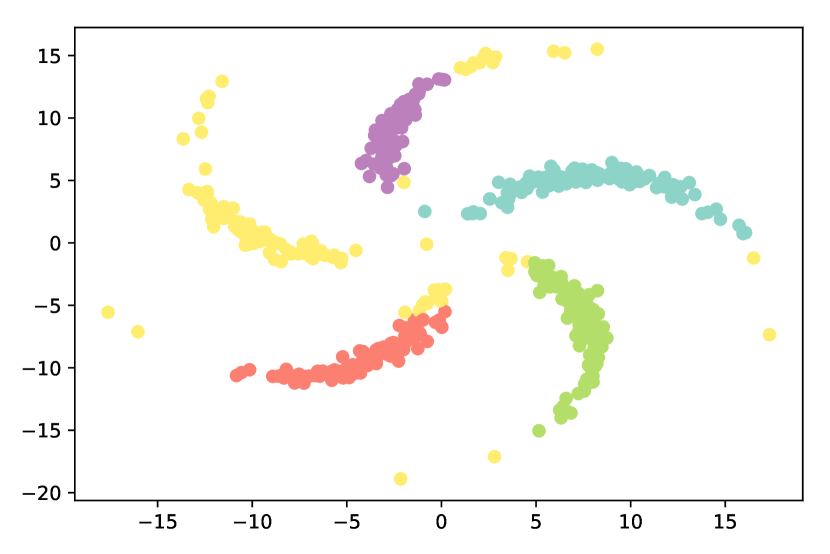
- 실험 결과는 합성 및 실제 데이터 세트에서 lidvae가 데이터 적합도 손실 없이 기존 VAE보다 posterior collapse를 더 잘 완화함을 시사한다.
이 논문 읽기
누빈트 뷰어에서 원문을 열고, 읽으면서 궁금한 곳을 바로 물어보세요.
누빈트에서 이 논문 읽기이 리뷰는 AI가 논문 원문을 바탕으로 만들었습니다. 인용하기 전에 원문을 확인해 주세요.