
[논문 리뷰] Remote detectability from entanglement bootstrap I: Kirby's torus trick
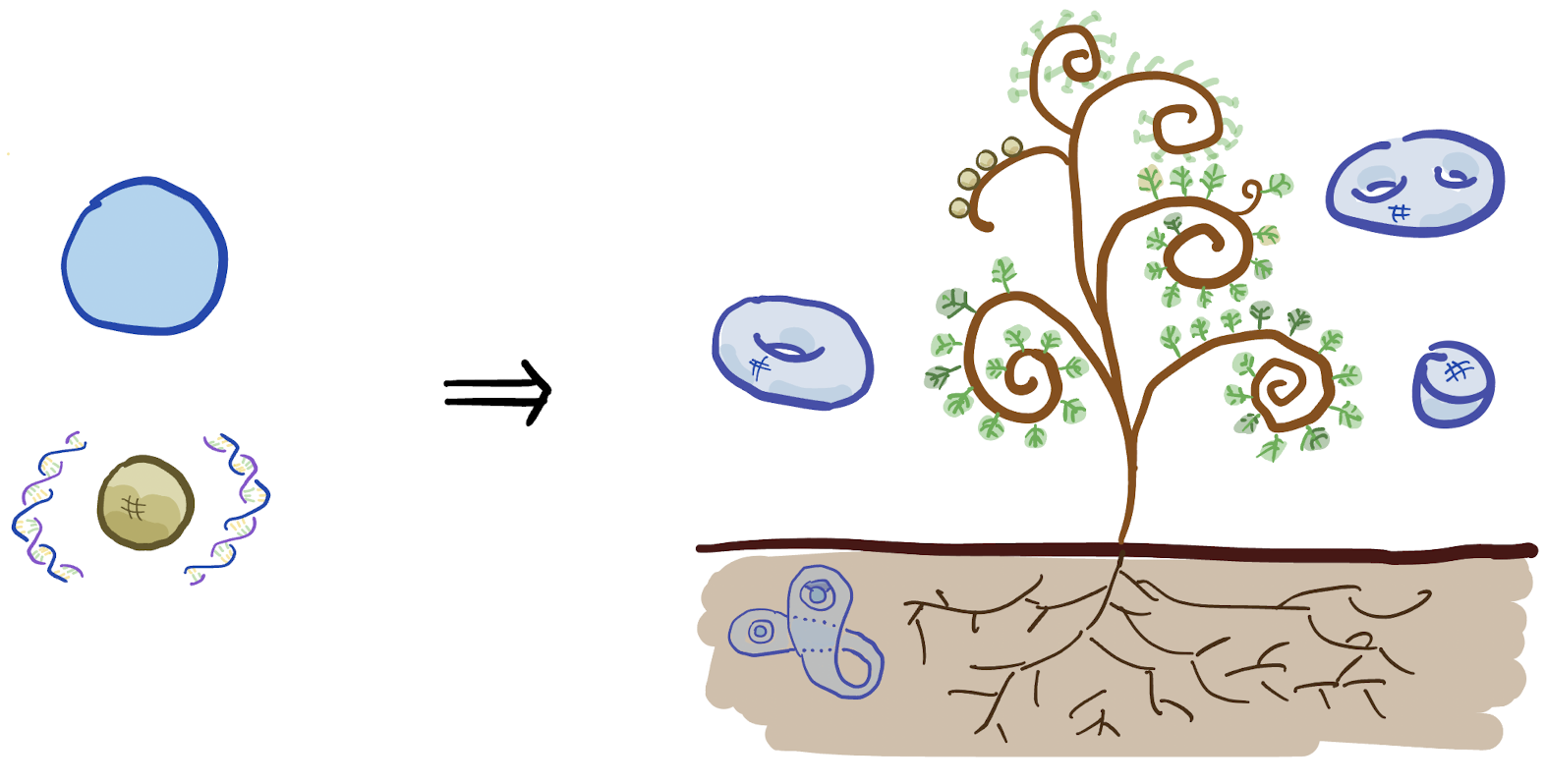
이 논문은 엔트레인지먼트 브리지프레임워크 내에서 위상적 순서의 기본 원리인 원거리 탐지 가능성(remote detectability)을 정리로 유도한다. 구멍이 난 닫힌 다양체를 위상적으로 자명한 영역에 매립시키고 키르비의 토러스 기법에서 영감을 얻은 '치유' 절차를 사용하여, 닫힌 다양체 위의 양자 상태를 구성하고, 서로 다른 anyon 유형 간의 원거리 탐지 가능성을 암시하는 유니터리 쌍화 행렬을 가진 쌍화 다양체(pairing manifolds)를 규명한다.
Remote detectability is often taken as a physical assumption in the study of topologically ordered systems, and it is a central axiom of mathematical frameworks of topological quantum field theories. We show under the entanglement bootstrap approach that remote detectability is a necessary property; that is, we derive it as a theorem. Starting from a single wave function on a topologically-trivial region satisfying the entanglement bootstrap axioms, we can construct states on closed manifolds. The crucial technique is to immerse the punctured manifold into the topologically trivial region and then heal the puncture. This is analogous to Kirby's torus trick. We then analyze a special class of such manifolds, which we call pairing manifolds. For each pairing manifold, which pairs two classes of excitations, we identify an analog of the topological $S$-matrix. This pairing matrix is unitary, which implies remote detectability between two classes of excitations. These matrices are in general not associated with the mapping class group of the manifold. As a by-product, we can count excitation types (e.g., graph excitations in 3+1d). The pairing phenomenon occurs in many physical contexts, including systems in different dimensions, with or without gapped boundaries. We provide a variety of examples to illustrate its scope.
연구 동기 및 목표
- 위상적 양자 시스템에서 원거리 탐지 가능성을 가정된 공리가 아니라 유도된 성질로 설정하는 것.
- 위상적으로 자명한 영역(예: 구 또는 구역)에 대한 기준 상태로부터 닫힌 다양체에 대한 상태 구축 방법을 개발하는 것.
- 두 개의 흥분 유형 간의 이중성을 유니터리 행렬을 통해 암호화하는 특수한 다양체 클래스인 쌍화 다양체를 규명하는 것.
- 2+1차원 anyon 이론을 초월하여 고차원 및 간격이 있는 경계를 가진 시스템으로 위상 S-행렬의 개념을 일반화하는 것.
- 매몰된 영역과 양자 상태의 치유를 통해 흥분 유형을 세고 일관성 관계를 도출하는 체계적인 방법을 제공하는 것.
제안 방법
- 지역적 매입을 통해 구멍이 난 닫힌 다양체 𝒲 = 𝒪 ∖ Bⁿ 을 기준 위상적 자명한 영역(ℬⁿ 또는 𝕊ⁿ)에 매립시키기.
- 매몰된 영역에서 기준 상태를 연장하여 전체 닫힌 다양체 𝒪 위에서 상태를 완성하기 위해 '치유' 절차를 사용하기.
- 정보 볼록집합을 통해 두 개의 서로 다른 흥분 유형을 이중화하는 쌍화 다양체를 정의하기: 𝒪 = X X̄ = Y Ȳ.
- 영역 X와 Y의 융합 및 엔트레인지먼트 구조에서 유한 차원의 유니터리 행렬(쌍화 행렬)을 구성하기.
- 엔트레인지먼트 브리지 공리계를 적용하여 양자 차원, 융합 확률, 흥분 용량 간의 일관성 관계를 도출하기.
- 특성 수직성과 군론적 항등식을 사용하여 양자 듀얼 모델에서 결과를 검증하여 쌍화 행렬의 유니터리성과 수식 계수 공식을 확인하기.
실험 결과
연구 질문
- RQ1엔트레인지먼트 브리지 프레임워크 내에서 원거리 탐지 가능성이 가정이 아니라 기본 원리로부터 도출될 수 있는가?
- RQ2어떤 다양체의 구조적 조건이 자명한 영역에 대한 기준 상태로부터 일관된 상태 구축을 가능하게 하는가?
- RQ3닫힌 다양체 위의 두 보완 영역의 엔트레인지먼트 구조에서 어떻게 유니터리 쌍화 행렬을 구성할 수 있는가?
- RQ4흥분 유형 간의 이중성을 암호화하는 데 있어 쌍화 다양체의 물리적 및 수학적 의미는 무엇인가?
- RQ5유도된 일관성 관계와 쌍화 행렬은 2+1차원 anyon 이론을 초월하여 고차원 위상적 순서와 간격이 있는 경계를 가진 시스템으로 어떻게 일반화되는가?
주요 결과
- 원거리 탐지 가능성은 엔트레인지먼트 브리지 프레임워크 내에서 쌍화 다양체 위의 쌍화 행렬의 유니터리성에서 유도된 정리로 증명된다.
- 위상 S-행렬과 유사하게, 쌍화 행렬은 유니터리이며 두 종류의 anyon 간 상호 탐지 가능성을 암호화한다.
- 게이지 군 G를 가진 양자 듀얼 모델의 경우, 종수 2 그래프 흥분의 수는 ∑_C_g |E_g|² / |G| 로 주어지며, 이는 쌍화 행렬에서 도출된 계수와 정확히 일치한다.
- 양자 듀얼 모델에서 ∑_ℓ ∑_a (N_ℓ^a)² = 𝒞_genus~2 일관성 관계가 성립하며, 특성 수직성과 군 표현 이론을 통해 검증된다.
- 용량 관계 ∑_ℓ ∑_a d_a d_ℓ N_ℓ^a = |G|⁴ 가 도출되었고, 양자 듀얼 모델에서 확인되어 엔트레인지먼트 브리지 프레임워크와의 일관성을 보여준다.
- 이 방법은 anyon을 초월하여 고차원 위상적 순서 및 간격이 있는 경계를 가진 시스템으로 일반화되며, 쌍화 행렬이 반드시 매핑 클래스 군과 연결되어 있지는 않다.
이 논문 읽기
누빈트 뷰어에서 원문을 열고, 읽으면서 궁금한 곳을 바로 물어보세요.
누빈트에서 이 논문 읽기이 리뷰는 AI가 논문 원문을 바탕으로 만들었습니다. 인용하기 전에 원문을 확인해 주세요.