
[논문 리뷰] The Lunar Gravitational-wave Antenna: Mission Studies and Science Case
이 논문은 LGWA 개념과 중력파 및 달 과학에서의 과학 사례를 제시하고, 민감도 모델링 및 현장 고려사항을 포함한 임무 계획 연구가 필요함을 제시합니다.
The Lunar Gravitational-wave Antenna (LGWA) is a proposed array of next-generation inertial sensors to monitor the response of the Moon to gravitational waves (GWs). Given the size of the Moon and the expected noise produced by the lunar seismic background, the LGWA would be able to observe GWs from about 1 mHz to 1 Hz. This would make the LGWA the missing link between space-borne detectors like LISA with peak sensitivities around a few millihertz and proposed future terrestrial detectors like Einstein Telescope or Cosmic Explorer. In this article, we provide a first comprehensive analysis of the LGWA science case including its multi-messenger aspects and lunar science with LGWA data. We also describe the scientific analyses of the Moon required to plan the LGWA mission.
연구 동기 및 목표
- Define the LGWA science case across gravitational-wave science, multi-messenger astronomy, and lunar science.
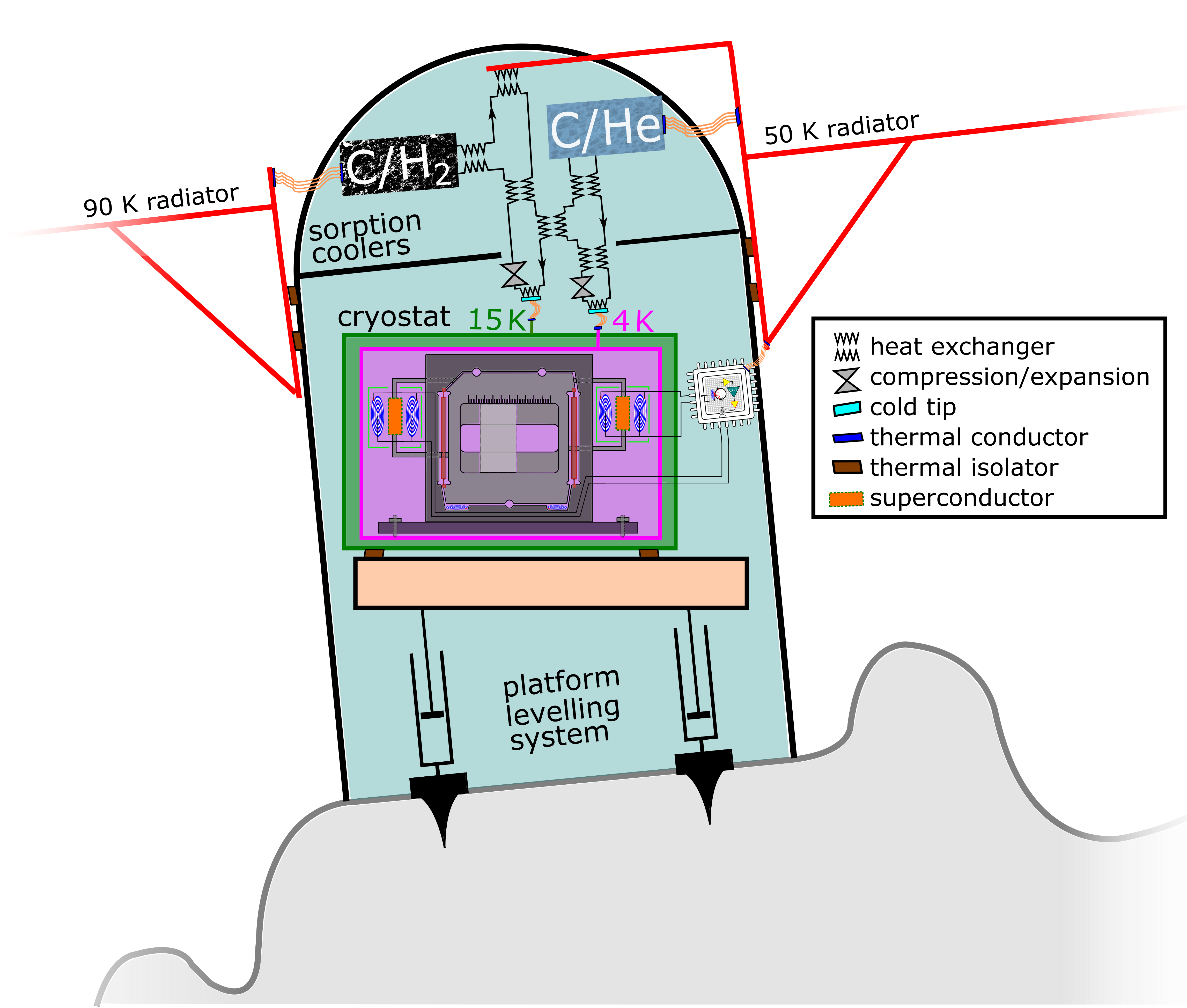
- Outline the mission concept and payload architecture for LGWA on the lunar surface.
- Develop sensitivity models and calibration strategies for a lunar GW detector in the 1 mHz–1 Hz band.
- Assess lunar surface environment, deployment site, and cross-mission data opportunities for LGWA.
- Identify pathfinder and mission-upgrade options to enhance LGWA science reach.
제안 방법
- Propose an array of four LGWA stations deployed in a permanently shadowed region at lunar poles to optimize low seismic noise.
- Develop two baseline sensor concepts: a niobium Watt’s linkage with interferometric readout and a silicon Watt’s linkage with superconducting readout.
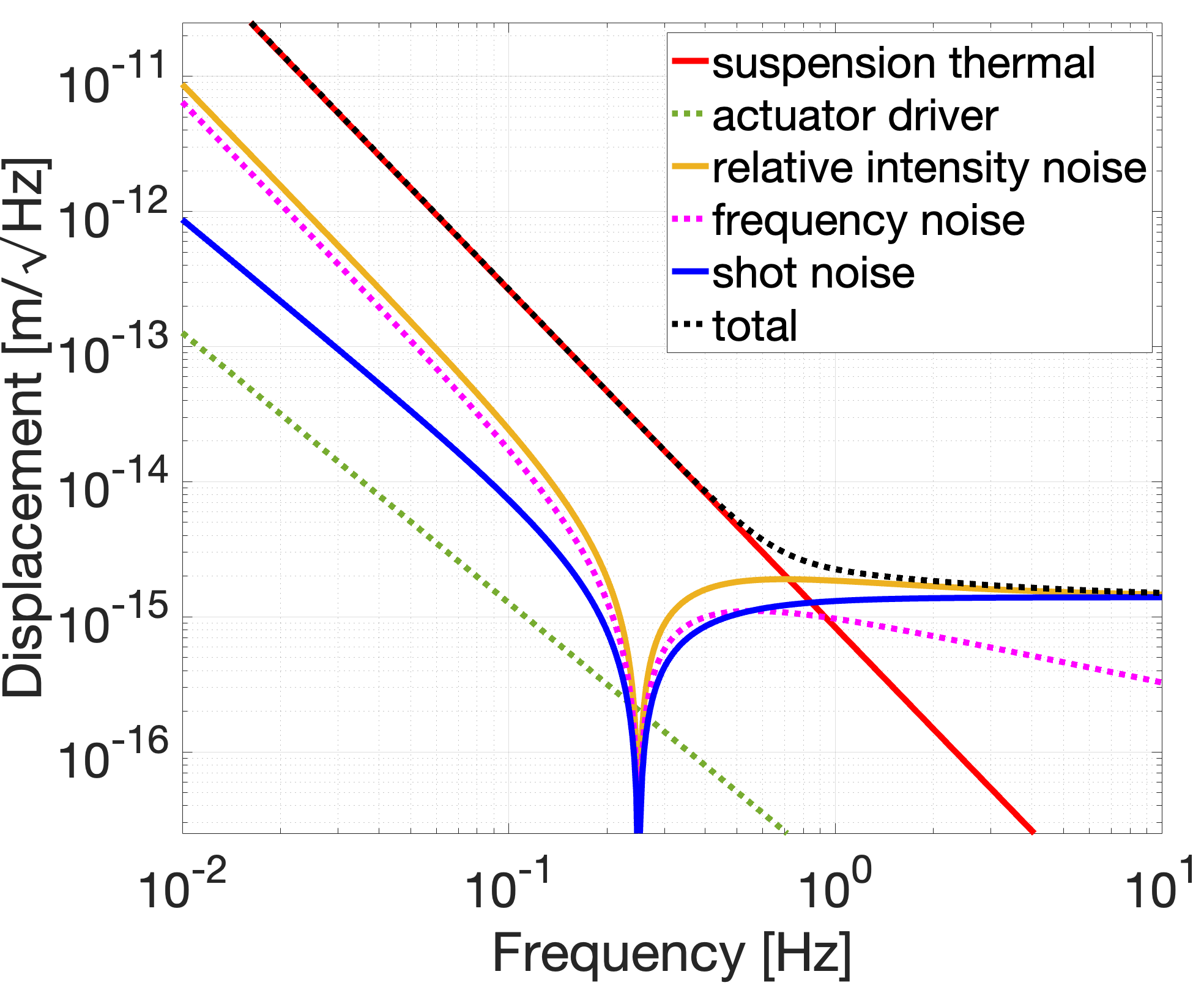
- Model instrument noise contributions including thermal, readout, actuation, and seismic background, and compute sensitivity curves.
- Model the lunar GW response using Dyson half-space and normal-mode formalisms, with calibration aided by multiband observations.
- Outline seismic-background reduction strategies and array-based noise cancellation adaptations for GW signals.
- Provide sensitivity models (LGWA-Nb and LGWA-Si) accessible via the GWFish repository and discuss calibration challenges.
실험 결과
연구 질문
- RQ1What GW sources and astrophysical/ cosmological questions become accessible with LGWA in the 1 mHz–1 Hz band?
- RQ2How can LGWA's lunar environment and seismic background be modeled and mitigated to achieve meaningful GW sensitivity?
- RQ3What lunar science can LGWA enable, particularly regarding the Moon’s internal structure and seismic activity?
- RQ4How can multiband GW observations with LGWA and other detectors refine waveform measurements and test fundamental physics?
- RQ5What are the practical pathways for pathfinder (Soundcheck) and upgrades to extend LGWA's capabilities?
주요 결과
- LGWA targets a decihertz GW band filling the gap between LISA and terrestrial detectors, with a baseline four-station pole deployment.
- Two sensor concepts yield different sensitivity budgets: a Nb interferometric readout versus a Si superconducting readout, with potential order-of-magnitude gains in displacement sensitivity for the Si design.
- Seismic background from meteoroid impacts may limit sensitivity above ~0.1 Hz, motivating array-based SBN reduction optimization.
- Calibrating lunar GW response depends on lunar internal structure and site geology/topography, with potential refinement via multiband GW observations and single-station inference methods.
- LGWA sensitivity curves are provided (LGWA-Nb and LGWA-Si) and hosted in the GWFish repository for community use.
- Upgrades such as improved LIGS sensitivity, more stations, and broader deployment could enhance LGWA's science return, potentially enabling polarization measurements and better SBN mitigation.
이 논문 읽기
누빈트 뷰어에서 원문을 열고, 읽으면서 궁금한 곳을 바로 물어보세요.
누빈트에서 이 논문 읽기이 리뷰는 AI가 논문 원문을 바탕으로 만들었습니다. 인용하기 전에 원문을 확인해 주세요.