
[Paper Review] 3D GANs and Latent Space: A comprehensive survey
This comprehensive survey explores 3D GANs and their latent spaces, analyzing architectures, training techniques, and 3D representations to improve 3D generation. It identifies key challenges in training 3D GANs and proposes future directions, including lightweight, representation-agnostic, and domain-aware models.
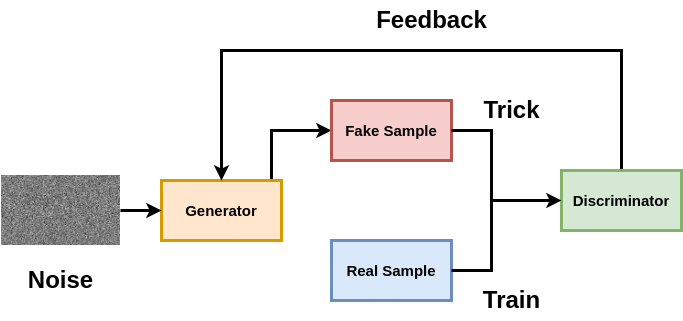
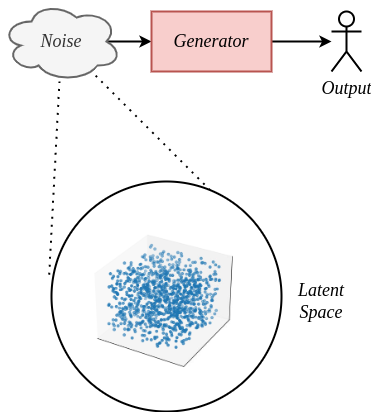
Generative Adversarial Networks (GANs) have emerged as a significant player in generative modeling by mapping lower-dimensional random noise to higher-dimensional spaces. These networks have been used to generate high-resolution images and 3D objects. The efficient modeling of 3D objects and human faces is crucial in the development process of 3D graphical environments such as games or simulations. 3D GANs are a new type of generative model used for 3D reconstruction, point cloud reconstruction, and 3D semantic scene completion. The choice of distribution for noise is critical as it represents the latent space. Understanding a GAN's latent space is essential for fine-tuning the generated samples, as demonstrated by the morphing of semantically meaningful parts of images. In this work, we explore the latent space and 3D GANs, examine several GAN variants and training methods to gain insights into improving 3D GAN training, and suggest potential future directions for further research.
Motivation & Objective
- To provide a first-of-its-kind comprehensive review of 3D GANs, focusing on latent space exploration and 3D generation.
- To analyze the role of latent space in enabling semantic manipulation and disentangled representations in 3D GANs.
- To identify and address key challenges in training 3D GANs, such as mode collapse, vanishing gradients, and representation bias.
- To propose future research directions, including lightweight architectures, representation-agnostic models, and ethical considerations.
Proposed method
- Conducts a systematic review of 3D GAN variants, categorizing them by task (e.g., point cloud reconstruction, 3D face generation, semantic scene completion).
- Analyzes 3D representations (e.g., voxel grids, point clouds, meshes, implicit functions) and evaluates their trade-offs using domain translation principles.
- Reviews 2D GAN variants and training techniques (e.g., progressive growing, spectral normalization) to inform improvements in 3D GAN training.
- Performs a bibliometric analysis of GAN research trends from 2014 to 2022, showing exponential growth in 3D GAN publications.
- Introduces latent space analysis techniques such as latent walks and disentangled directions to enable semantic manipulation of generated 3D content.
- Proposes future research directions based on identified gaps, including architectural efficiency, representation agnosticism, and ethical design.
Experimental results
Research questions
- RQ1How can the latent space of 3D GANs be leveraged to enable interpretable and semantically meaningful manipulation of generated 3D objects?
- RQ2What are the key challenges in training 3D GANs, and how do they differ from those in 2D GANs?
- RQ3Which 3D representations (e.g., point clouds, voxels, meshes) are most effective for 3D GANs, and how do they compare in terms of fidelity and training stability?
- RQ4What training techniques and architectural innovations can improve the sample quality, diversity, and convergence of 3D GANs?
- RQ5What future research directions can address limitations such as mode collapse, computational cost, and ethical risks in 3D GAN generation?
Key findings
- 3D GAN research has grown rapidly, with 16,000 papers published in 2021 alone, indicating strong and increasing interest in the field.
- Latent space disentanglement enables semantic editing of 3D objects, such as morphing specific parts of a face or shape.
- Despite progress, 3D GANs still face challenges like mode collapse, vanishing gradients, and artifacts, especially when generating high-resolution or diverse outputs.
- Current 3D GANs are representation-specific, lacking generalization across different 3D formats (e.g., point clouds vs. meshes), highlighting a need for representation-agnostic models.
- Lightweight and efficient 3D GAN architectures are needed to reduce training time and computational cost, enabling broader accessibility.
- Ethical concerns around deepfakes, synthetic 3D faces, and misuse of generated 3D content necessitate responsible AI development in 3D GAN research.
Read this paper
Open the full text in the Nubint reader and ask about any passage as you read.
Read this paper on NubintThis review was generated by AI from the original paper. Please check the paper before citing it.