
[Paper Review] A Comparison of Speech Data Augmentation Methods Using S3PRL Toolkit
This study evaluates speech data augmentation techniques—SpecAugment, Gaussian Noise, and Speed Perturbation—using the S3PRL toolkit to improve robustness of HuBERT and wav2vec models on phoneme recognition (PR) and automatic speech recognition (ASR). Results show that models fine-tuned on augmented data (especially Gaussian Noise and Speed Perturbation) achieve significantly lower error rates on corresponding augmented test sets, while SpecAugment slightly improves performance on original data without degrading it.
Data augmentations are known to improve robustness in speech-processing tasks. In this study, we summarize and compare different data augmentation strategies using S3PRL toolkit. We explore how HuBERT and wav2vec perform using different augmentation techniques (SpecAugment, Gaussian Noise, Speed Perturbation) for Phoneme Recognition (PR) and Automatic Speech Recognition (ASR) tasks. We evaluate model performance in terms of phoneme error rate (PER) and word error rate (WER). From the experiments, we observed that SpecAugment slightly improves the performance of HuBERT and wav2vec on the original dataset. Also, we show that models trained using the Gaussian Noise and Speed Perturbation dataset are more robust when tested with augmented test sets.
Motivation & Objective
- To evaluate the impact of different speech data augmentation techniques on self-supervised models like HuBERT and wav2vec.
- To assess whether data augmentation improves model generalization and robustness to real-world audio variations such as noise and speed changes.
- To benchmark model performance across multiple augmentation types using the S3PRL toolkit on PR and ASR tasks.
- To determine whether augmentation during fine-tuning enhances performance on both clean and augmented test sets.
- To explore the trade-off between performance on original data and robustness to specific types of data corruption.
Proposed method
- Utilized the S3PRL toolkit to train and evaluate HuBERT and wav2vec models on LibriSpeech-based PR and ASR tasks.
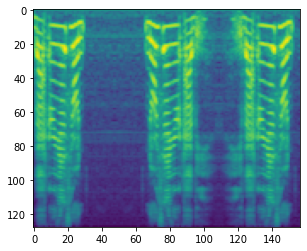
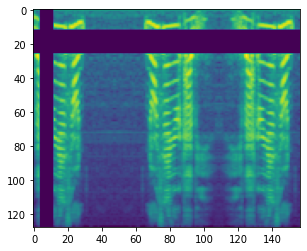
- Applied three data augmentation strategies: SpecAugment (time warping, frequency masking, time masking), Gaussian Noise injection, and Speed Perturbation (audio speed variation).
- Trained models on original, SpecAugment-augmented, and noise/speed-perturbed training sets, then evaluated on corresponding test sets.
- Measured performance using phoneme error rate (PER) for PR and word error rate (WER) for ASR.
- Used official SUPERB Benchmark evaluation protocols within S3PRL for consistent downstream task evaluation.
- Reproduced results across multiple random seeds to assess stability and reported average performance.
Experimental results
Research questions
- RQ1Does SpecAugment improve model performance on clean test sets compared to baseline and other augmentation methods?
- RQ2How does training on Gaussian Noise or Speed Perturbation affect model robustness when tested on corresponding augmented data?
- RQ3Can models fine-tuned on augmented data generalize better to real-world audio with noise or speed variation?
- RQ4What is the trade-off between performance on original data and robustness to specific types of data corruption?
- RQ5How do HuBERT and wav2vec compare in their response to different data augmentation strategies across PR and ASR tasks?
Key findings
- HuBERT-Gaussian-Noise achieved a PER of 13.10% on test sets with Gaussian Noise, representing a more than 20% relative reduction compared to the baseline.
- wav2vec-Speed-Perturbation achieved a WER of 34.22% on speed-perturbed test sets, showing a more than 27% relative reduction compared to the baseline.
- SpecAugment slightly improved performance on the original dataset, with both HuBERT and wav2vec showing lower PER and WER than the baseline on clean test sets.
- Models trained on Gaussian Noise or Speed Perturbation performed worse on the original test set, indicating a distribution shift due to data augmentation.
- The best performance on augmented test sets was consistently achieved by models fine-tuned on the same type of augmented data, confirming improved robustness.
- No single augmentation strategy universally outperformed others across all settings; the choice depends on the target test distribution.
Read this paper
Open the full text in the Nubint reader and ask about any passage as you read.
Read this paper on NubintThis review was generated by AI from the original paper. Please check the paper before citing it.