
[Paper Review] A Comprehensive Review of Spiking Neural Networks: Interpretation, Optimization, Efficiency, and Best Practices
A literature review synthesizing recent advances in spiking neural networks (SNNs), focusing on interpretation, optimization (including surrogate gradients), efficiency, benchmarks, and best practices for researchers.
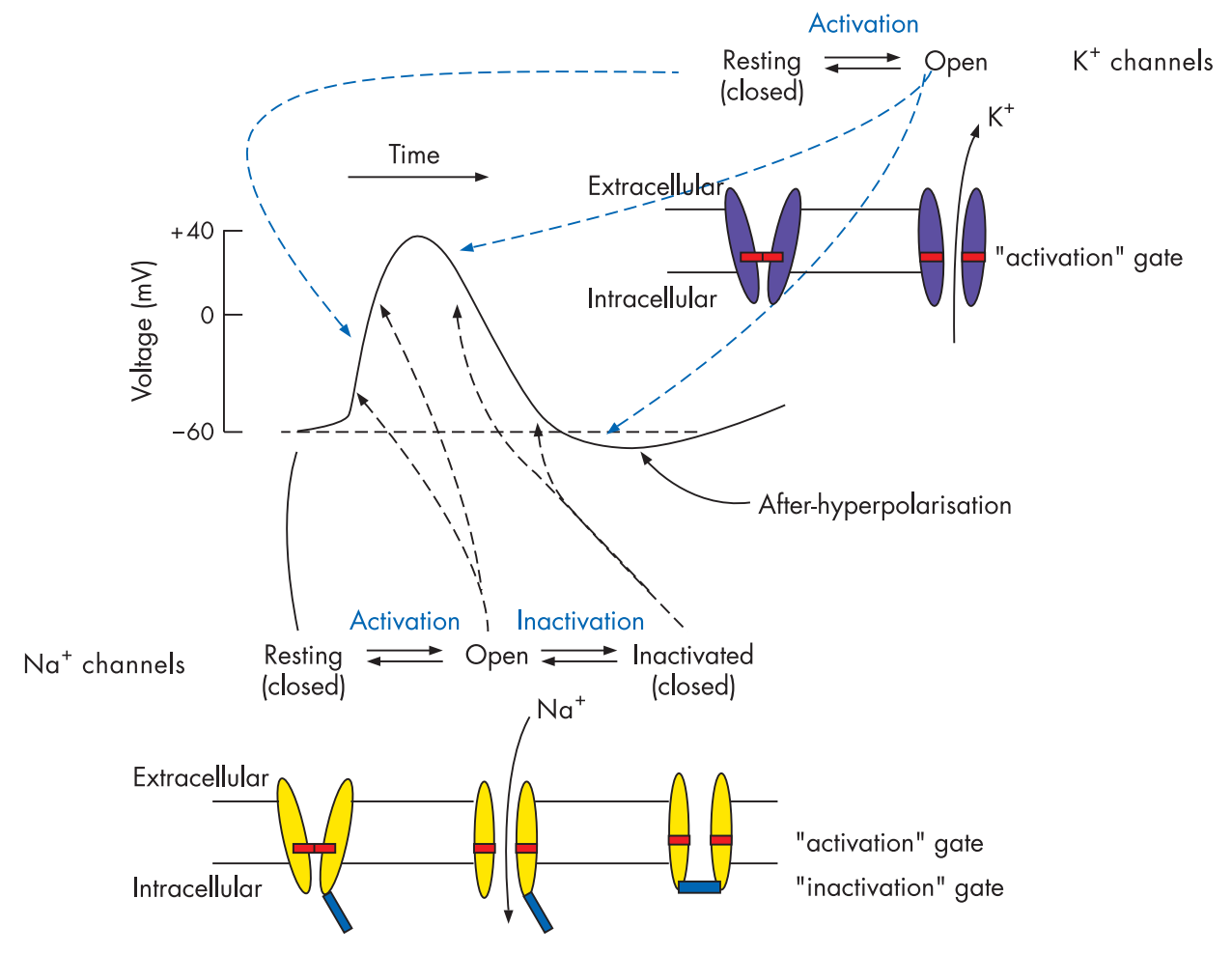
Biological neural networks continue to inspire breakthroughs in neural network performance. And yet, one key area of neural computation that has been under-appreciated and under-investigated is biologically plausible, energy-efficient spiking neural networks, whose potential is especially attractive for low-power, mobile, or otherwise hardware-constrained settings. We present a literature review of recent developments in the interpretation, optimization, efficiency, and accuracy of spiking neural networks. Key contributions include identification, discussion, and comparison of cutting-edge methods in spiking neural network optimization, energy-efficiency, and evaluation, starting from first principles so as to be accessible to new practitioners.
Motivation & Objective
- Survey recent developments in SNN optimization and biological plausibility from first principles.
- Compare methods for training SNNs, including surrogate gradients and non-differentiable spike dynamics.
- Evaluate energy efficiency mechanisms and hardware implications for neuromorphic computing.
- Identify standard benchmark datasets and available tools/frameworks to unify SNN research.
- Provide insights and best practices for new researchers entering SNN research.
Proposed method
- Meta-analysis of recent SNN optimization and efficiency techniques.
- Discussion and comparison of encoding schemes (rate coding vs TTFS/latency coding) and their trade-offs.
- Derivation and connection of SNN dynamics to quadratic optimization forms and convex optimization concepts.
- Overview of training approaches: Backpropagation Through Time (BPTT), surrogate gradients, and alternatives (STDP, event-driven optimization, OTTT, IDE).
- Examination of energy efficiency mechanisms, including sparsity, event-driven computation, and neuromorphic hardware implications.
- Compilation of benchmark datasets and survey of tools/frameworks used in SNN development.
Experimental results
Research questions
- RQ1What are the dominant optimization and training strategies for SNNs and how do they compare?
- RQ2How do encoding schemes and spiking dynamics affect accuracy, efficiency, and hardware suitability?
- RQ3What evidence exists for the energy efficiency and robustness of SNNs relative to ANNs, and under what conditions are gains realized?
- RQ4Which benchmark datasets and tooling are most commonly used to evaluate SNNs, and how can standardization be improved?
- RQ5What best practices emerge for researchers new to SNNs regarding interpretation, implementation, and evaluation?
Key findings
- SNNs can be interpreted and analyzed through connections to convex/quadratic optimization and dynamical systems.
- Surrogate gradient approaches are essential for training SNNs and have robust performance across different choices.
- Latency (TTFS) coding often yields better energy efficiency and accuracy trade-offs for many datasets compared to rate coding.
- Energy efficiency gains in SNNs can reach up to three orders of magnitude versus traditional ANNs, especially with sparse, event-driven processing and neuromorphic hardware.
- Several advanced training schemes (Dspike, IM-Loss, ESG) have been proposed to improve convergence and information retention in SNNs.
- There is a need for standardized benchmarks and tooling, which the reviewed work identifies and compiles.
Read this paper
Open the full text in the Nubint reader and ask about any passage as you read.
Read this paper on NubintThis review was generated by AI from the original paper. Please check the paper before citing it.