
[Paper Review] A Comprehensive Survey on Source-free Domain Adaptation
This survey provides a comprehensive, unified categorization of Source-Free Domain Adaptation (SFDA) methods, analyzing over 30 representative approaches across Office-31, Office-Home, and VisDA benchmarks. It classifies SFDA into data-based (e.g., domain reconstruction, style translation) and model-based methods, highlights key technical routes, and identifies future research directions in theory, applications, datasets, and extended settings.
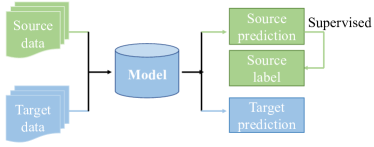
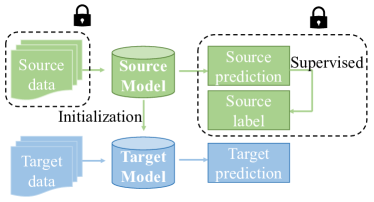
Over the past decade, domain adaptation has become a widely studied branch of transfer learning that aims to improve performance on target domains by leveraging knowledge from the source domain. Conventional domain adaptation methods often assume access to both source and target domain data simultaneously, which may not be feasible in real-world scenarios due to privacy and confidentiality concerns. As a result, the research of Source-Free Domain Adaptation (SFDA) has drawn growing attention in recent years, which only utilizes the source-trained model and unlabeled target data to adapt to the target domain. Despite the rapid explosion of SFDA work, yet there has no timely and comprehensive survey in the field. To fill this gap, we provide a comprehensive survey of recent advances in SFDA and organize them into a unified categorization scheme based on the framework of transfer learning. Instead of presenting each approach independently, we modularize several components of each method to more clearly illustrate their relationships and mechanics in light of the composite properties of each method. Furthermore, we compare the results of more than 30 representative SFDA methods on three popular classification benchmarks, namely Office-31, Office-home, and VisDA, to explore the effectiveness of various technical routes and the combination effects among them. Additionally, we briefly introduce the applications of SFDA and related fields. Drawing from our analysis of the challenges facing SFDA, we offer some insights into future research directions and potential settings.
Motivation & Objective
- To address the lack of a timely and comprehensive survey in the rapidly growing field of Source-Free Domain Adaptation (SFDA).
- To organize SFDA methods into a unified categorization framework based on transfer learning principles, distinguishing data-based and model-based approaches.
- To empirically compare over 30 SFDA methods across three major benchmarks—Office-31, Office-Home, and VisDA—to evaluate technical effectiveness and combination effects.
- To identify under-explored areas in SFDA methodology, such as self-attention mechanisms, contrastive learning, and entropy minimization.
- To propose future research directions in theoretical foundations, real-world applications, dataset diversity, and extended settings like open-set or multi-source adaptation.
Proposed method
- The authors categorize SFDA methods into two main streams: data-based (e.g., virtual domain generation, image style translation, neighborhood clustering) and model-based (e.g., perturbed domain supervision, local structure clustering) approaches.
- They modularize each method to reveal underlying components and relationships, emphasizing composite properties rather than treating methods in isolation.
- The survey evaluates more than 30 SFDA methods using standard benchmarks, comparing performance across Office-31, Office-Home, and VisDA to assess technical route efficacy.
- Domain-based reconstruction techniques are discussed as extensions of unsupervised domain adaptation (UDA), enabling UDA-style methods to function in SFDA by reconstructing source-like data.
- Image style translation leverages Batch Normalization layers from the source classifier to transform target images into source-style representations for better compatibility.
- Neighborhood and local structure clustering exploit intrinsic data relationships in target data, assuming that hard samples lie near the source model’s decision boundary.
Experimental results
Research questions
- RQ1What are the dominant methodological categories in SFDA, and how do they relate to conventional UDA methods?
- RQ2How do different technical components—such as style translation, clustering, or reconstruction—affect SFDA performance across standard benchmarks?
- RQ3What are the key limitations and under-explored opportunities in current SFDA methodologies, particularly in self-attention and contrastive learning?
- RQ4How do data imbalance and noise impact SFDA model robustness, and what are the implications for real-world deployment?
- RQ5What future research directions are most promising for advancing SFDA in theory, applications, and evaluation?
Key findings
- Over 30 SFDA methods were systematically evaluated on Office-31, Office-Home, and VisDA, revealing performance variations across technical routes and combination effects.
- Domain-based reconstruction and image style translation methods show strong compatibility with existing UDA frameworks, enabling adaptation without source data.
- Neighborhood clustering and local structure clustering demonstrate effectiveness by leveraging intrinsic data geometry, even without explicit domain alignment.
- Contrastive learning and image style translation are still implemented in relatively homogeneous ways, indicating room for innovation with newer techniques.
- Entropy minimization remains widely used but is often applied passively as an auxiliary loss, lacking deeper methodological innovation.
- The single-source, closed-set SFDA setting remains dominant, but future work should explore open-set, multi-source, and test-time adaptation settings.
Read this paper
Open the full text in the Nubint reader and ask about any passage as you read.
Read this paper on NubintThis review was generated by AI from the original paper. Please check the paper before citing it.