
[论文解读] A Distributed Acoustic Sensor System for Intelligent Transportation using Deep Learning
本文提出一种基于深度学习的系统,利用光纤电缆的分布式声学传感(DAS)技术对智能交通系统(ITS)中的车辆类型进行分类,并估计载客量,在受控条件下实现了92%的车辆分类准确率和92–97%的载客量检测准确率,为摄像头方法提供了一种保护隐私且可扩展的替代方案。
Intelligent transport systems (ITS) are pivotal in the development of sustainable and green urban living. ITS is data-driven and enabled by the profusion of sensors ranging from pneumatic tubes to smart cameras. This work explores a novel data source based on optical fibre-based distributed acoustic sensors (DAS) for traffic analysis. Detecting the type of vehicle and estimating the occupancy of vehicles are prime concerns in ITS. The first is motivated by the need for tracking, controlling, and forecasting traffic flow. The second targets the regulation of high occupancy vehicle lanes in an attempt to reduce emissions and congestion. These tasks are often conducted by individuals inspecting vehicles or through the use of emerging computer vision technologies. The former is not scale-able nor efficient whereas the latter is intrusive to passengers' privacy. To this end, we propose a deep learning technique to analyse DAS signals to address this challenge through continuous sensing and without exposing personal information. We propose a deep learning method for processing DAS signals and achieve 92% vehicle classification accuracy and 92-97% in occupancy detection based on DAS data collected under controlled conditions.
研究动机与目标
- 开发一种可扩展、保护隐私的智能交通系统(ITS)中车辆分类与载客量估计方法。
- 利用现有的光纤基础设施作为分布式声学传感器(DAS),实现连续、实时的交通监控。
- 解决基于摄像头的系统存在的高成本、隐私担忧和监测盲区等问题。
- 证明DAS信号中包含足够的时空特征,可通过深度学习实现准确的车辆与载客量分类。
提出的方法
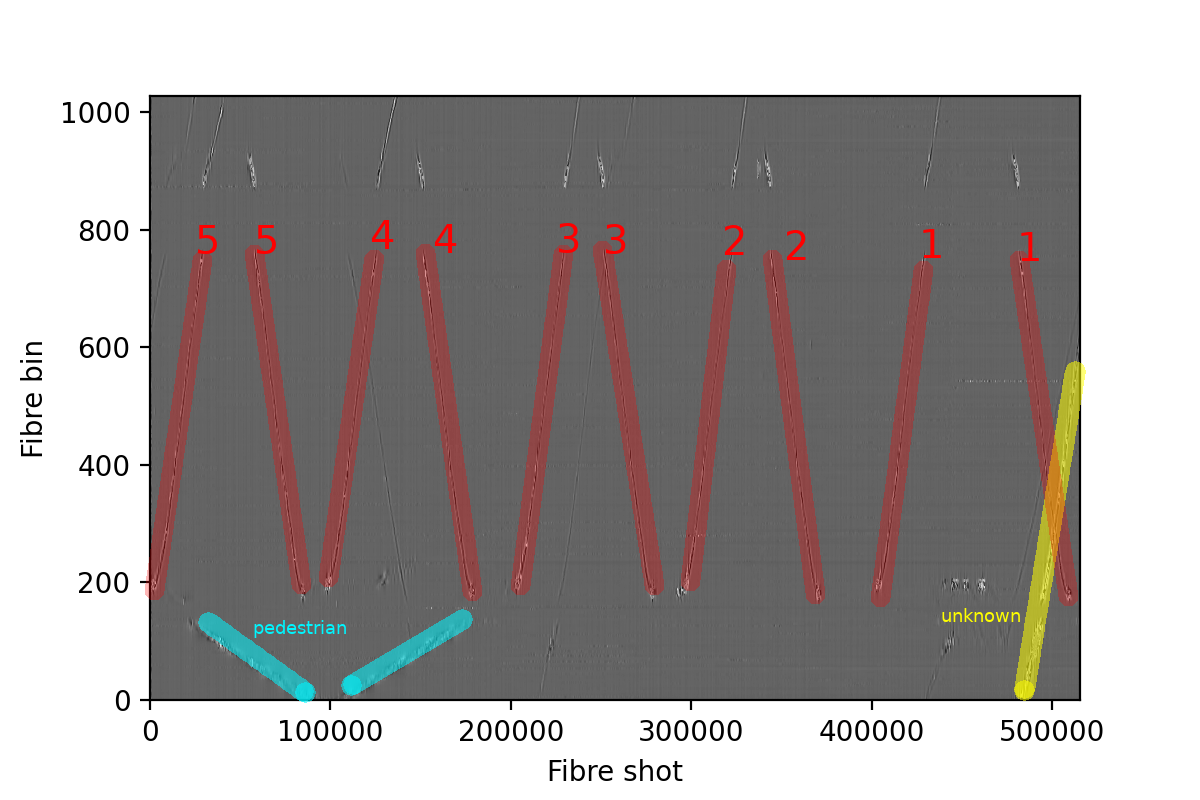
- 该系统使用一维和二维卷积神经网络(CNN)从光纤电缆采集的原始DAS信号中提取时空特征。
- 一维CNN处理时间序列DAS波形,用于分类车辆尺寸和载客量;二维CNN则利用语谱图表示以提升特征学习能力。
- 训练过程中应用数据增强和Dropout层以减少过拟合,但结果表明由于数据集规模较小,效果有限。
- 模型在五辆不同车辆以不同速度和载客量行驶的受控实验数据上进行训练,并在独立的未见数据集上进行验证。
- 通过DAS信号生成语谱图,以提升时间与频率分辨率,从而改善分类性能。
- 采用超参数调优和早停策略以优化模型收敛,尤其针对五分类任务。
实验结果
研究问题
- RQ1光纤电缆的DAS信号能否有效用于智能交通系统中车辆类型的分类与载客量的估计?
- RQ2DAS信号在不暴露个人数据的前提下,能在多大程度上保留关于车辆尺寸和乘客数量的信息?
- RQ3模型在训练数据与独立未见测试数据之间的性能表现如何变化,特别是在载客量估计方面?
- RQ4尽管信息含量有限且噪声较高,一维CNN能否有效从DAS信号中提取显著特征?
- RQ5不同车辆速度和载客量的存在是否会影响模型在不同类型车辆上的泛化能力?
主要发现
- 一维CNN在主数据集(AllCars-1p)上实现了92%的车辆尺寸分类准确率,其中大型车辆为89%,小型车辆为94%。
- 载客量检测在训练数据上的准确率达到97%,但在独立测试集上下降至38%,表明存在显著过拟合。
- 车辆分类准确率在训练数据上为92%,在独立验证集上下降至64%,证实存在过拟合问题。
- 在RC-60-Mix数据集上,模型对车辆尺寸的分类准确率保持在72%,表明其对不同乘客数量具有鲁棒性。
- 一维CNN模型在计算效率上优于二维CNN,但受限于一维样本的信息量,特征提取能力较弱。
- 尽管速度相关特征占主导,模型仍能成功区分车辆尺寸,表明DAS信号编码了车辆的结构与动态特性。
更好的研究,从现在开始
从阅读论文到最终审阅,大幅缩短您的研究时间。
无需绑定信用卡
本解读由 AI 生成,并经人工编辑审核。