
[Paper Review] A Framework To Improve User Story Sets Through Collaboration
This paper proposes SCOUT, a collaborative NLP framework that enhances user story completeness in agile requirements engineering by constructing a knowledge graph from user stories and applying heuristics to generate real-time suggestions. Using BERT-based NLP pipelines and a web-based interface, SCOUT significantly improves story quality and completeness, as validated by a user study showing statistically significant advantages over Google Docs (p = 0.015).
Agile methodologies have become increasingly popular in recent years. Due to its inherent nature, agile methodologies involve stakeholders with a wide range of expertise and require interaction between them, relying on collaboration and customer involvement. Hence, agile methodologies encourage collaboration between all team members so that more efficient and effective processes are maintained. Generating requirements can be challenging, as it requires the participation of multiple stakeholders who describe various aspects of the project and possess a shared understanding of essential concepts. One simple method for capturing requirements using natural language is through user stories, which document the agreed-upon properties of a project. Stakeholders try to strive for completeness while generating user stories, but the final user story set may still be flawed. To address this issue, we propose SCOUT: Supporting Completeness of User Story Sets, which employs a natural language processing pipeline to extract key concepts from user stories and construct a knowledge graph by connecting related terms. The knowledge graph and different heuristics are then utilized to enhance the quality and completeness of the user story sets by generating suggestions for the stakeholders. We perform a user study to evaluate SCOUT and demonstrate its performance in constructing user stories. The quantitative and qualitative results indicate that SCOUT significantly enhance the quality and completeness of the user story sets. Our contribution is threefold. First, we develop heuristics to suggest new concepts to include in user stories by considering both the individuals' and other team members' contributions. Second, we implement an open-source collaborative tool to support writing user stories and ensuring their quality. Third, we share the experimental setup and materials.
Motivation & Objective
- Address the challenge of incomplete and inconsistent user story sets in collaborative agile requirements engineering.
- Improve stakeholder collaboration by enabling real-time, context-aware suggestions during user story creation.
- Develop a scalable, open-source tool that supports requirement quality through automated completeness checks.
- Demonstrate the effectiveness of NLP and knowledge graphs in enhancing user story quality in real-world agile settings.
- Provide publicly available datasets and source code to support replication and community adoption.
Proposed method
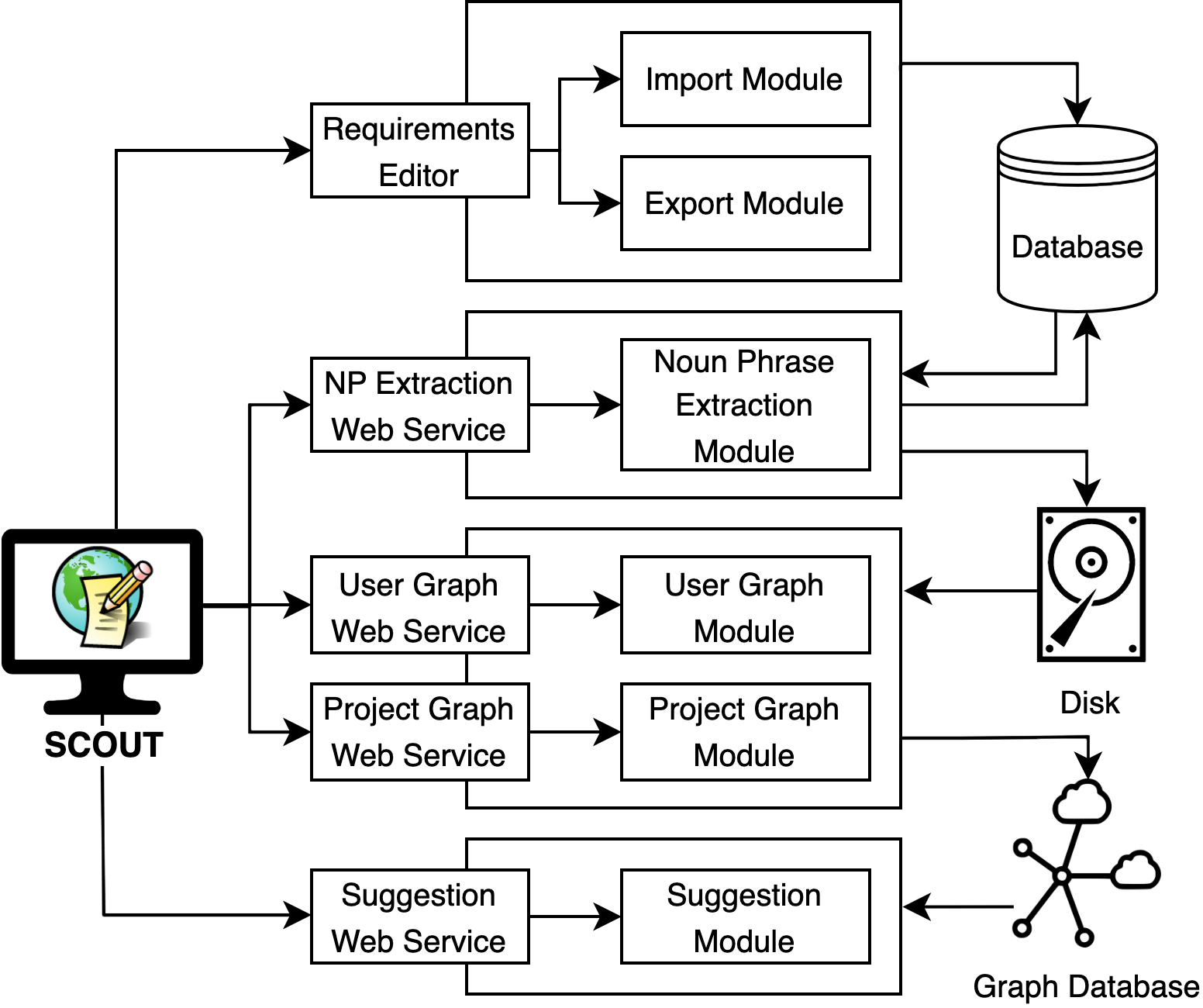
- Employ a BERT-based NLP pipeline to extract key concepts and noun phrases from user stories.
- Construct a dynamic knowledge graph by computing semantic similarity between concepts using sentence embeddings.
- Apply multiple heuristics to identify missing concepts, relationships, and potential duplicates based on graph structure.
- Integrate the system into a lightweight, web-based collaborative interface with real-time suggestion delivery.
- Implement a message broadcasting mechanism to simulate stakeholder communication in the collaborative environment.
- Use a controlled user study comparing SCOUT against Google Docs as a baseline, measuring completeness and quality metrics.
Experimental results
Research questions
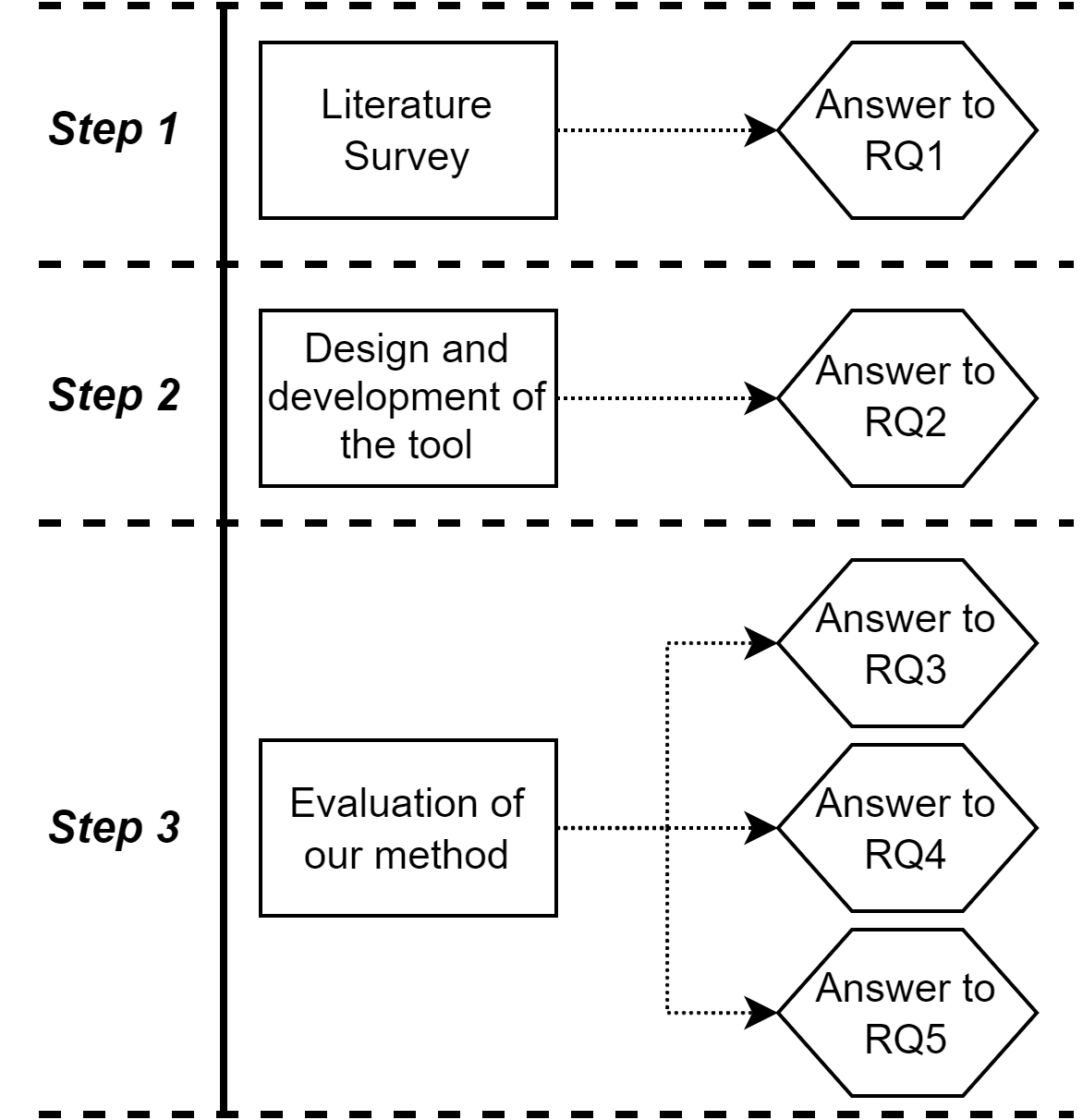
- RQ1To what extent does SCOUT improve the completeness of user story sets compared to traditional collaborative editing tools?
- RQ2How effective are NLP-based knowledge graphs and heuristics in identifying missing or redundant concepts in user stories?
- RQ3How do stakeholders perceive the usability and usefulness of real-time suggestions during collaborative requirement writing?
- RQ4Can SCOUT reduce the cognitive load and time required to achieve a consistent and complete user story set?
- RQ5What is the statistical significance of SCOUT’s performance improvement over baseline tools like Google Docs?
Key findings
- SCOUT achieved a statistically significant improvement in user story completeness compared to Google Docs, with a p-value of 0.015.
- Participants using SCOUT generated more conceptually complete user story sets, as measured by expert evaluation and heuristic coverage.
- The system’s real-time suggestions were perceived as helpful and contextually relevant by stakeholders during collaborative writing.
- The knowledge graph successfully identified semantically related concepts even when phrased differently, improving conceptual consistency.
- The open-source release of SCOUT’s source code and experimental data enables replication and community extension.
- The user study demonstrated that SCOUT reduces reliance on manual review and enhances team alignment during requirements elicitation.
Read this paper
Open the full text in the Nubint reader and ask about any passage as you read.
Read this paper on NubintThis review was generated by AI from the original paper. Please check the paper before citing it.