
[论文解读] A Machine Learning-based Digital Twin for Electric Vehicle Battery Modeling
本文提出了一种基于机器学习的电动汽车(EV)电池管理数字孪生模型,通过数据驱动模型联合建模荷电状态(SOC)与健康状态(SOH)。SOH模型基于历史数据一次性预训练,而SOC模型则通过云端定期使用更新的电池数据重新训练,以在电池老化过程中保持精度,实现推理时间低于1秒、重新训练时间低于1秒,确保与车载EV系统的兼容性。
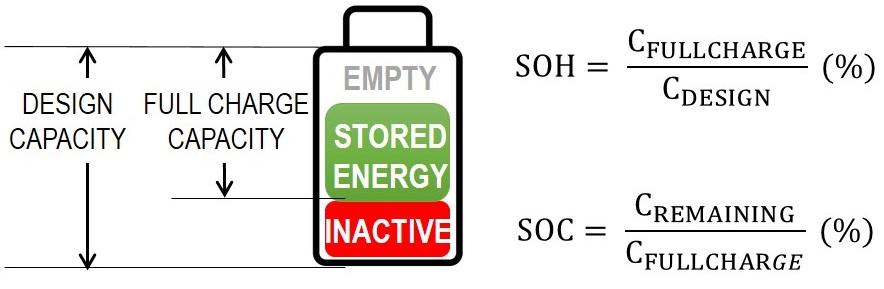
The widespread adoption of Electric Vehicles (EVs) is limited by their reliance on batteries with presently low energy and power densities compared to liquid fuels and are subject to aging and performance deterioration over time. For this reason, monitoring the battery State Of Charge (SOC) and State Of Health (SOH) during the EV lifetime is a very relevant problem. This work proposes a battery digital twin structure designed to accurately reflect battery dynamics at the run time. To ensure a high degree of correctness concerning non-linear phenomena, the digital twin relies on data-driven models trained on traces of battery evolution over time: a SOH model, repeatedly executed to estimate the degradation of maximum battery capacity, and a SOC model, retrained periodically to reflect the impact of aging. The proposed digital twin structure will be exemplified on a public dataset to motivate its adoption and prove its effectiveness, with high accuracy and inference and retraining times compatible with onboard execution.
研究动机与目标
- 为解决在非线性老化效应下准确估算电动汽车电池荷电状态(SOC)与健康状态(SOH)的挑战。
- 开发一种数字孪生架构,通过随电池老化周期性重新训练SOC模型,以维持SOC与SOH之间的相互依赖关系。
- 通过优化推理与重新训练时间,确保数字孪生模型可实时部署于车载EV环境中。
- 利用公开的NASA数据集验证该方法,证明数据驱动模型具有高精度与强适应性。
- 建立一种基于云端的SOC模型周期性重新训练框架,以反映电池退化状态的动态演变。
提出的方法
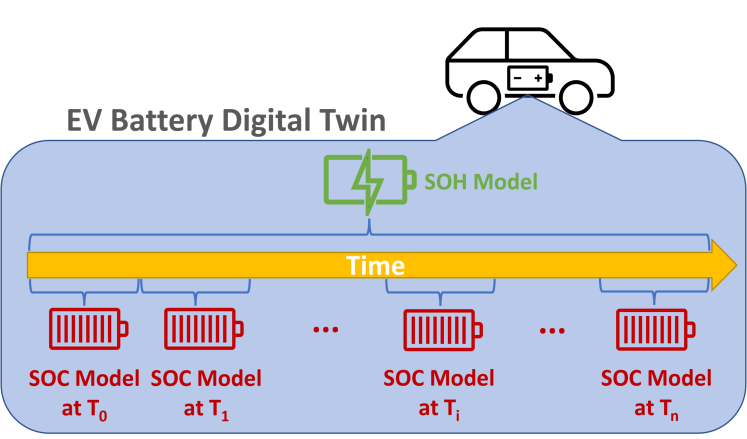
- 数字孪生采用基于历史电池循环数据预训练的离线SOH模型,用于估算容量退化。
- SOC模型通过云端定期使用来自电动汽车的更新放电数据重新训练,以反映当前电池老化状况。
- 对SOC与SOH估算均评估了随机森林(RF)、LightGBM(LGB)和深度神经网络(DNN)模型,使用最小-最大归一化特征。
- 通过使用不同SOH水平(如100%、75%、70%)的数据重新训练SOC模型,评估在使用过时模型时的性能退化。
- 推理可在云端或车载端执行,重点在于最小化延迟以支持实时电池管理。
- 系统采用边缘-云端混合架构,模型更新在云端重新训练后推送至车辆。
实验结果
研究问题
- RQ1如何准确建模老化锂离子电池中SOC与SOH之间的动态相互作用?
- RQ2在电动汽车场景下,哪些机器学习模型在精度、推理时间与重新训练时间之间提供了最佳平衡?
- RQ3当SOC模型在超出其训练SOH条件的环境下使用时,其性能如何退化?
- RQ4周期性重新训练SOC模型是否能有效维持电池生命周期内的高精度,即使存在老化效应?
- RQ5在实时数字孪生部署中,不同模型的计算性能特征(推理与重新训练时间)如何?
主要发现
- SOH模型在完整充电循环数据上一次性训练,推理时间约为1秒,精度高,适用于实时应用。
- 用于SOC估算的LightGBM(LGB)与随机森林(RF)模型相比DNN(约67秒)具有显著更短的训练时间(低于1秒),更适合周期性重新训练。
- 在SOH = 75%时,于该SOH水平训练的SOC模型分别实现RMSE为0.809%(RF)与0.599%(LGB);而于SOH = 100%训练的过时模型RMSE高达184.450%(RF),证明其随时间推移性能严重退化。
- 当使用在SOH = 100%训练的DNN模型处理SOH = 75%的电池时,其MAE上升至25.315%,因误差过大而实际不可用。
- 通过使用当前SOH数据周期性重新训练SOC模型,该数字孪生架构显著降低估计误差,相比过时模型减少超过90%。
- 所提出的系统实现与车载执行兼容的推理与重新训练时间,所有模型推理时间均在1秒内,重新训练时间均低于1秒(DNN除外),支持实时部署。
更好的研究,从现在开始
从阅读论文到最终审阅,大幅缩短您的研究时间。
无需绑定信用卡
本解读由 AI 生成,并经人工编辑审核。