
[Paper Review] A Novel Supervised Deep Learning Solution to Detect Distributed Denial of Service (DDoS) attacks on Edge Systems using Convolutional Neural Networks (CNN)
This paper proposes a novel supervised deep learning model using Convolutional Neural Networks (CNNs) to detect Distributed Denier of Service (DDoS) attacks in edge network environments. The method preprocesses network traffic into fixed-length packet flows, normalizes them, and applies a custom CNN architecture with dropout and sigmoid activation to achieve 98.83% accuracy in classifying benign and malicious traffic on unseen test data.
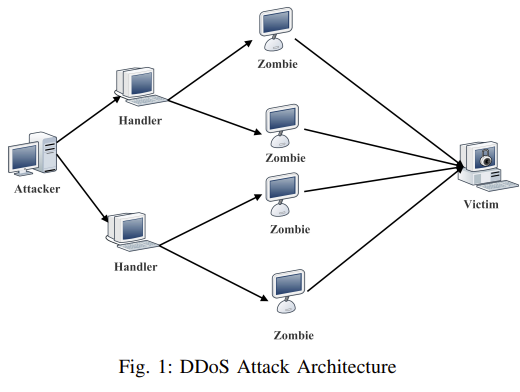
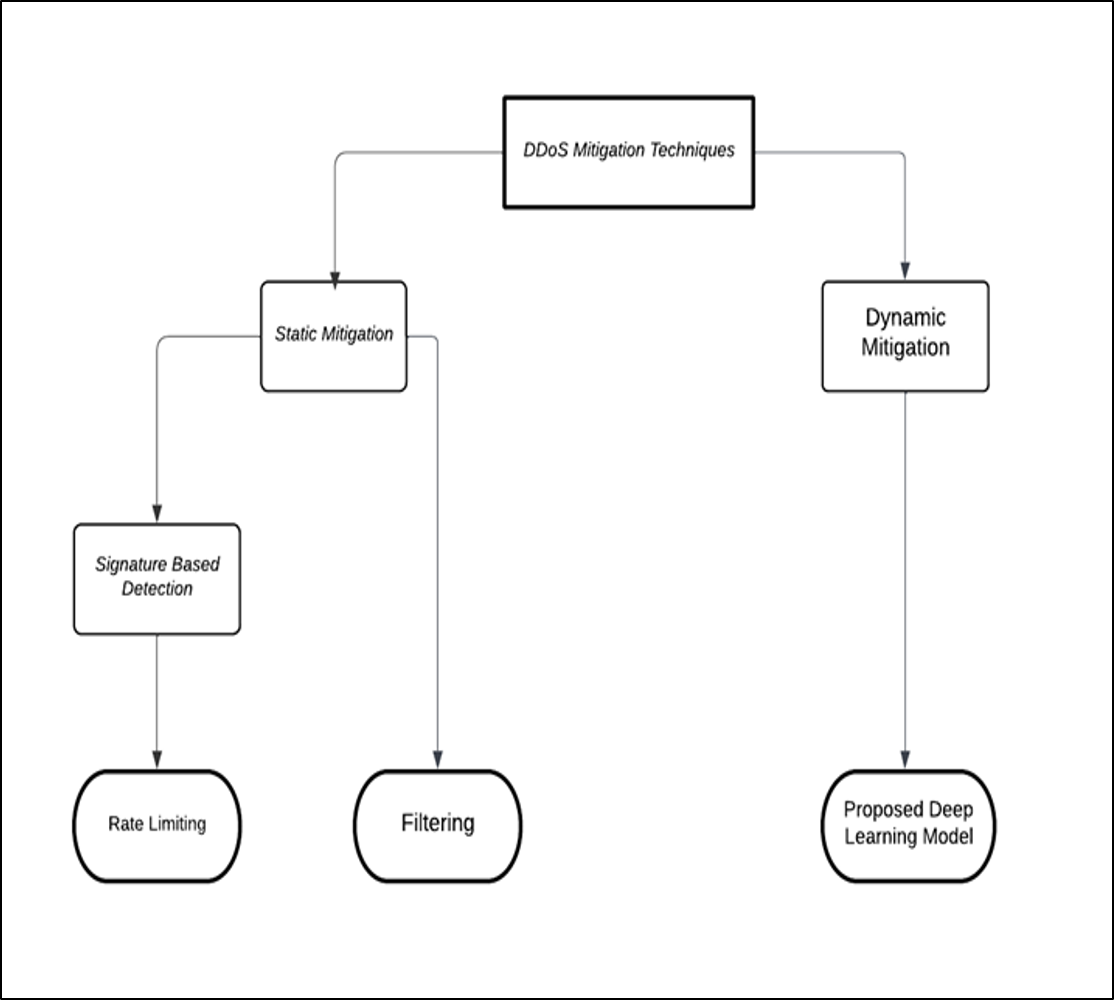
Cybersecurity attacks are becoming increasingly sophisticated and pose a growing threat to individuals, and private and public sectors. Distributed Denial of Service attacks are one of the most harmful of these threats in today's internet, disrupting the availability of essential services. This project presents a novel deep learning-based approach for detecting DDoS attacks in network traffic using the industry-recognized DDoS evaluation dataset from the University of New Brunswick, which contains packet captures from real-time DDoS attacks, creating a broader and more applicable model for the real world. The algorithm employed in this study exploits the properties of Convolutional Neural Networks (CNN) and common deep learning algorithms to build a novel mitigation technique that classifies benign and malicious traffic. The proposed model preprocesses the data by extracting packet flows and normalizing them to a fixed length which is fed into a custom architecture containing layers regulating node dropout, normalization, and a sigmoid activation function to out a binary classification. This allows for the model to process the flows effectively and look for the nodes that contribute to DDoS attacks while dropping the "noise" or the distractors. The results of this study demonstrate the effectiveness of the proposed algorithm in detecting DDOS attacks, achieving an accuracy of .9883 on 2000 unseen flows in network traffic, while being scalable for any network environment.
Motivation & Objective
- To address the growing threat of DDoS attacks on edge systems by developing a scalable, real-time detection mechanism.
- To overcome limitations of legacy DDoS detection methods such as signature-based filtering, rate-limiting, and static thresholds.
- To improve detection accuracy and generalization in dynamic network environments using deep learning.
- To create a model that is adaptable to evolving attack patterns and suitable for deployment in real-world edge networks.
- To evaluate the model’s performance on a real-world DDoS dataset with unseen traffic flows to assess generalization and robustness.
Proposed method
- The model processes raw network traffic by extracting packet flows and normalizing them to a fixed length for consistent input to the CNN.
- A custom CNN architecture is designed with multiple convolutional layers, batch normalization, dropout regularization, and a final sigmoid activation for binary classification.
- The use of ReLU activation functions enhances feature learning and model interpretability by emphasizing significant traffic patterns.
- Data preprocessing includes padding and normalization to standardize flow lengths and reduce noise, improving model stability and performance.
- The model is trained on the University of New Brunswick’s DDoS evaluation dataset, which includes real-time packet captures from actual DDoS attacks.
- Model evaluation includes accuracy, generalization on unseen flows, and proposed future use of AUC-ROC metrics for enhanced discrimination analysis.
Experimental results
Research questions
- RQ1Can a supervised CNN-based model achieve high accuracy in detecting DDoS attacks on edge systems using real-world network traffic data?
- RQ2How effective is the proposed preprocessing pipeline (flow extraction, normalization, padding) in improving model generalization and performance?
- RQ3To what extent can the model generalize to unseen DDoS attack patterns not present in the training data?
- RQ4How does the model’s performance compare to traditional DDoS detection techniques in terms of accuracy, false positive rates, and scalability?
- RQ5What are the key limitations of the model in detecting zero-day or previously unseen DDoS attack variants?
Key findings
- The proposed CNN model achieved a test accuracy of 98.83% on 2000 unseen network traffic flows, demonstrating strong generalization and robustness.
- The integration of batch normalization, dropout, and ReLU activation significantly improved model stability and reduced overfitting.
- The model effectively identified malicious traffic patterns by filtering out noise and focusing on key features contributing to DDoS behavior.
- The architecture showed scalability and adaptability, making it suitable for deployment in diverse network environments, including edge systems.
- Despite high accuracy, the model remains vulnerable to zero-day attacks due to reliance on known attack patterns in the training data, highlighting the need for continuous retraining.
- The study recommends future integration of AUC-ROC metrics to better evaluate the model’s discrimination capability beyond simple accuracy.
Read this paper
Open the full text in the Nubint reader and ask about any passage as you read.
Read this paper on NubintThis review was generated by AI from the original paper. Please check the paper before citing it.