
[Paper Review] A Perspective on Explainable Artificial Intelligence Methods: SHAP and LIME
This commentary analyzes SHAP and LIME as XAI methods for tabular data, discusses their assumptions, strengths, weaknesses, and provides recommendations for appropriate use and interpretation.
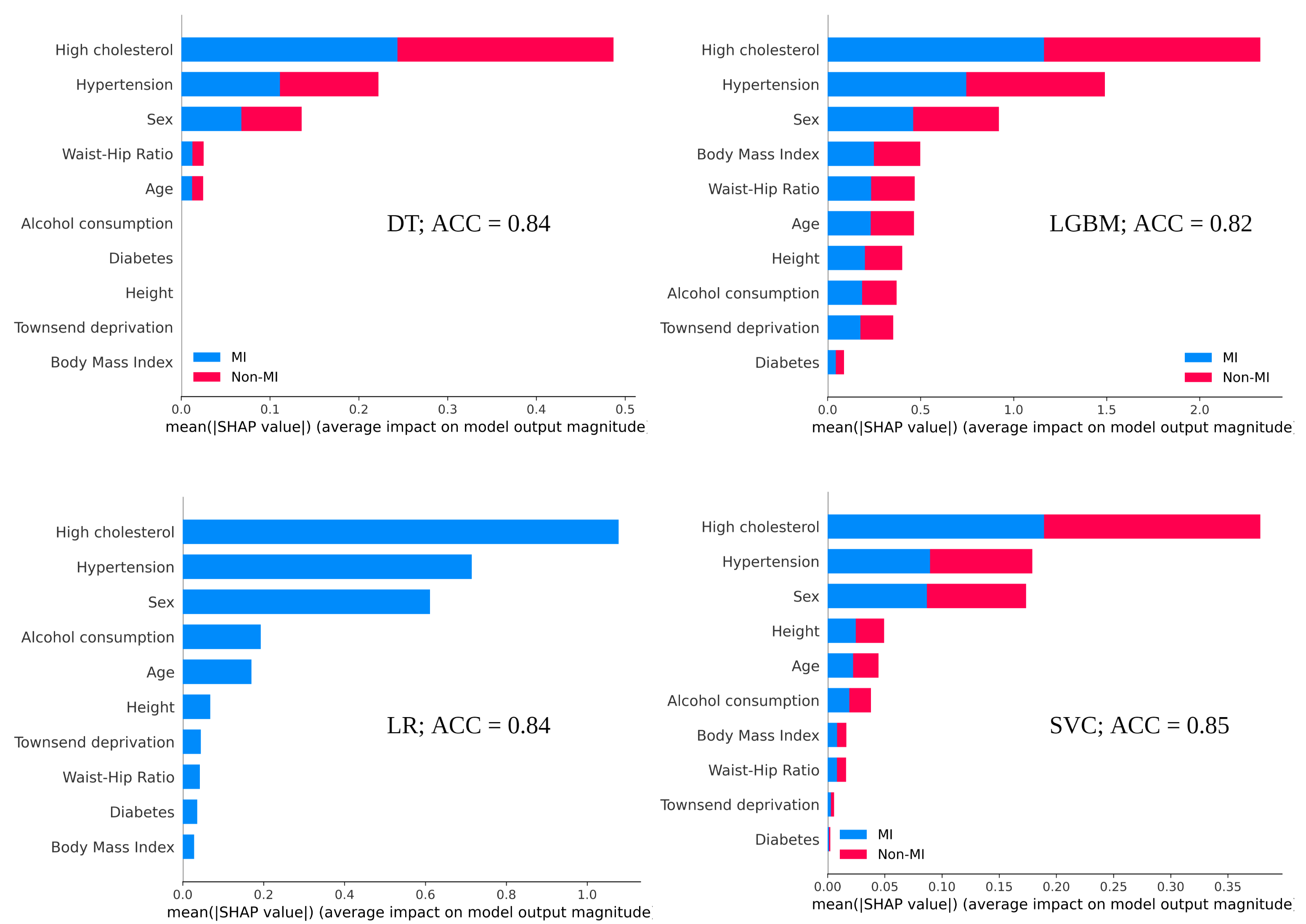
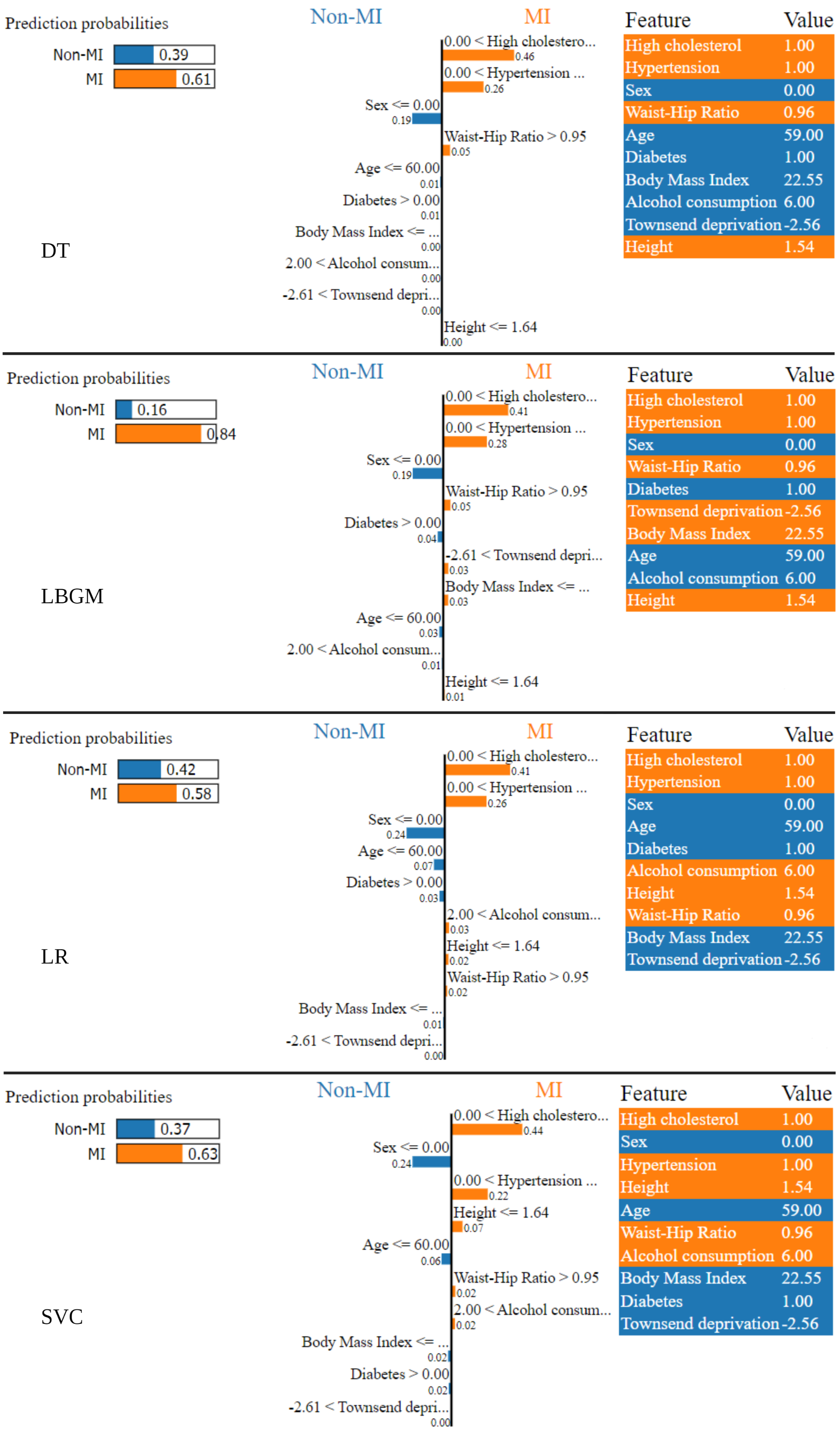
eXplainable artificial intelligence (XAI) methods have emerged to convert the black box of machine learning (ML) models into a more digestible form. These methods help to communicate how the model works with the aim of making ML models more transparent and increasing the trust of end-users into their output. SHapley Additive exPlanations (SHAP) and Local Interpretable Model Agnostic Explanation (LIME) are two widely used XAI methods, particularly with tabular data. In this perspective piece, we discuss the way the explainability metrics of these two methods are generated and propose a framework for interpretation of their outputs, highlighting their weaknesses and strengths. Specifically, we discuss their outcomes in terms of model-dependency and in the presence of collinearity among the features, relying on a case study from the biomedical domain (classification of individuals with or without myocardial infarction). The results indicate that SHAP and LIME are highly affected by the adopted ML model and feature collinearity, raising a note of caution on their usage and interpretation.
Motivation & Objective
- Explain the motivation for XAI and the need to demystify black-box models in high-stakes domains.
- Clarify how SHAP and LIME generate explanations and what they claim to represent.
- Identify weaknesses and strengths of SHAP and LIME, including assumptions and potential pitfalls.
- Provide recommendations to improve interpretation and appropriate use of SHAP and LIME in practice.
Proposed method
- Describe SHAP as a model-agnostic, post-hoc method based on game theory and feature contributions.
- Describe Kernel SHAP as an approximation to handle many features.
- Explain that SHAP explanations depend on the model and can be affected by feature independence assumptions and collinearity.
- Describe LIME as a model-agnostic, local explainer that converts a complex model into a local linear model for a single instance.
- Highlight that LIME is also model-dependent and may misrepresent non-linear relationships in some models.
- Discuss interpretability challenges when end-users are non-experts and when dealing with collinear features.
- Offer guidance on reporting SHAP outputs in simple language and using stability measures like NMR to assess feature lists.
Experimental results
Research questions
- RQ1What are the core assumptions behind SHAP and LIME when explaining model predictions?
- RQ2What are the practical strengths and limitations of SHAP and LIME for tabular data?
- RQ3How should researchers and end-users interpret SHAP and LIME outputs to avoid misinterpretation?
- RQ4What recommendations can improve the appropriate use and reporting of SHAP and LIME explanations?
Key findings
- SHAP outcomes depend on the chosen model, and different models can yield different feature importance orders.
- SHAP assumes feature independence, which may lead to biased or unrealistic explanations in the presence of collinearity.
- SHAP can be biased by biased classifiers and may produce explanations that do not reflect underlying biases.
- LIME explains local predictions by approximating a complex model with a local linear model, which may miss non-linear relationships.
- LIME explanations are local to a specific instance and may not generalize across the model; interpretation can be affected by feature collinearity.
- Both methods require careful communication and may benefit from simplifying outputs and using stability measures.
Read this paper
Open the full text in the Nubint reader and ask about any passage as you read.
Read this paper on NubintThis review was generated by AI from the original paper. Please check the paper before citing it.