
[Paper Review] A Review of Multi-Modal Large Language and Vision Models
This paper surveys the state of multi-modal large language models (MM-LLMs), covering history, architectures, open vs. proprietary models, training/tuning methods, ethics, and evaluation. It also reviews major text-only LLMs with multimodal capabilities and vision-language models.
Large Language Models (LLMs) have recently emerged as a focal point of research and application, driven by their unprecedented ability to understand and generate text with human-like quality. Even more recently, LLMs have been extended into multi-modal large language models (MM-LLMs) which extends their capabilities to deal with image, video and audio information, in addition to text. This opens up applications like text-to-video generation, image captioning, text-to-speech, and more and is achieved either by retro-fitting an LLM with multi-modal capabilities, or building a MM-LLM from scratch. This paper provides an extensive review of the current state of those LLMs with multi-modal capabilities as well as the very recent MM-LLMs. It covers the historical development of LLMs especially the advances enabled by transformer-based architectures like OpenAI's GPT series and Google's BERT, as well as the role of attention mechanisms in enhancing model performance. The paper includes coverage of the major and most important of the LLMs and MM-LLMs and also covers the techniques of model tuning, including fine-tuning and prompt engineering, which tailor pre-trained models to specific tasks or domains. Ethical considerations and challenges, such as data bias and model misuse, are also analysed to underscore the importance of responsible AI development and deployment. Finally, we discuss the implications of open-source versus proprietary models in AI research. Through this review, we provide insights into the transformative potential of MM-LLMs in various applications.
Motivation & Objective
- Summarize the historical development of large language models and the role of transformer attention in their capabilities.
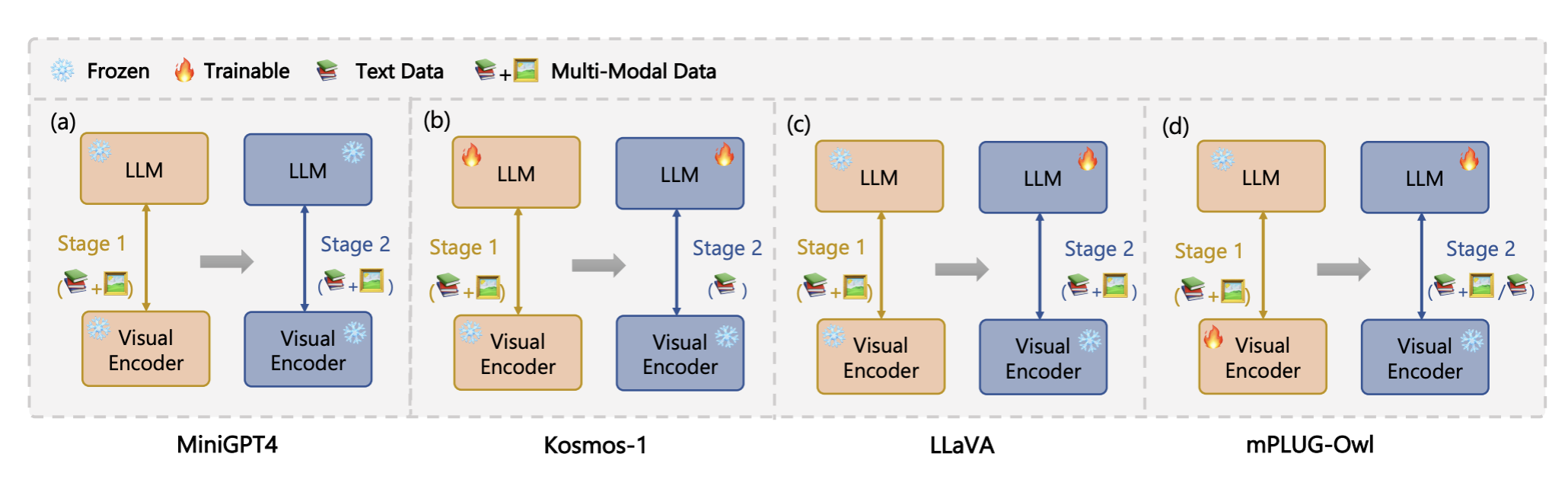
- Assess multi-modal extensions of LLMs and how visual components are integrated into base LLMs.
- Compare open-source and proprietary LLMs in terms of cost, transparency, and ethical considerations.
- Review common fine-tuning and prompt-engineering techniques used to tailor models to tasks.
- Discuss evaluation benchmarks and ethical challenges associated with MM-LLMs and their deployment.
Proposed method
- Review and synthesize key LLM and MM-LLM models and their architectures.
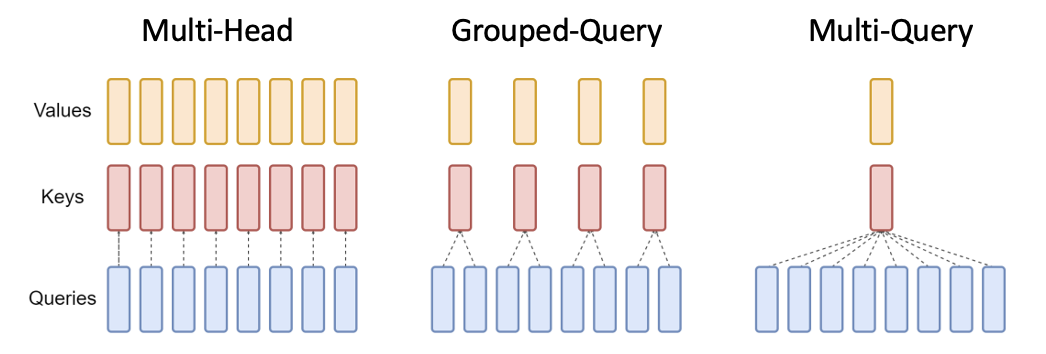
- Explain attention mechanisms and variants (MHA, MQA, GQA) and their computational trade-offs.
- Summarize training/fine-tuning approaches (LoRA, QLoRA, SFT, RLHF) and their implications.
- Analyze open-source versus proprietary models, including licensing and data considerations.
- Discuss evaluation benchmarks and methods for assessing MM-LLMs and LLMs.
- Highlight ethical issues such as data bias and model misuse and address open-source openness.
Experimental results
Research questions
- RQ1What are the major developments in LLMs and MM-LLMs and how do they differ in architecture and training?
- RQ2How are visual components incorporated into LLMs to form MM-LLMs, and what tuning methods are most effective?
- RQ3What are the trade-offs between open-source and proprietary LLMs regarding cost, transparency, and ethics?
- RQ4What evaluation benchmarks are used to assess MM-LLMs and what challenges arise in benchmarking?
- RQ5What ethical considerations emerge in the development and deployment of MM-LLMs and how can they be mitigated?
Key findings
- MM-LLMs extend LLM capabilities to images, videos, and audio by retrofitting or building from scratch, enabling applications like image captioning and text-to-video generation.
- Attention mechanisms (self-attention, MHA, MQA, GQA) are central to Transformer-based models and influence performance and resource use.
- Open-source LLMs (e.g., LLaMA family, Falcon, Mistral) offer transparency and cost advantages but vary in licensing and performance relative to proprietary models.
- Fine-tuning methods (LoRA, QLoRA, SFT) and RLHF are common strategies to tailor models while managing cost and efficiency.
- Ethical concerns include data bias, model misuse, and licensing/access issues, with a discussion on open versus closed models and regulatory implications.
- Evaluation and benchmarking of LLMs/MM-LLMs rely on standard NLP and multi-modal benchmarks, with emphasis on practical performance and safety considerations.
Read this paper
Open the full text in the Nubint reader and ask about any passage as you read.
Read this paper on NubintThis review was generated by AI from the original paper. Please check the paper before citing it.