
[Paper Review] A Survey and Benchmark of Automatic Surface Reconstruction from Point Clouds
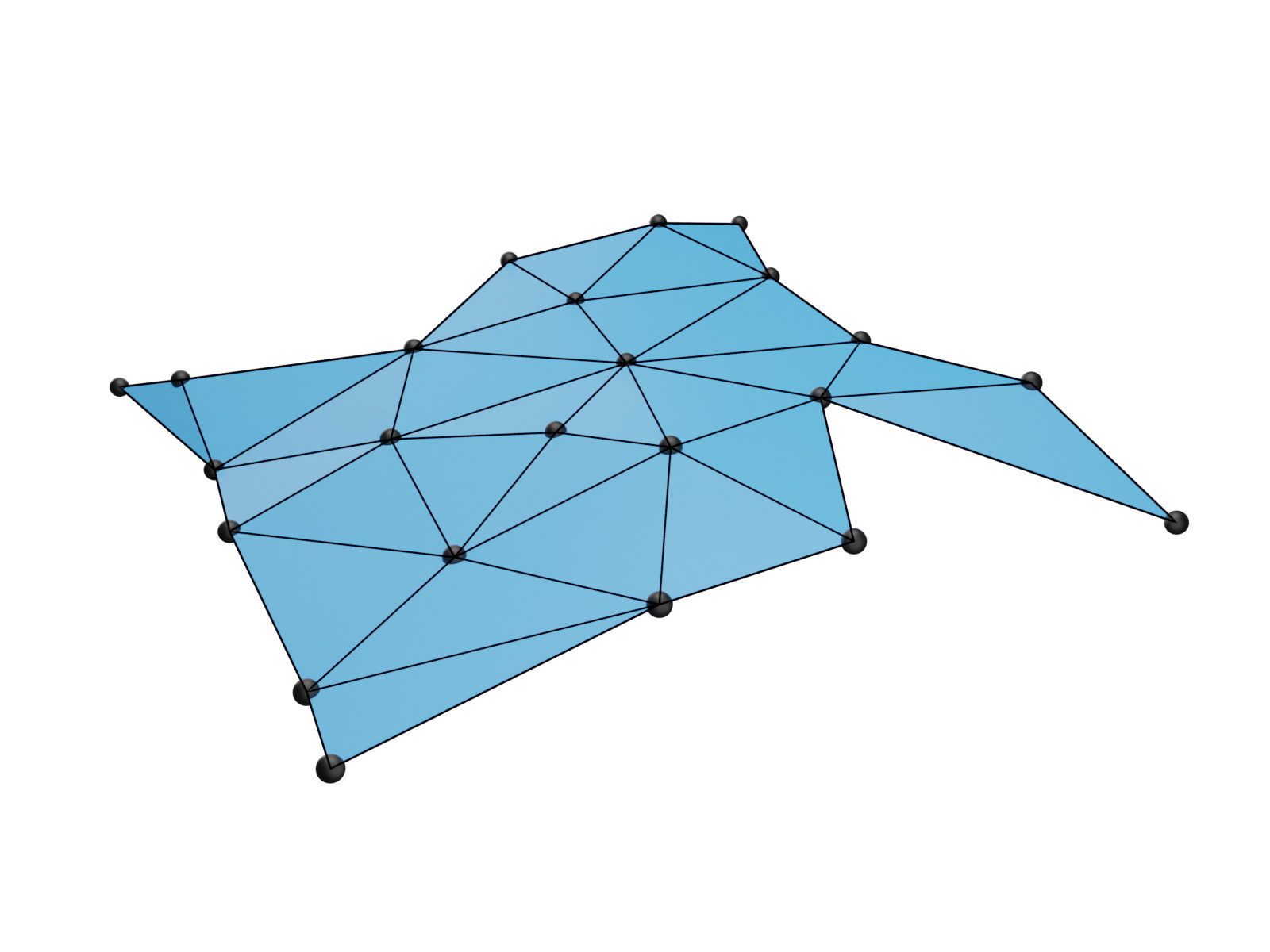
This paper presents a comprehensive survey and benchmark of traditional and learning-based surface reconstruction methods from 3D point clouds, evaluating their performance under standardized, realistic conditions. It finds that while learning-based models outperform traditional methods on in-distribution data with similar characteristics, traditional methods remain more robust to real-world acquisition defects like noise, outliers, and non-uniform sampling.
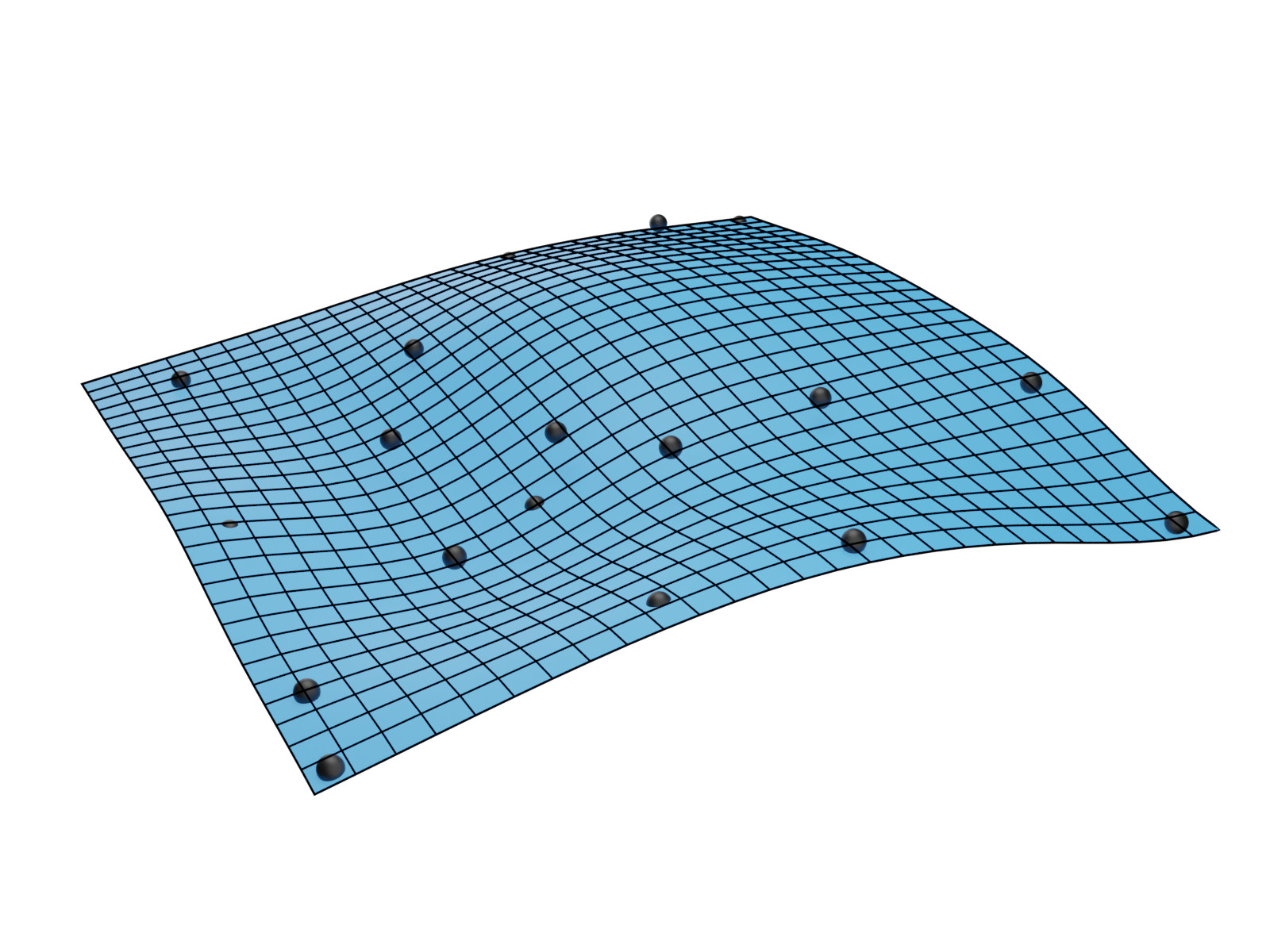
We present a comprehensive survey and benchmark of both traditional and learning-based methods for surface reconstruction from point clouds. This task is particularly challenging for real-world acquisitions due to factors such as noise, outliers, non-uniform sampling, and missing data. Traditional approaches often simplify the problem by imposing handcrafted priors on either the input point clouds or the resulting surface, a process that can require tedious hyperparameter tuning. In contrast, deep learning models have the capability to directly learn the properties of input point clouds and desired surfaces from data. We study the influence of handcrafted and learned priors on the precision and robustness of surface reconstruction techniques. We evaluate various time-tested and contemporary methods in a standardized manner. When both trained and evaluated on point clouds with identical characteristics, the learning-based models consistently produce higher-quality surfaces compared to their traditional counterparts -- even in scenarios involving novel shape categories. However, traditional methods demonstrate greater resilience to the diverse anomalies commonly found in real-world 3D acquisitions. For the benefit of the research community, we make our code and datasets available, inviting further enhancements to learning-based surface reconstruction. This can be accessed at https://github.com/raphaelsulzer/dsr-benchmark .
Motivation & Objective
- To systematically evaluate and compare traditional and learning-based surface reconstruction methods under consistent, realistic conditions.
- To investigate the generalization capabilities of deep learning-based methods on unseen shape categories and unseen acquisition defects.
- To assess the robustness of methods to real-world point cloud anomalies such as noise, outliers, non-uniform sampling, and missing data.
- To provide a standardized benchmark with publicly available code and datasets to support future research in deep surface reconstruction.
- To identify limitations of current learning-based approaches, especially regarding out-of-distribution defects, and guide future method development.
Proposed method
- The authors use a diverse set of publicly available shape datasets with known ground-truth meshes to evaluate reconstruction quality.
- They generate synthetic point clouds with realistic acquisition characteristics—such as non-uniform sampling, noise, outliers, and missing data—by simulating MVS scanning pipelines.
- The benchmark includes both synthetic and real-world point clouds, enabling evaluation on known ground-truth surfaces and practical scenarios.
- Traditional methods (e.g., SPSR, RESR) and learning-based models (e.g., SAP, DGNN, POCO, P2S, IGR) are evaluated under identical training and test conditions.
- Geometric and topological reconstruction quality is measured using standard metrics such as Chamfer Distance, Hausdorff Distance, and F-Score.
- Runtime and inference efficiency are also evaluated, particularly for real-time or deployment-relevant applications.
Experimental results
Research questions
- RQ1How do learning-based surface reconstruction methods compare to traditional methods in terms of geometric and topological accuracy on point clouds with realistic defects?
- RQ2To what extent can learning-based models generalize to novel shape categories not present in the training data?
- RQ3How robust are learning-based methods to out-of-distribution acquisition defects such as unknown outlier patterns or extreme non-uniform sampling?
- RQ4Do traditional methods maintain consistent performance across diverse point cloud characteristics, including noise and missing data?
- RQ5What is the trade-off between reconstruction quality, robustness, and inference speed in modern surface reconstruction pipelines?
Key findings
- When trained and tested on point clouds with similar characteristics, learning-based models consistently produce higher-quality surfaces than traditional methods.
- Learning-based methods generalize to unseen shape categories when trained on large, complex datasets (e.g., 30k shapes), suggesting they learn general priors from data rather than shape-specific features.
- Traditional methods like SPSR and RESR outperform most learning-based models in terms of robustness to real-world acquisition defects such as noise, outliers, and missing data.
- Methods like SAP and DGNN achieve a favorable balance between speed and robustness, with SAP being the fastest among evaluated methods.
- Optimization-based learning methods (e.g., IGR, POCO) show limited resilience to domain shifts and do not outperform traditional techniques in most settings.
- The benchmark highlights a critical gap: current learning-based models are not robust to unseen or complex acquisition defects, underscoring the need for more realistic training data.
Read this paper
Open the full text in the Nubint reader and ask about any passage as you read.
Read this paper on NubintThis review was generated by AI from the original paper. Please check the paper before citing it.