
[Paper Review] A Survey of Deep Learning and Foundation Models for Time Series Forecasting
A comprehensive survey of deep learning, transformers, foundation models, and knowledge-based approaches for time series forecasting, with a focus on pandemic forecasting and the integration of knowledge graphs, LLMs, and pre-training.
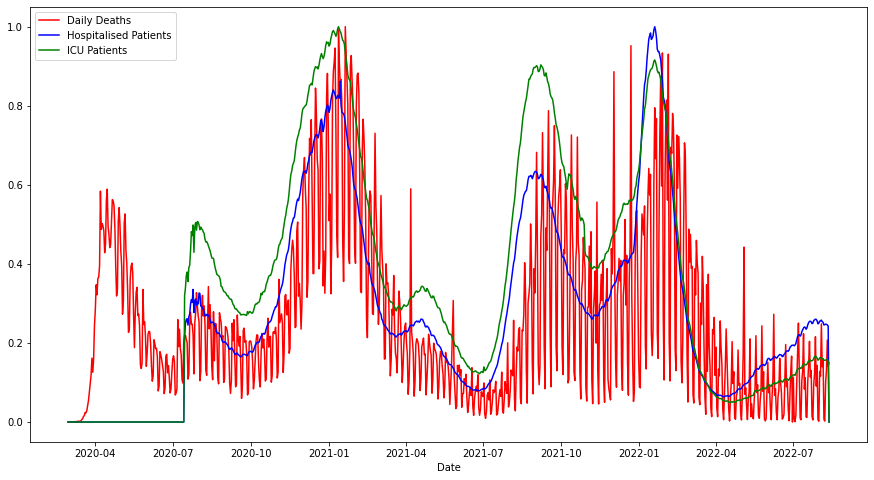
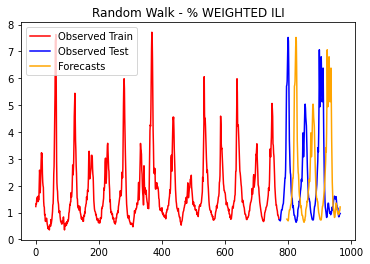
Deep Learning has been successfully applied to many application domains, yet its advantages have been slow to emerge for time series forecasting. For example, in the well-known Makridakis (M) Competitions, hybrids of traditional statistical or machine learning techniques have only recently become the top performers. With the recent architectural advances in deep learning being applied to time series forecasting (e.g., encoder-decoders with attention, transformers, and graph neural networks), deep learning has begun to show significant advantages. Still, in the area of pandemic prediction, there remain challenges for deep learning models: the time series is not long enough for effective training, unawareness of accumulated scientific knowledge, and interpretability of the model. To this end, the development of foundation models (large deep learning models with extensive pre-training) allows models to understand patterns and acquire knowledge that can be applied to new related problems before extensive training data becomes available. Furthermore, there is a vast amount of knowledge available that deep learning models can tap into, including Knowledge Graphs and Large Language Models fine-tuned with scientific domain knowledge. There is ongoing research examining how to utilize or inject such knowledge into deep learning models. In this survey, several state-of-the-art modeling techniques are reviewed, and suggestions for further work are provided.
Motivation & Objective
- Assess the progression of time series forecasting methods from classical statistics to deep learning and foundation models.
- Examine how encoder-decoder, transformer, and graph neural network architectures capture temporal and spatial dependencies in time series.
- Explore how knowledge sources such as knowledge graphs and large language models can augment forecasting models.
- Identify challenges in pandemic forecasting and opportunities for theory-guided data science and physics-informed approaches.
- Provide directions for future research and practical recommendations for model development and evaluation.
Proposed method
- Survey historical and contemporary time series forecasting models, including SARIMAX, VAR, LSTM/GRU, encoder-decoder, and transformer-based approaches.
- Discuss advances in sparse attention, patch-based transformers, and pre-training/MAE techniques for multivariate time series.
- Review representation learning methods (e.g., TS2Vec, CoST, FEAT, SimTS) and their impact on forecasting performance and interpretability.
- Summarize the role of graph neural networks for spatial-temporal forecasting, particularly in pandemic data at national and state levels.
- Highlight the use of knowledge sources (knowledge graphs, LLMs) to improve forecast quality, explainability, and scientific grounding.
- Provide a meta-study perspective on the effectiveness of various modeling techniques in current literature.
Experimental results
Research questions
- RQ1What modeling techniques are driving improvements in time series forecasting, and how do they compare to traditional baselines?
- RQ2How do transformer-based and graph-based architectures perform in temporal and spatial forecasting tasks, including pandemic data?
- RQ3What is the role of pre-training, patching, and representation learning in enhancing forecasting accuracy and efficiency?
- RQ4How can knowledge graphs and large language models be integrated to improve forecast quality and interpretability?
- RQ5What are the main challenges and future directions for foundation models in time series forecasting?
Key findings
- Transformers and related attention-based architectures have emerged as top performers in time series forecasting, especially for temporal dynamics.
- Sparse attention, patch-based inputs, and auto-correlative techniques can reduce computation and improve long-horizon forecasting with transformers.
- Representation learning approaches (e.g., TS2Vec, CoST, FEAT, SimTS) offer effective latent representations that support forecasting and can improve interpretability.
- Graph neural networks are well-suited to capture spatial-temporal dependencies, particularly for state- and national-level pandemic data.
- Foundation-model ideas, including pre-training and the use of knowledge graphs and LLMs, hold promise for improving pandemic preparedness and explainability, though challenges remain (short time series, distribution shifts).
- A meta-study perspective suggests varying effectiveness across techniques in current literature, with ML-based methods increasingly competing with or surpassing classical statistical approaches in recent iterations.
Read this paper
Open the full text in the Nubint reader and ask about any passage as you read.
Read this paper on NubintThis review was generated by AI from the original paper. Please check the paper before citing it.