
[Paper Review] A Survey of Secure Computation Using Trusted Execution Environments
This survey presents a comprehensive taxonomy and systematic evaluation of trusted execution environment (TEE)-based secure computation protocols, categorizing them into secure outsourced, distributed, and multi-party computation. It introduces standardized assessment criteria across setting, methodology, security, and performance, offering a comparative analysis of state-of-the-art protocols for general and specialized tasks like privacy-preserving machine learning and encrypted databases, serving as a practical guideline for protocol selection and identifying key research challenges.
As an essential technology underpinning trusted computing, the trusted execution environment (TEE) allows one to launch computation tasks on both on- and off-premises data while assuring confidentiality and integrity. This article provides a systematic review and comparison of TEE-based secure computation protocols. We first propose a taxonomy that classifies secure computation protocols into three major categories, namely secure outsourced computation, secure distributed computation and secure multi-party computation. To enable a fair comparison of these protocols, we also present comprehensive assessment criteria with respect to four aspects: setting, methodology, security and performance. Based on these criteria, we review, discuss and compare the state-of-the-art TEE-based secure computation protocols for both general-purpose computation functions and special-purpose ones, such as privacy-preserving machine learning and encrypted database queries. To the best of our knowledge, this article is the first survey to review TEE-based secure computation protocols and the comprehensive comparison can serve as a guideline for selecting suitable protocols for deployment in practice. Finally, we also discuss several future research directions and challenges.
Motivation & Objective
- To address the lack of systematic comparison and guidance in deploying TEE-based secure computation protocols.
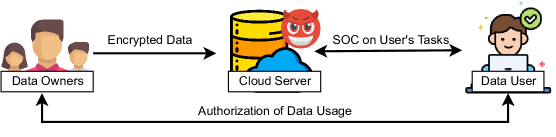
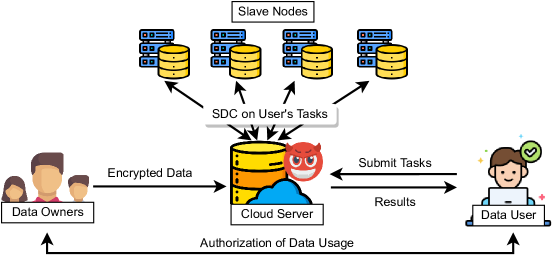
- To classify existing TEE-based secure computation protocols into three major categories: secure outsourced, distributed, and multi-party computation.
- To establish standardized assessment criteria across four dimensions: setting, methodology, security, and performance for fair protocol comparison.
- To analyze and compare state-of-the-art TEE-based protocols for general-purpose computation and special-purpose applications such as privacy-preserving machine learning and encrypted database queries.
- To identify open challenges and future research directions in TEE-based secure computation, including scalability, real-time processing, mobile compatibility, and trust management.
Proposed method
- Propose a three-category taxonomy: secure outsourced computation, secure distributed computation, and secure multi-party computation.
- Define a comprehensive assessment framework with four criteria: computational setting, protocol methodology, security model, and performance metrics (e.g., execution time, communication cost).
- Survey and analyze 40+ representative TEE-based secure computation protocols from peer-reviewed literature, focusing on both general and special-purpose functions.
- Evaluate protocols using standardized metrics, comparing them against baselines such as plaintext execution and fully in-enclave execution.
- Conduct formal security analysis where available, and assess resilience to side-channel and replay attacks.
- Identify gaps in existing work, particularly in protection against untrusted code and mobile deployment, and propose future research directions.
Experimental results
Research questions
- RQ1How can TEE-based secure computation protocols be systematically classified and compared across different application settings?
- RQ2What are the key trade-offs between security guarantees, performance efficiency, and deployment feasibility in TEE-based secure computation?
- RQ3To what extent do existing TEE-based protocols support large-scale data processing, real-time computation, and mobile deployment?
- RQ4What are the current limitations in securing TEEs against malicious or untrusted code, and how can trust assumptions be minimized?
- RQ5How do TEE-based protocols compare to traditional cryptographic solutions like homomorphic encryption and secret sharing in terms of practicality and performance?
Key findings
- The survey identifies a critical gap in the literature: no prior comprehensive survey systematically compares TEE-based secure computation protocols across security, performance, and deployment settings.
- Most TEE-based protocols are designed to resist malicious adversaries, but protection against side-channel and replay attacks remains underdeveloped, with only a few works addressing these threats.
- Performance evaluations show that TEE-based protocols generally outperform fully homomorphic encryption and secret-sharing frameworks in execution time, though communication overhead remains a bottleneck in distributed settings.
- For privacy-preserving machine learning, TEE-based solutions achieve acceptable inference and training times on small to medium datasets, but scalability to large-scale data remains a major challenge.
- Existing protocols often compare performance against plaintext or in-enclave baselines, but lack standardized benchmarks for cross-protocol comparison, limiting reproducibility and fair evaluation.
- Future research must focus on incremental computation, mobile-friendly deployment, and reducing trust in TEE hardware to enable broader industrial adoption.
Read this paper
Open the full text in the Nubint reader and ask about any passage as you read.
Read this paper on NubintThis review was generated by AI from the original paper. Please check the paper before citing it.