
[Paper Review] A Survey on Recent Advances in LLM-Based Multi-turn Dialogue Systems
This survey reviews LLM-based multi-turn dialogue systems, detailing LLM types and adaptation methods, open-domain and task-oriented dialogue advances, datasets, metrics, and future challenges.
This survey provides a comprehensive review of research on multi-turn dialogue systems, with a particular focus on multi-turn dialogue systems based on large language models (LLMs). This paper aims to (a) give a summary of existing LLMs and approaches for adapting LLMs to downstream tasks; (b) elaborate recent advances in multi-turn dialogue systems, covering both LLM-based open-domain dialogue (ODD) and task-oriented dialogue (TOD) systems, along with datasets and evaluation metrics; (c) discuss some future emphasis and recent research problems arising from the development of LLMs and the increasing demands on multi-turn dialogue systems.
Motivation & Objective
- Summarize existing LLMs and approaches for adapting LLMs to downstream tasks in multi-turn dialogue.
- Elaborate recent advances in multi-turn dialogue systems, including open-domain and task-oriented systems, with datasets and evaluation metrics.
- Discuss future emphasis and research problems arising from LLM development and rising demands in multi-turn dialogue.
Proposed method
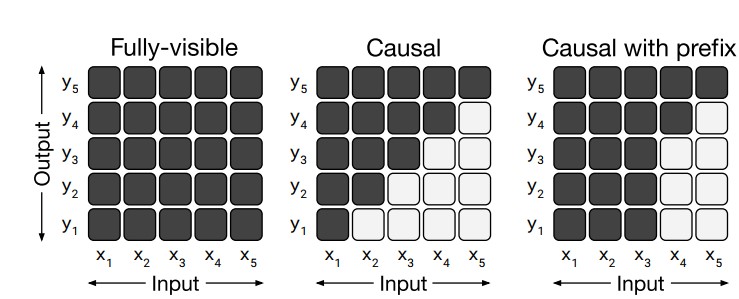
- Survey the general methods of LLMs, including decoder-only, encoder-only, and encoder-decoder transformer architectures.
- Describe full fine-tuning and parameter-efficient fine-tuning (PEFT) techniques such as adapters, LoRA, and instruction fine-tuning.
- Discuss strategies to mitigate fine-tuning instabilities and robustness methods (R3F, R4F, SMART, FreeLB).
- Explain prompt engineering approaches, including prompt tuning with discrete (PVP-based) prompts and continuous prompts, plus methods like PET, LM-BFF, and PTR.
Experimental results
Research questions
- RQ1What are the prevalent LLMs and architectural families used for multi-turn dialogue systems?
- RQ2What methods are effective for adapting LLMs to downstream TOD/ODD sub-tasks (FFT, PEFT, instruction tuning)?
- RQ3How are open-domain and task-oriented dialogue systems constructed and evaluated with current LLM technologies?
- RQ4What datasets and evaluation metrics are standard in this evolving area, and what challenges remain?
Key findings
- LLMs enable significant performance gains in multi-turn dialogue systems through scaling and architectural variety (decoder-only, encoder-only, and encoder-decoder).
- Fine-tuning can be done fully or via parameter-efficient methods like adapters and LoRA to reduce resource usage while preserving pre-trained knowledge.
- Instruction fine-tuning and reinforcement learning from human feedback improve alignment and task performance.
- Prompt engineering, including discrete prompts (PET, LM-BFF) and tuning-free prompting, substantially impacts downstream task performance.
- Mitigating fine-tuning instability is critical, with methods such as R3F/R4F, SMART, and adversarial training proposed.
- New dialog-specific models and families (GPT, LLaMA, GLM, ChatGLM, Code Llama) and their dialog-specialized variants are advancing the field.

Read this paper
Open the full text in the Nubint reader and ask about any passage as you read.
Read this paper on NubintThis review was generated by AI from the original paper. Please check the paper before citing it.