
[Paper Review] A Systematic Literature Review of Explainable AI for Software Engineering
This paper conducts a systematic literature review to map Explainable AI (XAI) methods used in Software Engineering (XAI4SE), identifying which SE areas and tasks are studied, what XAI approaches are used, and how useful XAI has been in SE, with a roadmap for future work.
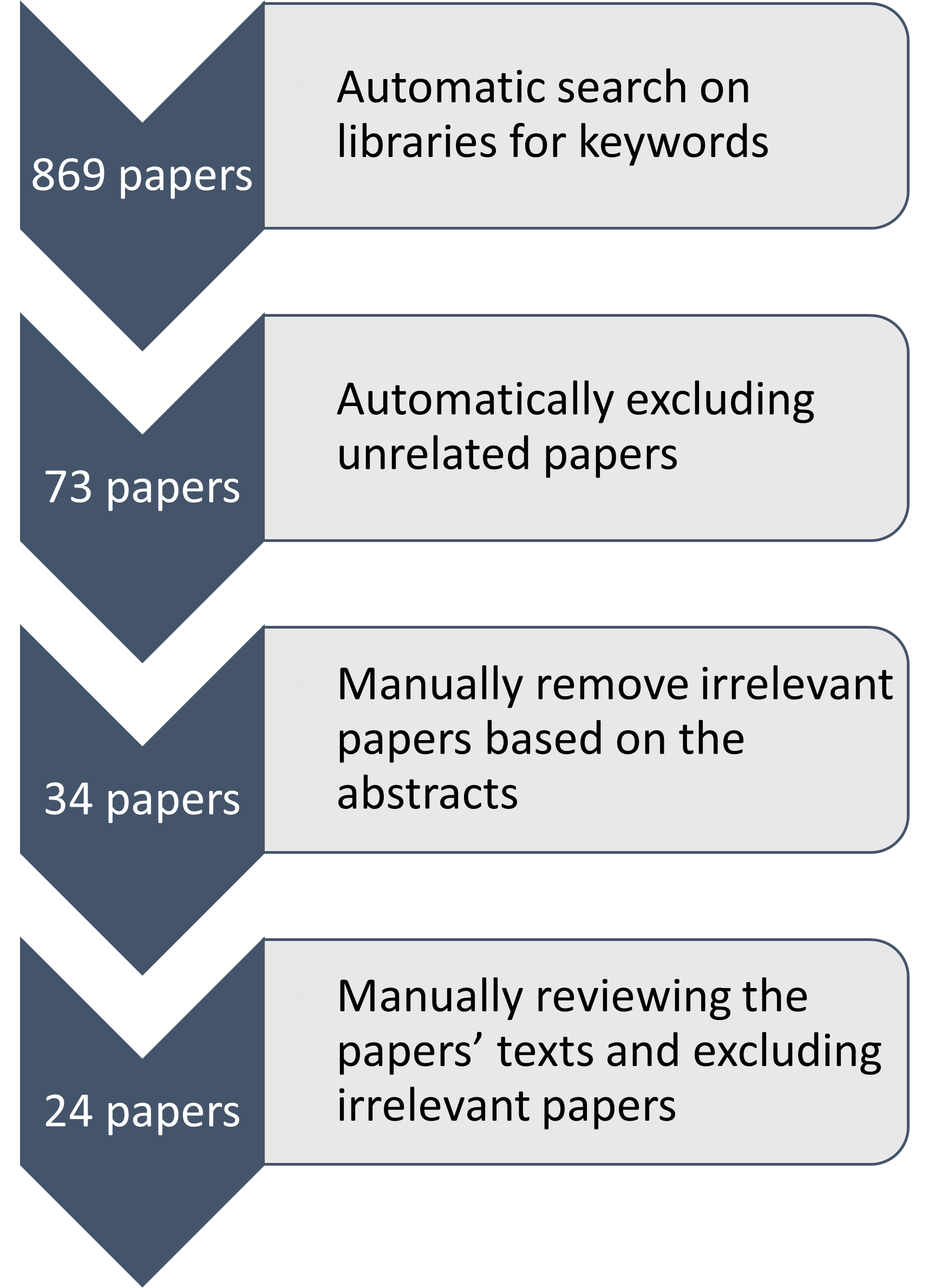
Context: In recent years, leveraging machine learning (ML) techniques has become one of the main solutions to tackle many software engineering (SE) tasks, in research studies (ML4SE). This has been achieved by utilizing state-of-the-art models that tend to be more complex and black-box, which is led to less explainable solutions that reduce trust and uptake of ML4SE solutions by professionals in the industry. Objective: One potential remedy is to offer explainable AI (XAI) methods to provide the missing explainability. In this paper, we aim to explore to what extent XAI has been studied in the SE community (XAI4SE) and provide a comprehensive view of the current state-of-the-art as well as challenge and roadmap for future work. Method: We conduct a systematic literature review on 24 (out of 869 primary studies that were selected by keyword search) most relevant published studies in XAI4SE. We have three research questions that were answered by meta-analysis of the collected data per paper. Results: Our study reveals that among the identified studies, software maintenance (\%68) and particularly defect prediction has the highest share on the SE stages and tasks being studied. Additionally, we found that XAI methods were mainly applied to classic ML models rather than more complex models. We also noticed a clear lack of standard evaluation metrics for XAI methods in the literature which has caused confusion among researchers and a lack of benchmarks for comparisons. Conclusions: XAI has been identified as a helpful tool by most studies, which we cover in the systematic review. However, XAI4SE is a relatively new domain with a lot of untouched potentials, including the SE tasks to help with, the ML4SE methods to explain, and the types of explanations to offer. This study encourages the researchers to work on the identified challenges and roadmap reported in the paper.
Motivation & Objective
- Assess which software engineering areas and tasks have been investigated with XAI methods.
- Identify the XAI techniques and explanations applied in SE studies.
- Evaluate how useful XAI has been for SE and summarize limitations and future roadmaps.
Proposed method
- Perform a systematic literature review following Kitchenham guidelines.
- Search five major databases with structured keywords covering interpretable/explainable terms, SE tasks, and ML terms.
- Screen 869 initial papers to 24 primary studies that meet inclusion criteria.
- Extract 17 properties per paper to answer the research questions.
- Synthesize results with descriptive statistics and meta-analysis per paper.
Experimental results
Research questions
- RQ1RQ1: What are the main software engineering areas and tasks for which Explainable AI approaches have been used to date?
- RQ2RQ2: What are the Explainable AI approaches adopted for SE tasks?
- RQ3RQ3: How useful has XAI been for SE, and how are explanations evaluated?
Key findings
- Software maintenance is the most studied SDLC stage (68% of tasks) with defect prediction as the leading task (44% of defect-related work).
- Most XAI applications in SE rely on self-explaining or model-internal explanations, with limited use of higher-level explanations like visualization or natural language justifications.
- LIME and ANOVA are among the most frequently used XAI methods in the reviewed studies.
- There is a notable lack of standard evaluation metrics for XAI in SE and limited human-centered evaluation, signaling a need for benchmarks and rigorous user studies.
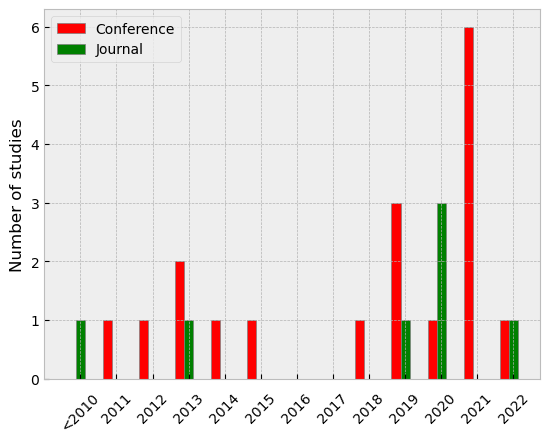
- The review identifies a nascent XAI4SE field with growth after 2019 and highlights gaps across SE tasks, ML4SE methods, and explanation types.
Read this paper
Open the full text in the Nubint reader and ask about any passage as you read.
Read this paper on NubintThis review was generated by AI from the original paper. Please check the paper before citing it.