
[Paper Review] A Whole Cosmology View of the Hubble Constant
This paper argues that reconciling the Hubble constant discrepancy via dynamical dark energy or modified expansion history is highly constrained by cosmology as a whole. It shows that shifting $H_0$ without disrupting other observables—like CMB distances, growth of structure, and BAO measurements—leads to 'no thanks' scenarios, making such models unlikely unless they simultaneously fit all cosmic data without fine-tuning.
The Hubble constant $H_0$ is the value of the cosmic expansion rate at one time (the present), and cannot be adjusted successfully without taking into account the entire expansion history and cosmology. We outline some conditions, that if not quite ``no go'' are ``no thanks'', showing that changing the expansion history, e.g. employing dynamical dark energy, cannot reconcile disparate deductions of $H_0$ without upsetting some other cosmological measurement.
Motivation & Objective
- To assess whether modifying the expansion history via dynamical dark energy can reconcile the tension between local and CMB-based Hubble constant measurements.
- To evaluate the viability of such models when subjected to the full suite of cosmological observations, not just $H_0$.
- To argue that models altering $H_0$ without disturbing other cosmological observables are highly constrained, leading to a 'no thanks' conclusion rather than a 'no go' theorem.
- To emphasize the importance of treating cosmology as a whole—across time and all observables—when addressing the Hubble constant discrepancy.
- To advocate for Occam’s Razor and model naturalness, discouraging ad hoc physics introduced solely to fit a desired $H_0$ value.
Proposed method
- Uses a model-independent approach to compare expansion history $H(z)$ between $Ω_{m,1}h_1$ (local measurement) and $\Omega_{m,2}h_2$ (CMB-derived) cosmologies.
- Derives the required dark energy density $\rho_{\text{de}}(z)$ needed to shift $H_0$ while matching $H(z)$ over a finite redshift range.
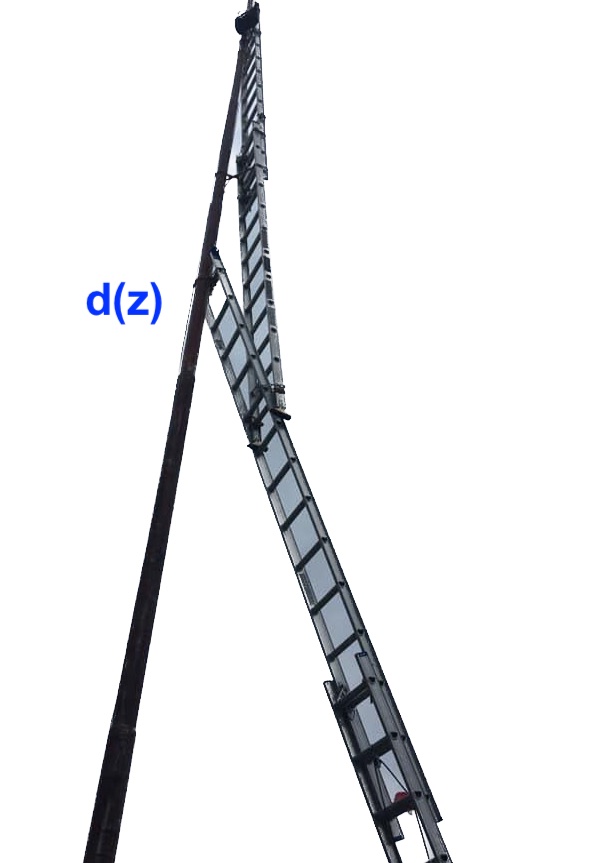
- Applies the distance-redshift relation $d(z) = \int_0^z \frac{dz'}{H(z')} $ to test whether $H(z)$ can deviate from $\Lambda$CDM while preserving distance measurements.
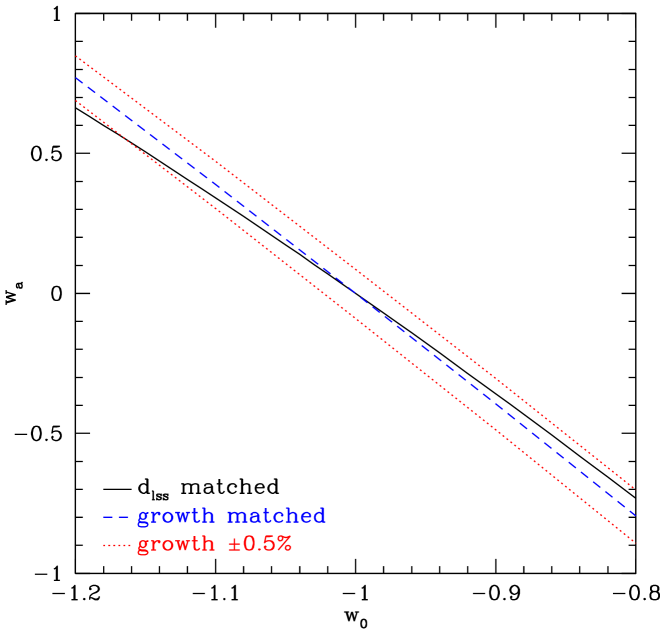
- Evaluates the impact of altered $H(z)$ on cosmic growth history, using the growth rate $f\sim \Omega_m^{3/5}$ to estimate deviations in structure formation.
- Considers modified gravity as a potential avenue to decouple $H_0$ shifts from growth and distance effects, though it remains highly constrained.
- Applies Occam’s Razor to reject models that require excessive fine-tuning or new physics solely to fit $H_0$, emphasizing consistency across all observables.
Experimental results
Research questions
- RQ1Can a dynamical dark energy model reconcile the local and CMB-based Hubble constant values without disrupting other cosmological observables?
- RQ2To what extent does the requirement to match $\Omega_m h^2$ from the CMB constrain the possibility of shifting $H_0$ via modified expansion history?
- RQ3How do changes in $H(z)$ affect the growth of large-scale structure, and can these be compensated without introducing new physics?
- RQ4What are the implications of radial BAO and CMB distance measurements for models attempting to alter $H_0$?
- RQ5Is it possible to construct a self-consistent cosmological model that shifts $H_0$ while simultaneously fitting distance, growth, and CMB data without fine-tuning?
Key findings
- If $\Omega_m h^2$ is fixed by CMB observations, then $H_1 = H_2$ is required, making any shift in $H_0$ impossible without violating this constraint.
- A $H_0$ shift of 10% to reconcile local and CMB values would require $\Omega_e \sim 0.1$, leading to a $\sim 50\%$ change in the growth amplitude today.
- Models that alter $H(z)$ to shift $H_0$ generally cause significant deviations in structure growth, which are inconsistent with observed large-scale structure data.
- The distance-redshift relation $d(z)$ is highly sensitive to $H(z)$, and deviations from $\Lambda$CDM are constrained by radial BAO and CMB measurements.
- Modified gravity offers a potential path to decouple $H_0$ shifts from growth and distance effects, but such models face strong constraints from early-time and small-scale tests.
- Any model that requires new physics solely to fit $H_0$ is unlikely to succeed unless it simultaneously fits all cosmological data—otherwise, it violates Occam’s Razor and is deemed a 'no thanks'.
Read this paper
Open the full text in the Nubint reader and ask about any passage as you read.
Read this paper on NubintThis review was generated by AI from the original paper. Please check the paper before citing it.