
[Paper Review] AA-ICP: Iterative Closest Point with Anderson Acceleration
This paper proposes AA-ICP, an accelerated variant of the Iterative Closest Point (ICP) algorithm using Anderson acceleration to speed up convergence. By leveraging historical iterations to compute the next update via a low-cost least-squares optimization, AA-ICP reduces iteration count by over 30% on real-world 3D datasets while improving final registration accuracy by 0.3% on average, with minimal code changes and negligible computational overhead.
Iterative Closest Point (ICP) is a widely used method for performing scan-matching and registration. Being simple and robust method, it is still computationally expensive and may be challenging to use in real-time applications with limited resources on mobile platforms. In this paper we propose novel effective method for acceleration of ICP which does not require substantial modifications to the existing code. This method is based on an idea of Anderson acceleration which is an iterative procedure for finding a fixed point of contractive mapping. The latter is often faster than a standard Picard iteration, usually used in ICP implementations. We show that ICP, being a fixed point problem, can be significantly accelerated by this method enhanced by heuristics to improve overall robustness. We implement proposed approach into Point Cloud Library (PCL) and make it available online. Benchmarking on real-world data fully supports our claims.
Motivation & Objective
- To accelerate the Iterative Closest Point (ICP) algorithm for real-time use on mobile and resource-constrained platforms.
- To address the slow convergence of standard ICP, which relies on Picard iteration and is computationally expensive in practice.
- To integrate Anderson acceleration into ICP without modifying existing ICP pipelines or requiring derivative information.
- To improve robustness and convergence quality of ICP on real-world data that may violate theoretical assumptions of fixed-point methods.
- To provide a practical, open-source implementation of AA-ICP within the Point Cloud Library (PCL) for broad adoption.
Proposed method
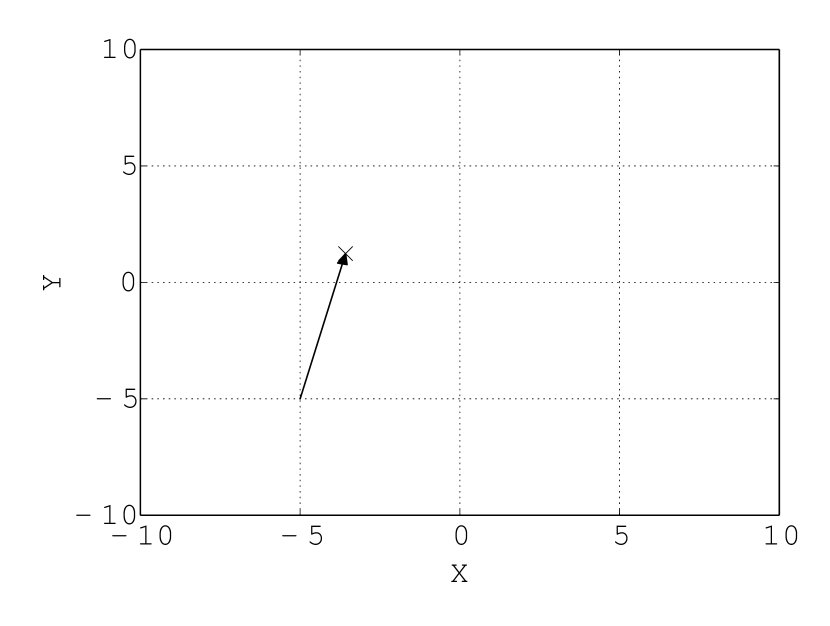
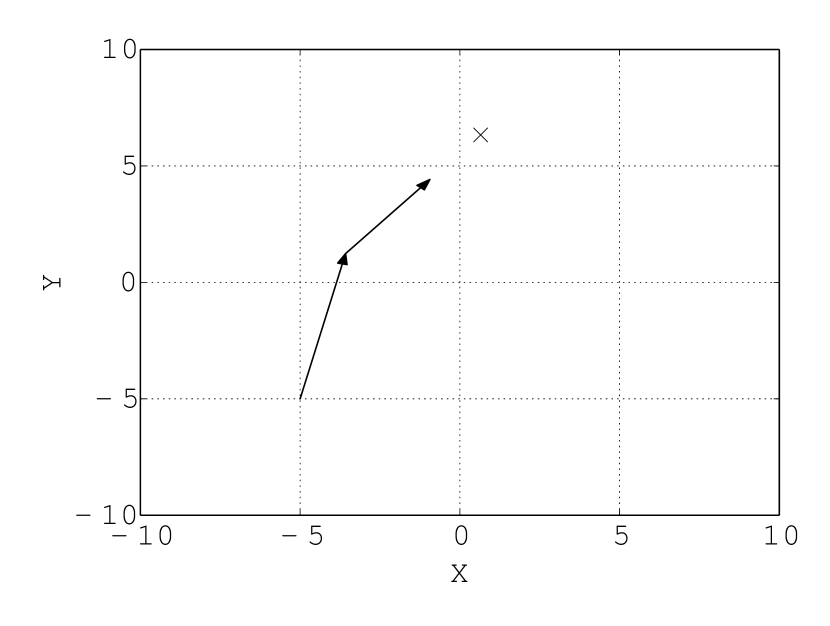
- Reformulate ICP as a fixed-point problem: u = G(u), where G is the transformation update mapping.
- Replace standard Picard iteration (u^{k+1} = G(u^k)) with Anderson acceleration, which computes the next iterate as a linear combination of previous iterates and residuals.
- Use a low-dimensional least-squares optimization over the last m+1 iterations to compute the next update, minimizing residual error.
- Introduce heuristics to improve robustness on real-world data, such as adaptive memory size and damping strategies.
- Implement the method within the Point Cloud Library (PCL), ensuring backward compatibility with existing ICP codebases.
- Apply the method to both 2D and 3D ICP variants, with evaluation on RGB-D and laser scanner datasets.
Experimental results
Research questions
- RQ1Can Anderson acceleration significantly reduce the number of iterations required for ICP convergence?
- RQ2Does AA-ICP improve final registration accuracy compared to standard ICP under the same convergence threshold?
- RQ3How does the performance of AA-ICP vary with different levels of initial misalignment (rotation/translation)?
- RQ4What is the impact of convergence criteria (ε) on the speed-up achieved by AA-ICP?
- RQ5Can AA-ICP be efficiently integrated into existing ICP pipelines with minimal code changes and low runtime overhead?
Key findings
- AA-ICP achieves a median speed-up of 35% on RGB-D datasets and up to 35% on Stanford Bunny scans with moderate misalignment.
- Over 90% of AA-ICP runs converge faster than standard ICP, with the number of iterations reduced significantly across all test scenarios.
- AA-ICP improves final registration error by 0.3% on average and 0.4% in the mean, with over 97% of runs achieving lower error than standard ICP.
- Speed-up increases with stricter convergence criteria (lower ε), indicating AA-ICP is most effective when high-precision results are required.
- The method shows consistent acceleration across different misalignment levels, with speed-up peaking at 5° rotation and 2.5 cm translation before stabilizing around 35%.
- The implementation is lightweight and fully integrated into PCL, with minimal runtime cost and no need for derivative computation or algorithmic overhaul.
Read this paper
Open the full text in the Nubint reader and ask about any passage as you read.
Read this paper on NubintThis review was generated by AI from the original paper. Please check the paper before citing it.