
[Paper Review] Advancing Explainable AI Toward Human-Like Intelligence: Forging the Path to Artificial Brain
This paper advances Explainable AI (XAI) by integrating neuroscience, cognitive science, and ethics to forge Human-Like Intelligence (HLI) in AI systems. It proposes a multidisciplinary framework that enhances model interpretability through feature-based and pixel-level explanation methods, aiming to achieve transparent, responsible, and cognitively aligned AI with emotional intelligence and consciousness-inspired design.
The intersection of Artificial Intelligence (AI) and neuroscience in Explainable AI (XAI) is pivotal for enhancing transparency and interpretability in complex decision-making processes. This paper explores the evolution of XAI methodologies, ranging from feature-based to human-centric approaches, and delves into their applications in diverse domains, including healthcare and finance. The challenges in achieving explainability in generative models, ensuring responsible AI practices, and addressing ethical implications are discussed. The paper further investigates the potential convergence of XAI with cognitive sciences, the development of emotionally intelligent AI, and the quest for Human-Like Intelligence (HLI) in AI systems. As AI progresses towards Artificial General Intelligence (AGI), considerations of consciousness, ethics, and societal impact become paramount. The ongoing pursuit of deciphering the mysteries of the brain with AI and the quest for HLI represent transformative endeavors, bridging technical advancements with multidisciplinary explorations of human cognition.
Motivation & Objective
- To bridge Explainable AI (XAI) with neuroscience and cognitive science to enable human-like reasoning in AI systems.
- To address the limitations of current XAI methods in explaining 'how' and 'why' decisions are made, especially in complex, non-additive models.
- To advance responsible AI by integrating ethical considerations, accountability, and societal impact into the design of transparent AI systems.
- To explore the development of Human-Like Intelligence (HLI), including emotional intelligence and self-awareness, through interdisciplinary convergence.
- To position AI as a tool for deciphering the mysteries of the human brain, enabling breakthroughs in cognitive science and neurological healthcare.
Proposed method
- Employs feature-based XAI techniques such as SHAP, CAM, Grad-CAM, and GAMs to provide local and global interpretability of model decisions.
- Utilizes pixel-level explanation methods like Layer-Wise Relevance Propagation (LRP) and DeconvNet to trace feature contributions back to input pixels.
- Integrates cognitive science and human-computer interaction (HCI) principles to design user-centered XAI systems that align with human reasoning processes.
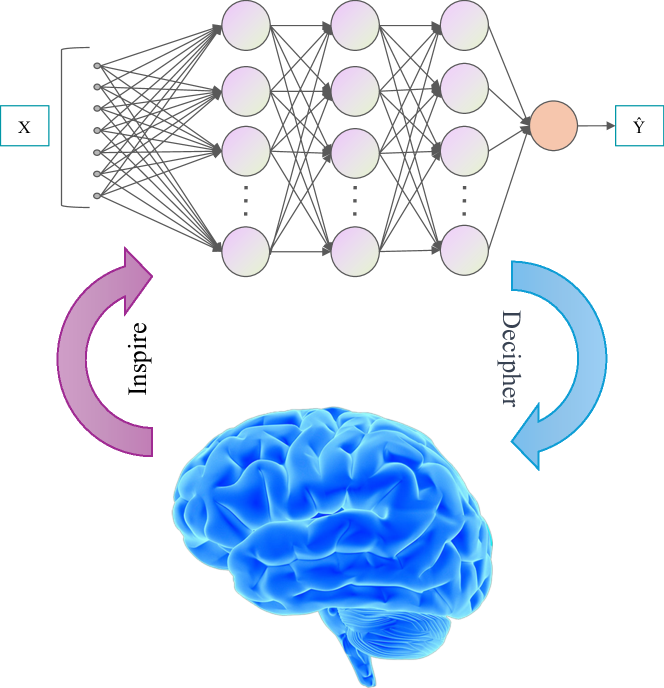
- Proposes a feedback loop between AI development and neuroscience, where advances in neural network design inform brain research and vice versa.
- Leverages deep learning architectures (e.g., VGG-16, ResNet-50, SpinalNet) and interpretable models (e.g., decision trees, random forests) for comparative analysis of accuracy and interpretability.
- Advocates for the use of neuro-AI interfaces and brain-computer interfaces to enable thought-based control and deepen understanding of neural mechanisms.
Experimental results
Research questions
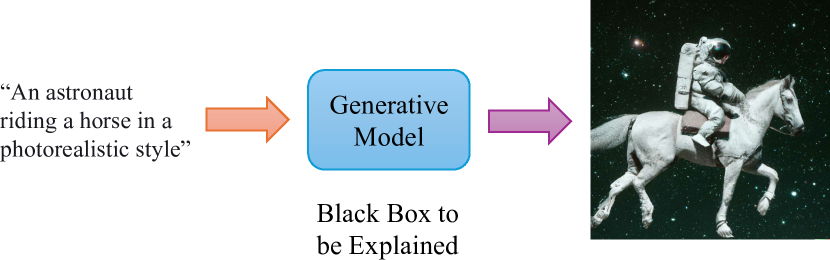
- RQ1How can XAI methods be enhanced to explain not just 'where' but also 'why' and 'how' AI decisions are made, especially in complex generative models?
- RQ2In what ways can the integration of neuroscience and cognitive science improve the interpretability and human-likeness of AI systems?
- RQ3What ethical and philosophical challenges arise when designing AI systems with self-awareness and emotional intelligence?
- RQ4How can AI contribute to decoding the human brain’s mechanisms, particularly in memory, learning, and consciousness?
- RQ5What role do neuro-AI interfaces play in advancing both AI interpretability and our understanding of human cognition?
Key findings
- SpinalNet achieved 97.32% accuracy with high interpretability, demonstrating that high-performance models can be both accurate and explainable.
- Feature-based methods like SHAP and Grad-CAM++ provide consistent, localized explanations of model decisions, though they fall short in explaining non-additive or complex reasoning.
- Pixel-level methods such as LRP and DeconvNet successfully trace decision contributions to individual input pixels, enabling retrospective analysis of model behavior.
- The integration of XAI with cognitive science enables more natural, empathetic AI interactions, particularly in applications like mental health and customer service.
- Neuro-AI convergence enables new insights into brain mechanisms, including memory formation and neural communication patterns, with implications for treating disorders like Alzheimer’s.
- The pursuit of Human-Like Intelligence (HLI) requires not only technical innovation but also deep engagement with philosophy, ethics, and psychology to ensure responsible and meaningful AI development.
Better researchstarts right now
From reading papers to final review, dramatically reduce your research time.
No credit card · Free plan available
This review was created by AI and reviewed by human editors.