
[Paper Review] AI Chatbots as Multi-Role Pedagogical Agents: Transforming Engagement in CS Education
This study introduces a multi-role AI chatbot system in CS education, assigning distinct pedagogical roles—Instructor, Peer, Career Adviser, and Emotional Supporter—using GPT-3 to enhance engagement and learning. Results show LLM-generated responses are accurate, fluent, empathetic, and relevant, especially for higher-order cognitive questions, demonstrating strong potential for personalized, scalable learning support.
This study investigates the use of Artificial Intelligence (AI)-powered, multi-role chatbots as a means to enhance learning experiences and foster engagement in computer science education. Leveraging a design-based research approach, we develop, implement, and evaluate a novel learning environment enriched with four distinct chatbot roles: Instructor Bot, Peer Bot, Career Advising Bot, and Emotional Supporter Bot. These roles, designed around the tenets of Self-Determination Theory, cater to the three innate psychological needs of learners - competence, autonomy, and relatedness. Additionally, the system embraces an inquiry-based learning paradigm, encouraging students to ask questions, seek solutions, and explore their curiosities. We test this system in a higher education context over a period of one month with 200 participating students, comparing outcomes with conditions involving a human tutor and a single chatbot. Our research utilizes a mixed-methods approach, encompassing quantitative measures such as chat log sequence analysis, and qualitative methods including surveys and focus group interviews. By integrating cutting-edge Natural Language Processing techniques such as topic modelling and sentiment analysis, we offer an in-depth understanding of the system's impact on learner engagement, motivation, and inquiry-based learning. This study, through its rigorous design and innovative approach, provides significant insights into the potential of AI-empowered, multi-role chatbots in reshaping the landscape of computer science education and fostering an engaging, supportive, and motivating learning environment.
Motivation & Objective
- Address low engagement and high student-to-teacher ratios in computer science education through AI-driven interventions.
- Overcome barriers in inquiry-based learning caused by abstract content and lack of personalized feedback.
- Design and evaluate a multi-role chatbot system aligned with Self-Determination Theory to fulfill needs for competence, autonomy, and relatedness.
- Optimize chatbot role allocation and interaction quality to enhance motivation, comprehension, and persistence in CS courses.
- Provide actionable insights for educators, AI developers, and policymakers on responsible AI integration in higher education.
Proposed method
- Employ a Design-Based Research (DBR) approach with iterative prototyping, deployment, evaluation, and refinement in a real CS course setting.
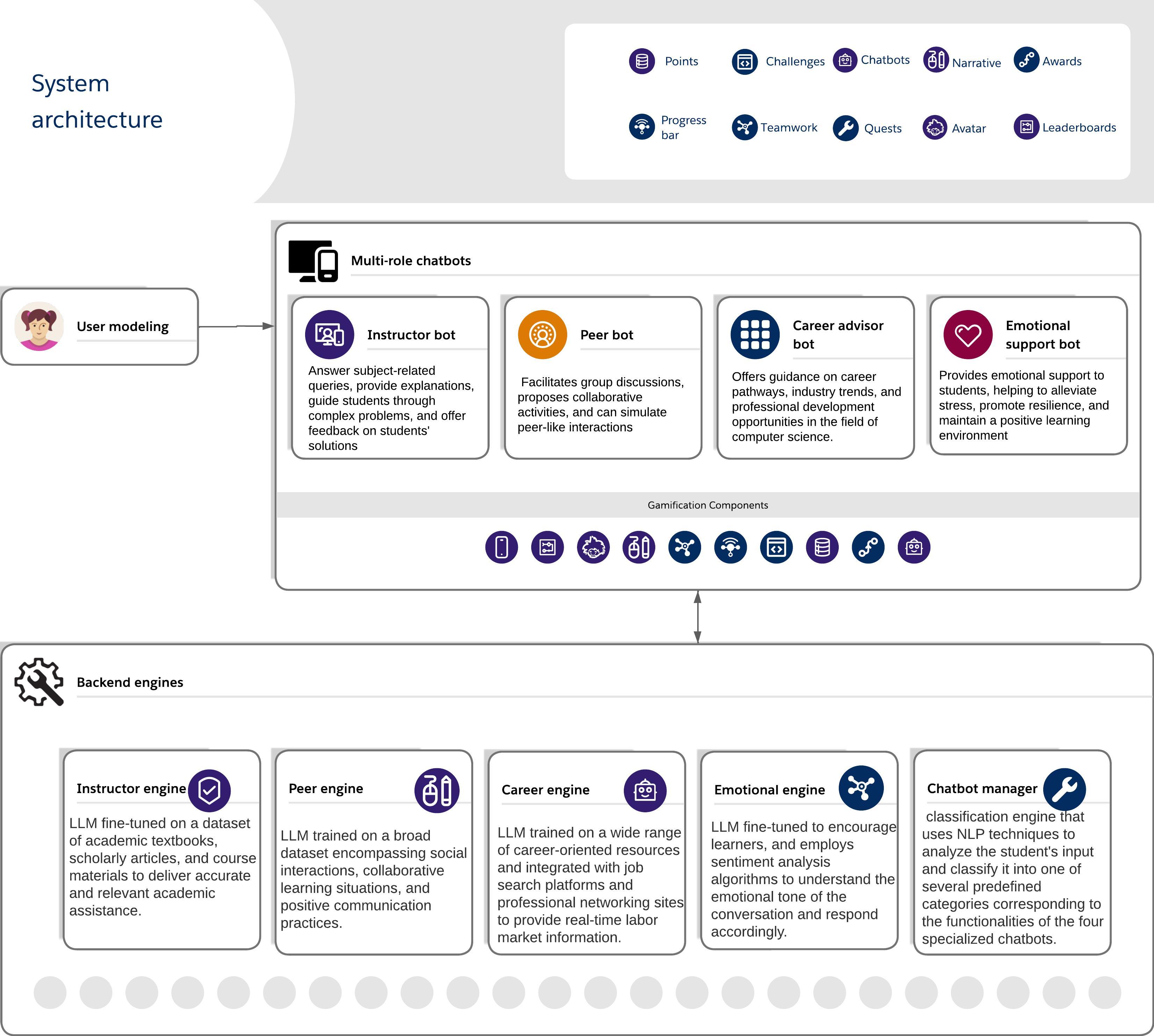
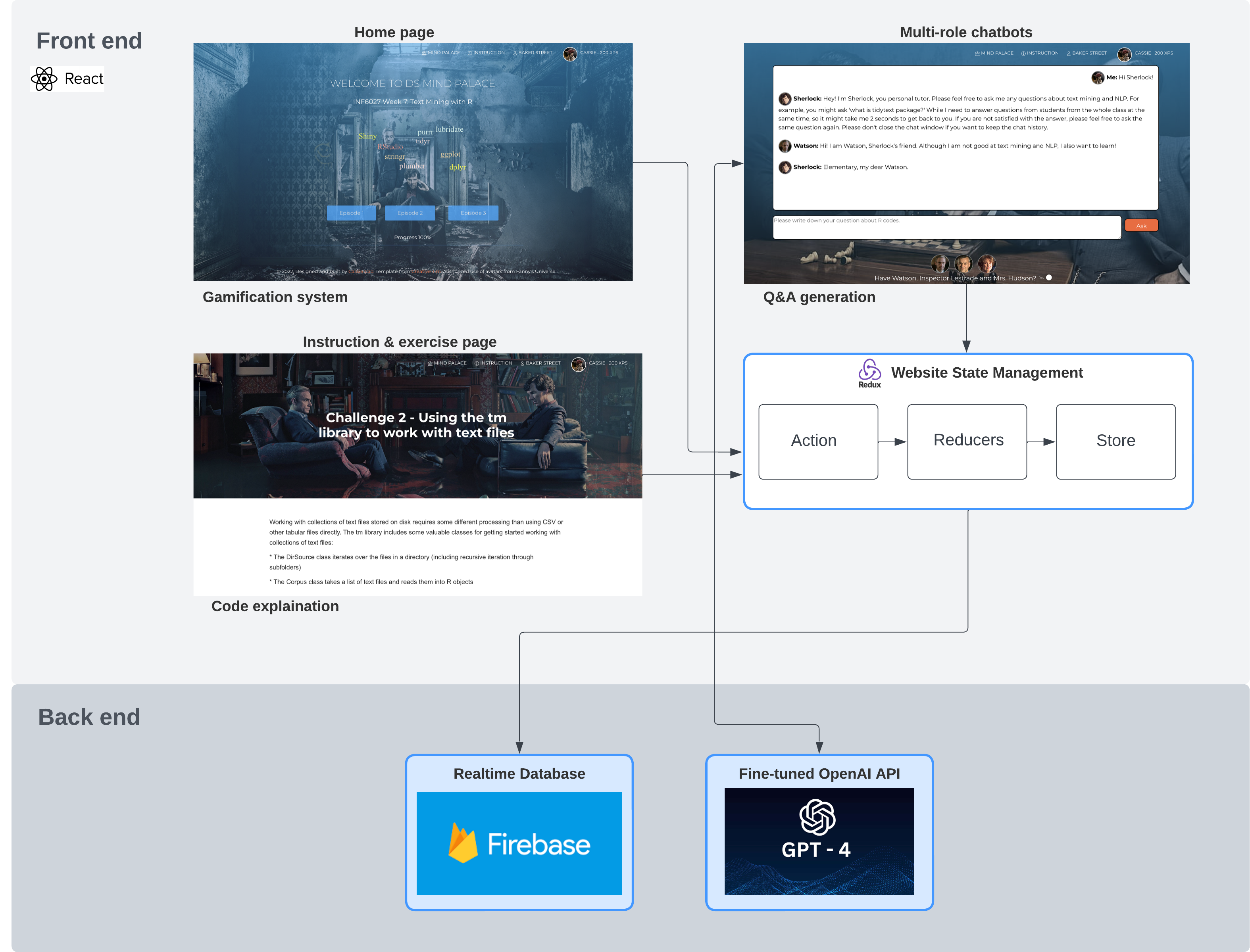
- Implement a full-stack system with four specialized chatbots: Instructor Bot (academic guidance), Peer Bot (collaborative learning), Career Advising Bot (professional relevance), and Emotional Supporter Bot (emotional resilience).
- Use a Chatbot Manager to route student inquiries based on type and complexity, ensuring optimal role assignment.
- Apply NLP techniques including topic modeling, sentiment analysis, and sequence analysis to analyze interaction logs and survey data.
- Conduct an ABC experimental design with 200 postgraduate students across three conditions: human tutor, single chatbot, and multi-role chatbot.
- Develop a five-dimensional metric (accuracy, fluency, empathy, engagement, relevance) to evaluate LLM-generated responses using expert screening, ground truth checks, and automated analysis.
Experimental results
Research questions
- RQ1How does the use of multi-role chatbots influence the quality and quantity of student inquiries?
- RQ2How do multi-role chatbots affect students’ learning experience, engagement, and motivation?
- RQ3How do students perceive the individual and collective roles of the chatbots?
- RQ4What is the impact of chatbot role specialization on response quality across different cognitive levels?
- RQ5How do sentiment and interaction patterns correlate with student engagement and emotional states?
Key findings
- Large language model (LLM)-generated responses demonstrated high accuracy and fluency, with performance improving at higher cognitive levels of student questions.
- The chatbots exhibited strong empathy and engagement, particularly in responses to complex, higher-order thinking questions, as validated by researcher coding and sentiment analysis.
- Semantic similarity and keyword co-occurrence analyses confirmed that responses remained highly relevant and coherent to the original queries.
- The multi-role chatbot system successfully supported diverse student needs, with the Chatbot Manager effectively routing inquiries to the most appropriate agent.
- Students reported enhanced motivation and perceived support, particularly through the Emotional Supporter and Career Advising Bots, contributing to sustained engagement.
- The five-dimensional evaluation metric effectively captured nuanced aspects of response quality, enabling reliable assessment of LLM performance in educational contexts.
Read this paper
Open the full text in the Nubint reader and ask about any passage as you read.
Read this paper on NubintThis review was generated by AI from the original paper. Please check the paper before citing it.