
[Paper Review] Algorithmic Transparency in Forecasting Support Systems
This study investigates how algorithmic transparency in Forecasting Support Systems (FSS) affects forecast accuracy and user satisfaction. It compares three FSS designs—opaque, transparent, and transparently adjustable—using time series decomposition. Results show transparency reduces adjustment frequency and error variance, but allowing users to adjust transparent components leads to extreme, inaccurate changes, highlighting the need for training to prevent information overload.
Most organizations adjust their statistical forecasts (e.g. on sales) manually. Forecasting Support Systems (FSS) enable the related process of automated forecast generation and manual adjustments. As the FSS user interface connects user and statistical algorithm, it is an obvious lever for facilitating beneficial adjustments whilst discouraging harmful adjustments. This paper reviews and organizes the literature on judgemental forecasting, forecast adjustments, and FSS design. I argue that algorithmic transparency may be a key factor towards better, integrative forecasting and test this assertion with three FSS designs that vary in their degrees of transparency based on time series decomposition. I find transparency to reduce the variance and amount of harmful forecast adjustments. Letting users adjust the algorithm's transparent components themselves, however, leads to widely varied and overall most detrimental adjustments. Responses indicate a risk of overwhelming users with algorithmic transparency without adequate training. Accordingly, self-reported satisfaction is highest with a non-transparent FSS.
Motivation & Objective
- To investigate how algorithmic transparency in Forecasting Support Systems (FSS) influences forecast accuracy and user satisfaction.
- To assess whether transparent FSS designs reduce harmful forecast adjustments compared to opaque or adjustable interfaces.
- To evaluate the impact of component-wise adjustment capabilities on forecast quality and user behavior.
- To explore the role of user training and mental model alignment in effective human-algorithm collaboration in forecasting.
- To identify design trade-offs between transparency, usability, and forecast performance in judgmental adjustment processes.
Proposed method
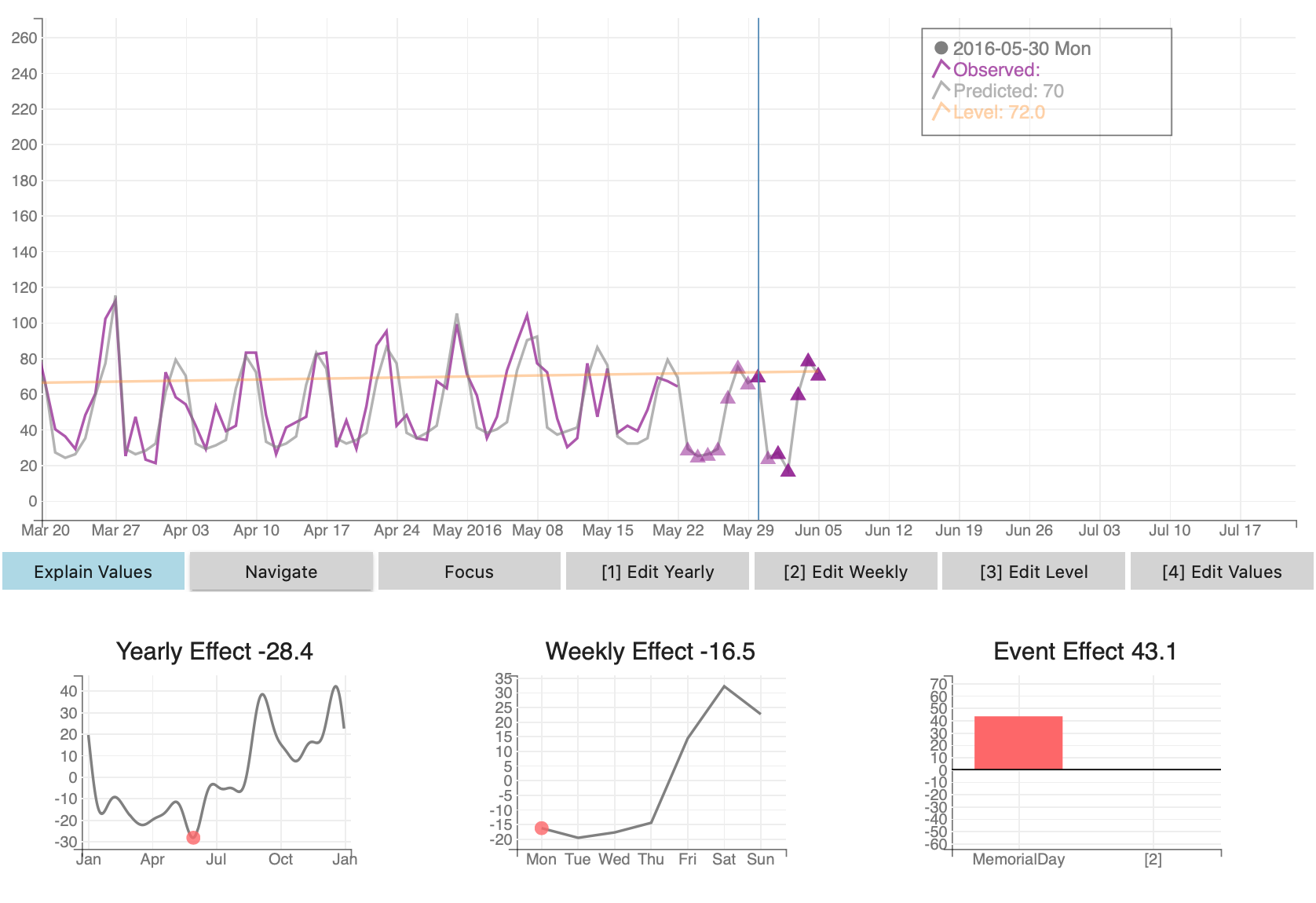
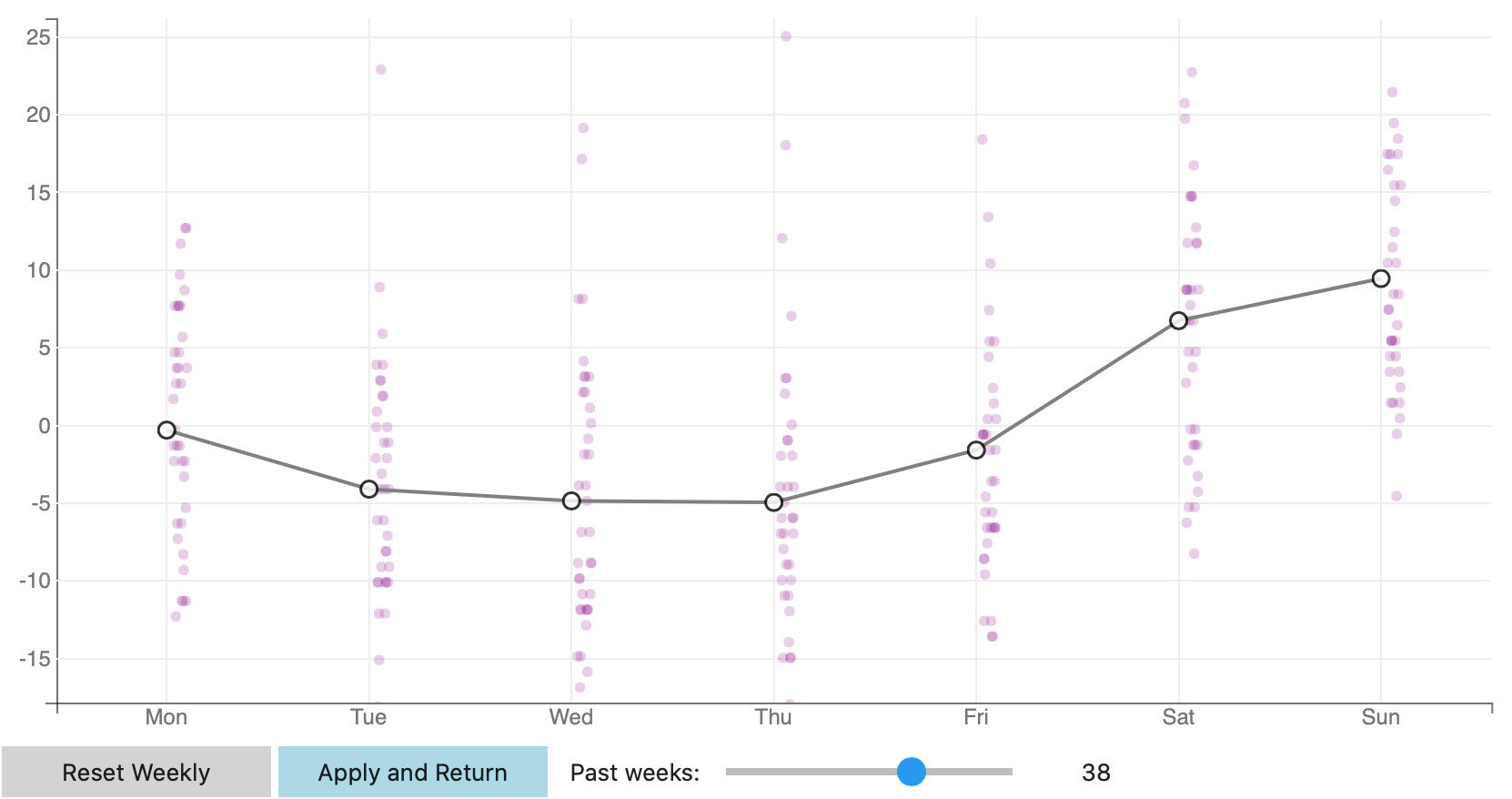
- Three FSS designs were experimentally compared: Opaque (O), Transparent (T), and Transparently Adjustable (TA), varying in algorithmic transparency and adjustment capabilities.
- The FSS used time series decomposition to expose underlying components (trend, seasonality, level) to users in T and TA conditions.
- Participants adjusted forecasts using a GUI in a controlled lab experiment via Amazon mTurk, with financial incentives tied to adjustment frequency and accuracy.
- Adjustment Volume (AV), Deviation Volume (DV), and relative Mean Absolute Error (rMAE) were measured as key performance indicators.
- User satisfaction and self-reported understanding were collected via post-task surveys to assess perceived usability and cognitive load.
- Statistical analysis compared adjustment frequency, error variance, and user-reported outcomes across the three FSS conditions.
Experimental results
Research questions
- RQ1How does algorithmic transparency in FSS affect the frequency and magnitude of judgmental forecast adjustments?
- RQ2Does a transparent FSS design reduce forecast error variance compared to opaque or adjustable designs?
- RQ3What is the impact of allowing users to adjust transparent components on forecast accuracy and user satisfaction?
- RQ4To what extent do users feel overwhelmed by algorithmic transparency, and how does this affect adjustment behavior?
- RQ5Can algorithmic transparency improve user understanding and reduce harmful adjustments without increasing cognitive load?
Key findings
- The Transparent (T) FSS design reduced adjustment frequency and volume compared to the Opaque (O) and Transparently Adjustable (TA) designs, with the lowest standard deviation in adjustment volume and rMAE.
- The Transparently Adjustable (TA) FSS design led to the highest variance in adjustment volume and rMAE, indicating highly inconsistent and often detrimental adjustments.
- Participants in the TA condition made the largest average adjustments, with 80% of the top five largest adjustments per participant originating from this condition.
- Despite higher transparency, the TA condition resulted in the worst forecast accuracy, as measured by rMAE, due to extreme, component-level adjustments.
- User satisfaction was highest in the Opaque (O) condition, suggesting that excessive transparency without training can reduce perceived usability.
- Feedback indicated that many users felt overwhelmed by the complexity of the TA interface, particularly when given direct control over algorithmic components.
Better researchstarts right now
From reading papers to final review, dramatically reduce your research time.
No credit card · Free plan available
This review was created by AI and reviewed by human editors.